Africa
Triumph Of Leadership At Onitsha -By IfeanyiChukwu Afuba
Politics is at the centre of the other front that railed against the (Onitsha) market stabilisation policy. The problem was not about the propriety of the measures but about who would take the credit. Reopening of markets on Monday in the southeast is sure to be counted a mighty job, drawing accolades for architects of the feat. But Soludo, the potential executor, is considered a rival by certain political interests in the region.

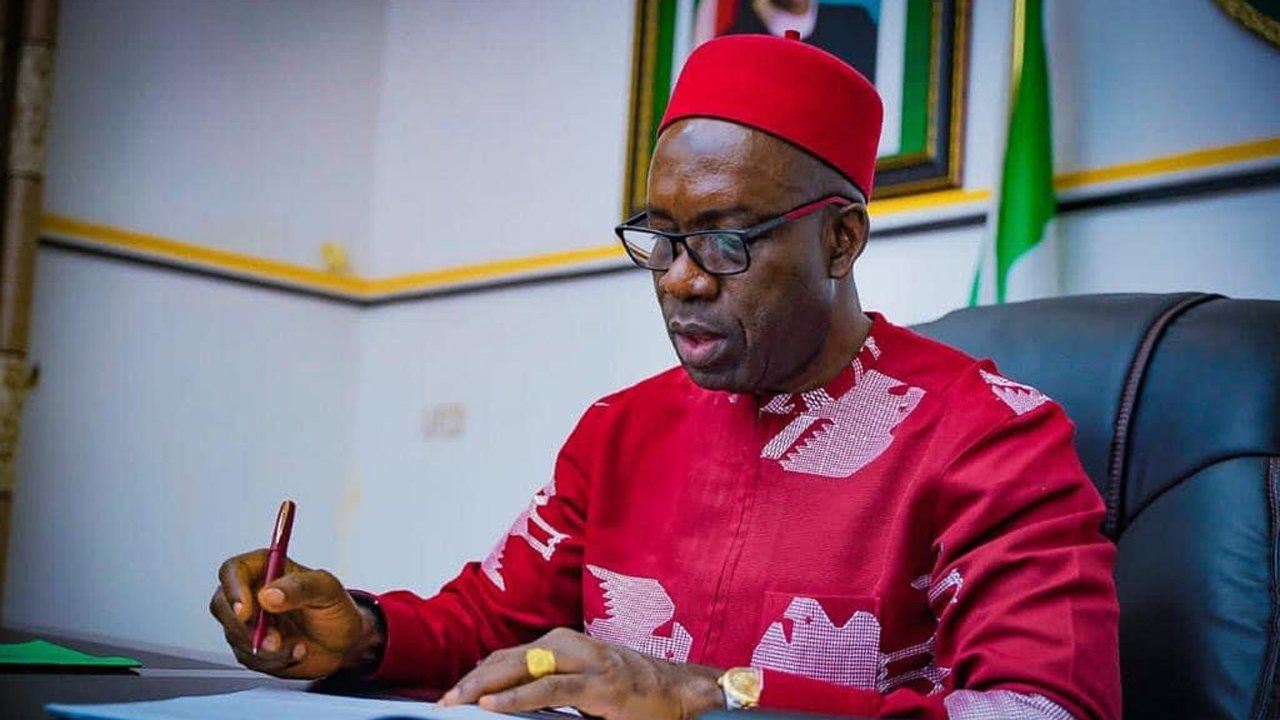
To the disbelief and disappointment of many a critic, traders at Onitsha main market complied with Governor Charles Soludo’s directive for resumption of business on Monday, February 2, 2026. For the first time in over four years, excepting for Christmas periods, the market opened for activities on a Monday. News reports spoke of a ‘bustling main market’ and environs, with the protagonist of change, Soludo and team marching through the market streets in proclamation of a new season.
The blacklisting of Monday as a no – business, no movement, people’s crusade was a terrible siege on the population. The very people who were promised liberation became the major victims of an intervention.
But the greater tragedy lay in the climate of fear that paralysed reasoning. It was a setting in which it was a virtue to be pedestrian about self determination. And among those not held hostage by populism, some preferred to politicise a bid for reclamation of the public space.
And so, a strong pushback by Anambra State Governor, Charles Soludo on the lingering Monday sit – at – home protest
in Anambra State, and indeed the southeast, sparked heated debates in the last week of January 2026. Soludo’s order for the sealing of Onitsha main market for one week had the trappings of a Donald Trump move – surprise, audacity, and with the objective of redefining the subject.
The traders, remnant of the IPOB leadership – the group behind the imposed disobedience – and their apologists were caught off guard by the move. Anger, emotion, and finger – pointing dominated reactions. Neutral voices raised the issue of personal freedom within the orbit of law and society. Amidst the storm, Soludo succeeded in shifting the balance on the subject.
It was a necessary but hazardous task that the Anambra governor waded into. The trying circumstances of the matter was another case of who will bell the cat. Who will brave through the evil forest to retrieve the twin babies mercilessly left to die? The Onitsha market knot was one infused with power of chain reaction. By it’s strategic positioning as commercial hub east of the Niger, Onitsha main market symbolised not just the face of markets in the region, but the fate of trade as well. On the surface,
Monday boycott of buying and selling at Onitsha main market bordered on economic impact. But the controversial observance had political and social implications as well. By their three dimensions, the Monday ritual posed challenges of governance. Together, these manifestations of separateness, of a parallel order, constituted a leadership test. Perhaps, other southeast state governors had their different approaches to a common problem. Their steps, if they were not timid and tentative, would have emerged as measures to reckon with. The difference now is that Soludo has moved from the exploratory stages of engagement to now take the bull by the horns.
A lot of the opposition to Soludo’s initiative thrived on specious argument. Much stock was placed on the presumed indictment of denying traders means of livelihood with the one week market closure. The charge of insensitivity, of putting families on hunger path is a line that’ll whip up emotions anyday. But this accusation in the face of available facts is disingenuous. It’s akin to saying that omelette can be made without breaking eggs. Why didn’t he use other options? Why didn’t he engage the traders? Such stuff sound like effort to slyly send someone on a wild goose chase. The governor since coming into office in March 2002 severally engaged stakeholders, including traders towards overcoming the sit – at – home cul de sac. In any case, where lay the greater threat to the economic wellbeing of the traders? Since imposition of the lockdown in 2021, the traders had suffered 225 days of no sales. Without Soludo’s decisive action, the wasted business days would continue on the 300 track. This staggering loss cannot be compared to the one – off seven day shutdown. The former was a disaster, the latter a corrective surgery.
Much capital was also made about security being a principal factor in the continued Monday “sit at home.” Still, rationalising desertion of markets on Mondays on account of security inadequacy, does not preclude the government from restoring the hijacked market day. The linkage reinforces the need for government action. Government’s security responsibility does not involve encouraging the people to live in fear. A government’s mandate on security is not about abandoning citizens to restrictions on their lives by non – state actors. The task of security of lives and property is about the freedom of the people to go about pursuing their legitimate aspirations. Located in this perspective, Soludo’s markets’ reopening reflects integrated security architecture. Do we need to stress that the ubiquitous presence of gun – toting operatives is not synonymous with societal safety? But in demonstration of the priority accorded protection of the people, the Soludo administration has invested in different forms of security resources – with good results to show for it. The Agunechemba outfit continues to play an active complementary role to the Police. Reduced crime rate is obvious in Anambra State today. The sense of improved security led to resumption of trading in markets on Mondays in most parts of the State. Schools are in session every Monday. Commercial vehicles ply their routes on Monday. So, there is something out of sync about insecurity being behind Onitsha main market Monday closures. It was most unlikely that the state government would have embarked on the Onitsha mission without security threat level assessment.
For some other critics, it was a straightforward, people have right not to open their shops, if they so choose. That is correct. But it’s also the case that rights go with responsibilities. When organisations entice us with mouth – watering prizes to buy their products, it comes with a caveat. The lines “terms and conditions apply” at once protects the interests of the firm as well as limits the claims of the customer in the bargain. Shop holders at the market asserting their right to lock up the stalls as it suits them must contend with the power of government as owner of the property to state the clauses for their use. Government has the option of revoking the allocations of recalcitrant traders. What answer have those who insist on the personal right to lock shops on Monday to the right of those who want to open their stores the same Monday? Access to the market has been locked against the latter group for about five years now. Does their plight not deserve redressing? A responsible government endeavours to cater for the common good. An objective assessment of Soludo government’s response to the markets closure cannot but situate it in the public interest. The restoration was to the state’s and southeast’s overall benefit.
There are two probable interests at the root of opposition to Soludo’s action. The first would be the fanatical supporters of IPOB. They are unable to face reality; neither the impracticality of their goals nor the shift by Nnamdi Kanu, the jailed leader of the organisation. Kanu is reported to have called for discontinuation of the Monday protest. But the hardline school would prefer to blame other actors than concede the failings of the movement. It’s unacceptable to cripple the southeast in the name of liberation struggle. Every progressive Igbo rejects Nigeria’s injustice to the southeast and believes in Biafra of the mind. Even as some did not share the agenda of an independent state, Ralph Uwazurike’s MASSOB was well received because of its persuasive approach. The necessity of protest was appreciated. Trouble began with IPOB’s introduction of violence into the crusade. No benefit has accrued from the resort to violence. Sadly, pockets of the confrontation bloc, unwilling to lose their emergency privileges, continue to invest in disorder. The diatribe issued by a rogue leadership of IPOB condemning Soludo’s thankless job, is a reminder of the group’s desperation for relevance.
Politics is at the centre of the other front that railed against the (Onitsha) market stabilisation policy. The problem was not about the propriety of the measures but about who would take the credit. Reopening of markets on Monday in the southeast is sure to be counted a mighty job, drawing accolades for architects of the feat. But Soludo, the potential executor, is considered a rival by certain political interests in the region. Media forces aligned to this political movement led the rush to belittle the Onitsha market repositioning. The irony is that a continuation of the “sit at home” isolates the southeast from mainstream national politics. By severing the isolationist cord of “sit at home” Soludo has sent out a message of confidence in the region. Soludo’s breakthrough boosts the quest for a Nigerian President of southeast origin.