Forgotten Dairies
Washington’s $61 Million Strike on Iran’s Crypto Lifeline -By Fransiscus Nanga Roka
This is also a more profound rule of law problem. Civil forfeiture is the seizure of property by the government without a criminal conviction. That nimbleness is crucial for cross-border assets but can also weaken due process. Prosecutors are required to prove tracing on a-wallet-by-wallet basis, share the specific blockchain methodology used, and segregate or differentiate between proceeds being used for sanctions evasion versus legitimate sources of funds. Admissible evidence cannot be replaced by a geopolitical alternative called “Iran-linked.”

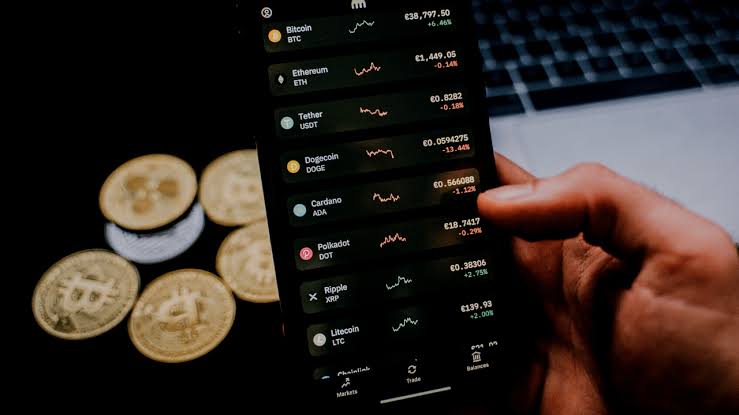
The US is pursuing an economic war on Iran like never before by not seizing a load of oil at sea, but by cutting off the virtual lifeblood that (allegedly) turns embargoed crude into usable cryptocurrency.
Manhattan federal prosecutors have filed a civil-forfeiture complaint to recover nearly $61 million in cryptocurrency they claim was proceeds from oil sales on behalf of Iranian nationals operating black-market oil sales in China. These transactions supposedly took place in May and June 2025 before being halted. But the wallets hit by the attack were just pieces of a massive framework, the addresses recycling to each other are alleged by prosecutors to have taken in and moved over $1.5 billion.
The mechanism allegedly reveals the anatomy of modern sanctions evasion. Iranian oil was sold with the use of inscrutable commercial intermediaries; alleged Chinese front companies including Hexa Whale Trading and Blessed Trust made deposits to Binance accounts, masquerading their origin, ownership and payment destinations using layered digital wallets. Prosecutors argue that some of the funding went to Iran’s government, agents and proxies at least parts of which support terrorism.
But precision matters. Indeed, they are still just government accusations; not the actual verdicts of a court. The complaint is essentially an in rem civil action targeting the cryptocurrency it self not a finite criminal conviction of Binance, or any Chinese companies individually or the individual named defendants. No wrongdoing on the part of Binance is alleged in the proceeding, they say.
Why does this matter? Not that cryptocurrency has rendered illicit finance invisible; it has made it borderless, instantaneous and 24/7-operational. Blockchain transactions are permanent, but that permanence is only useful when investigators can tie a wallet address to an exchange, beneficial owners, shipping docs, oil invoices and state-controlled recipient. Crypto is both a latrine and the crime scene.
However, Washington ought to refrain from declaring victory. Seizing $61 million from a suspected $1.5 billion network means that now only four cents of every dollar has been made to pass through somewhere between the net and the ledger. With the state seizing money through asset forfeiture while allowing real architects, brokers, front companies and complicit service providers to walk free such policies risk merely becoming expensive but vacuous deprivations: you lose one pool of provision while the laundering infrastructure reproduces somewhere else.
This is also a more profound rule of law problem. Civil forfeiture is the seizure of property by the government without a criminal conviction. That nimbleness is crucial for cross-border assets but can also weaken due process. Prosecutors are required to prove tracing on a-wallet-by-wallet basis, share the specific blockchain methodology used, and segregate or differentiate between proceeds being used for sanctions evasion versus legitimate sources of funds. Admissible evidence cannot be replaced by a geopolitical alternative called “Iran-linked.”
Five step process for a credible strategy
To begin, courts need to require blockchain evidence that can be independently audited, including details of attribution methods and transaction paths and error rates. Second, exchanges must conduct due diligence on oil-trading companies, jurisdictions that pose a high risk, and near-instant layers of stablecoin transfers. Third, US authorities should do parallel investigations with China and the relevant exchange jurisdictions in Hong Kong rather than just unilaterally impose sanctions. Fourth, authorities need to find beneficial owners and prosecute human decision-makers where the evidence allows not just seize anonymous wallets. Fifth, forfeited assets should be reported on publicly and insulated from non-transparent executive allocation.
Sanctions enforcement is becoming technologically savvy, as this example shows. It still does not show whether it is really effective in the strategy, or in law. If Washington can not sustain that financial disruption with evidentiary transparency, multilateral legitimacy and due process, its crypto offensive could leave millions frozen whilst the machinery of illicit oil finance remains largely intact and operating.
Fransiscus Nanga Roka
Faculty of Law University 17 August 1945 Surabaya and Managing Partner Law Firm Victorious Indonesia