Africa
Yoruba Nation: Prospects And Perils Post-2031(2) -By Abiodun KOMOLAFE
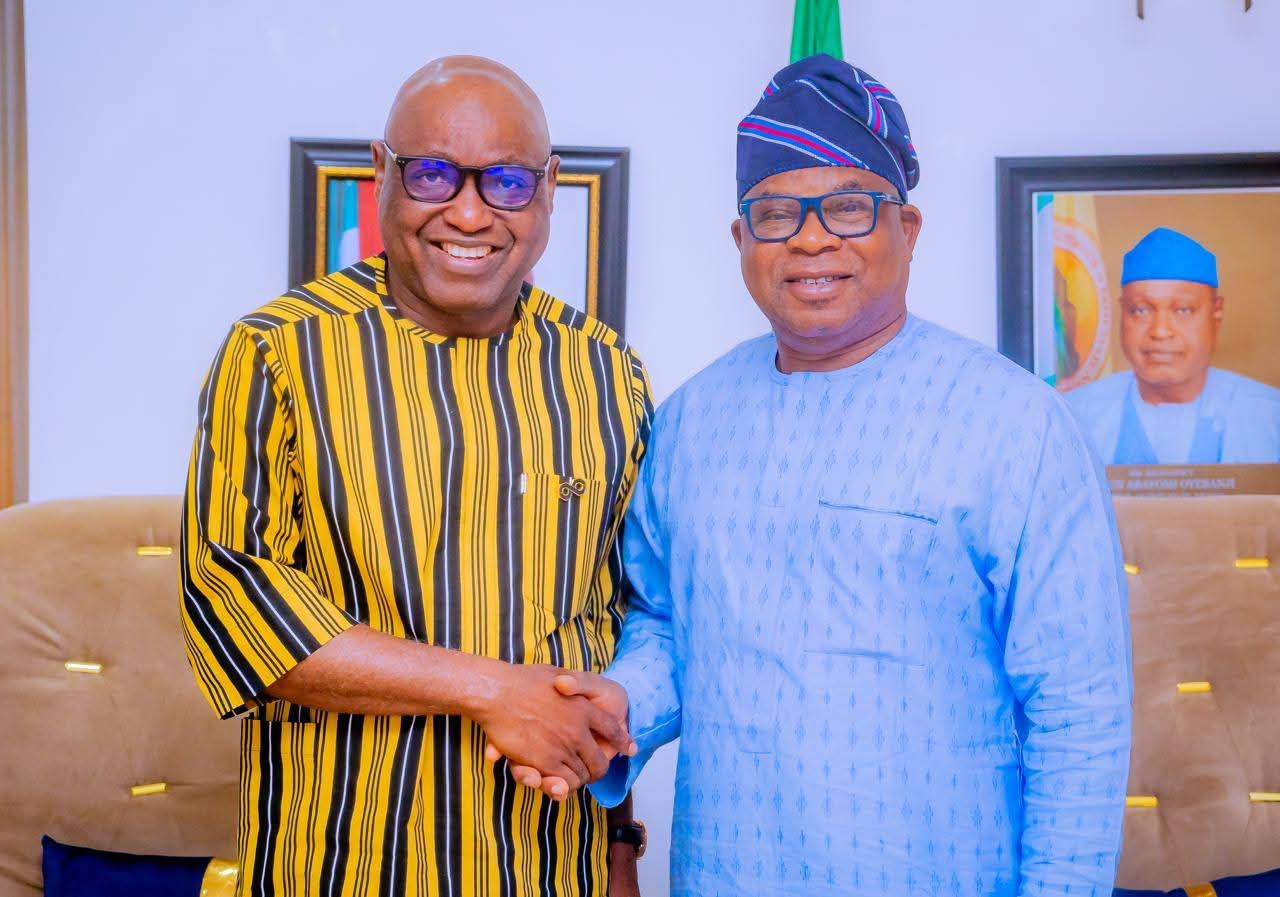
ARG must take advantage of the impending off-cycle governorship elections in Ekiti and Osun States, featuring Biodun Abayomi Oyebanji (BAO) and Asiwaju Munirudeen Bola Oyebamiji (AMBO) respectively, to reassert itself through both intellectual and practical interventions. This is a prime opportunity for the sociocultural body to reemerge and refocus. It cannot afford to let this moment slip away!

In the words of Frantz Fanon: “Each generation must discover its mission, fulfill it or betray it, in relative opacity.” Let there be no doubt – and we say this to emphasize the gravity of the moment – Yorubas stand at a critical crossroads. Without being alarmist, it is make or break, now or never!
Yoruba leadership must interrogate a sobering report released last Saturday, February 21, 2026, by a respected, independent British agency. Its findings have already sent ripples through government circles, trade unions, and the private sector alike. The core issue is a paradox: while the last few years have seen a record surge in new SMEs, job creation hasn’t kept pace. The culprit, of course, is the rapid integration of Artificial Intelligence (AI). As AI aggressively displaces entry-level roles, we are facing a shift that should be viewed as nothing short of unnerving.
If gold could rust, what shall iron do? If the UK is alarmed by this report, the leadership of Yorubaland should be terrified! Like the rest of the country, this isn’t merely an economic hurdle; if mismanaged, it will become a social catastrophe. To be forewarned is to be forearmed!
The devastation extends to our fields, where agricultural labour is now virtually non-existent. Our youth have become beautiful symptoms of quick fixes, preferring the opportunistic scramble for land-grabbing or the volatile life of a motor park tout. As if that were not enough, extensive mining is now the grim reality in and around Ilesa in Osun State. Outside interests are stripping these natural resources under the noise and the chaos of the Federal Government’s Exclusive List, leaving the state to inherit, helplessly, an environmental lamentation akin to Sodom and Gomorrah.
Similar resources exist in other parts of the region, yet for now, our people seem only to be reaping a harvest of kidnappings and hostage-taking for ransom! Yet, we lament that our faith in the naira is under siege! For God’s sake, why wouldn’t it be? Why is there no movement towards unbundling these regulations so that Osun can become a primary beneficiary?
At a time like this, the Yoruba leadership must ask that most pivotal of questions in a policy discourse: What is to be done? Commendably, the Federal Government has committed to creating thirty million new jobs across the country by 2030. But how is it to be achieved in the age of AI? As we have noted previously – and it bears repeating – The Economist magazine (or newspaper, as they prefer to be called) emphasized in an incisive analysis a year ago that “Africa has too many small companies.”
What it means is that we are fighting on two fronts. The first is creating jobs to contain the demographic explosion. The second is up-scaling small businesses to ensure sustainability and further employment. These are interwoven, hydra-headed challenges that must be slain together. Doing so requires the brand of “Research-In-Application” that the Yoruba once championed through figures like Professors S.D. Onabamiro, Sam Aluko and Adebayo Adedeji. We must recreate that era now with – to quote former US President Barack Obama – “the fierce urgency of now!”
As in the 1950s, progress must begin with the centrality of education as the engine room of the future. Even within a defective federalism, nothing prevents the South West from collectively adopting a learning framework suited to the global trajectory. The current curriculum is no longer fit for purpose; it should be discarded in favour of a homegrown model designed to position the Yoruba as one of the best-equipped national groups on earth. This fundamental revamp must start at the nursery school level.
This work must start immediately, drawing on the expertise of Governor Oyebanji and his predecessor, Professor Fayemi, alongside visionaries such as Professors Wole Soyinka and Adebayo Williams, Asiwaju Bisi Adegbuyi, Otunba Tola Mobolurin, and Dr. Zacch Adedeji. Together, they must craft – after wide consultations – a blueprint with the working title: ‘A Competitive Yoruba Nation By 2040.’ This multidimensional framework must involve engineers, applied economists, and accountants to ensure its viability. Arguably, this will be one of the most critical tasks undertaken by the Yoruba-speaking nationality in the last century and a half.
Secondly, the Yoruba nation must realize that its capital base and systems of financial intermediation are currently fragile. This explains why Yoruba interests are no longer “top of the game”, particularly regarding medium-sized businesses in metropolises like Lagos, Ibadan, Abeokuta, Ilorin, and even Ijebu-Jesa – not to mention the Federal Capital Territory (FCT), where Yoruba capital is hardly relevant. This is alarming! Since sustainable employment cannot be generated without robust capital, and government intervention has its limits, we must look in the direction of private systemic growth.
Now, we must ask ourselves: What are the originating mission statements of groups such as the Afenifere Renewal Group (ARG), and how are those foundational positions being refined and updated in the temple of today’s conditions? Furthermore, how will they propel the Yoruba-speaking nationality to the forefront of every aspect of human endeavour in the 2030s?
The original mission of Egbe Afenifere in the 1940s was to prepare the Yoruba for a preeminent role in the decades ahead. They achieved this mission! Unfortunately, a question hangs in the air: Are their successors, heirs and beneficiaries treading the same path? To be polite, the jury is still deliberating!
Again, we must ask: Where was ARG at its inception, what is left in its tank, and why are Nigerians not hearing from this intellectual and technocratic pan-Yoruba movement at this critical juncture of the nation’s history – at a time when “the world is accustomed to equating peace with the absence of tension”? But then, it is not too late!
Position papers must now be issued on how to tackle the myriad issues already outlined. ARG must be at the forefront of mobilizing the states, local governments and civil society in Yorubaland to reignite regional integration and work with the DAWN Commission – interestingly, one of ARG’s own products – and the SWDC to set and achieve goals propelled by a 10-year Southwestern Region development plan. These objectives can only be achieved within the framework of old-fashioned Development Planning. There’s no other feasible way!
For sustainability, ARG must beef up its ranks and attract younger elements who, no doubt, are at the cutting edge of today’s world. It must also be structured – or restructured – to operate as a professional outfit, akin to international non-governmental organizations (NGOs) like Amnesty International or Save the Children. Most of all, it must develop a robust funding plan, lest it become ineffective. After all, what is the point in starting what cannot be sustained?
Finally, ARG must take advantage of the impending off-cycle governorship elections in Ekiti and Osun States, featuring Biodun Abayomi Oyebanji (BAO) and Asiwaju Munirudeen Bola Oyebamiji (AMBO) respectively, to reassert itself through both intellectual and practical interventions. This is a prime opportunity for the sociocultural body to reemerge and refocus. It cannot afford to let this moment slip away!
There is a precedent for this that should serve as our guide! From Lagos to Oyo; from Ogun to Ondo; and from Osun to Ekiti: some of us within the ARG – especially between 2008 and 2013 – took significant risks, both individually and collectively. As the Group’s pioneer national Administrative Secretary, I was deeply involved. I know, therefore, whereof I speak. There is much to say, but that is a matter for another time!
May the Lamb of God, who takes away the sin of the world, grant us peace in Nigeria!
● Concluded.
Email: ijebujesa@yahoo.co.uk.
Mobile: 08033614419 SMS only.