
Breaking News
2027 Elections: INEC Chairman Warns Political Parties Against Violence, Identifies 9 States Affected
INEC has raised concerns over political violence in nine states, warning that intimidation, thuggery and attacks could undermine voter participation and election credibility.

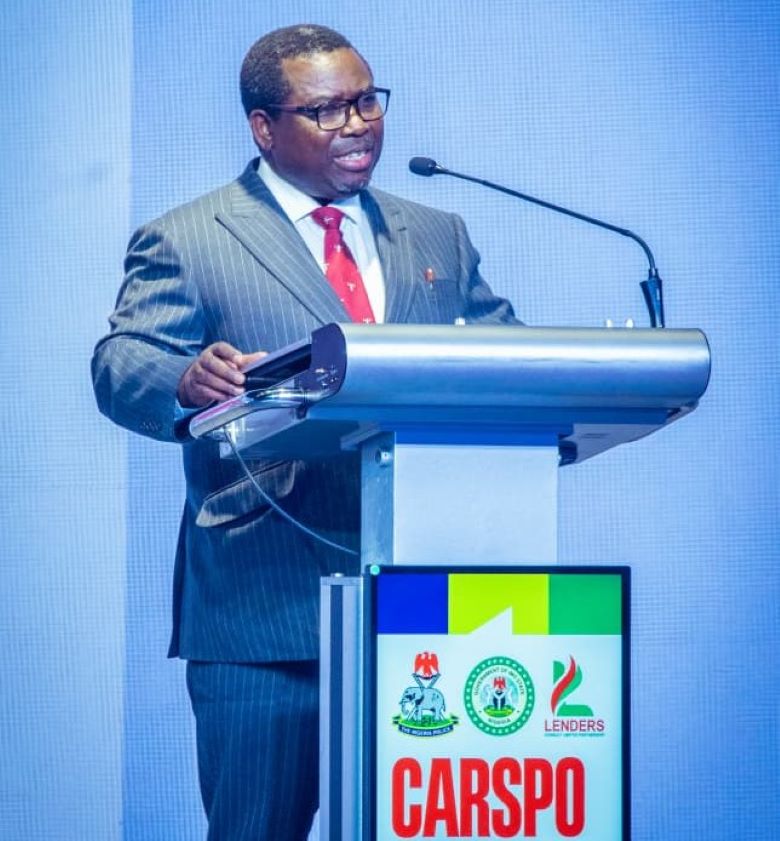
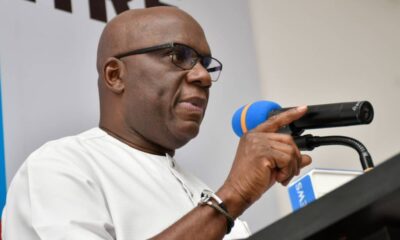
ABUJA — Chairman of the Independent National Electoral Commission (INEC), Prof. Joash Amupitan, has warned that escalating political violence across Nigeria poses a serious threat to the successful conduct of the 2027 general elections.
Amupitan specifically identified Lagos, Edo, Ekiti, Enugu, Ebonyi, Delta, Cross River, Oyo and Benue as states where incidents of political violence had been recorded.
He urged political parties and their supporters to abandon violence, intimidation and the deployment of thugs, warning that such actions could discourage Nigerians from voting and undermine the credibility of the forthcoming elections.
The INEC chairman issued the warning at a Strategic Election Security Conference organised by the commission and the Office of the National Security Adviser (ONSA) in Abuja.
He accused some political actors of signing peace accords in Abuja while allegedly financing or tolerating violence at the state level.
“Signing peace accords in Abuja while tolerating or financing thuggery in the states is a contradiction our democracy can no longer afford,” he declared.
According to Amupitan, political violence has increasingly targeted campaign convoys, town hall meetings, party offices and supporters.
He added that electoral officials, INEC staff and ad hoc personnel had also been subjected to harassment, intimidation and physical attacks by supporters and agents of political parties, both within Nigeria and abroad.
The INEC chairman said the country had experienced a disturbing rise in political intolerance, inflammatory rhetoric and coordinated attacks since the commencement of campaigns in August 2026.
He warned that no political ambition justified the loss of innocent lives.
Amupitan also insisted that INEC would not be pressured into compromising its constitutional responsibility or neutrality.
“We will neither be intimidated nor blackmailed into compromising our neutrality, and every attack on INEC personnel, facilities, or materials will be met with the full weight of the law,” he said.
He further warned political party leaders that they would be held accountable for the actions of their candidates, campaign councils and supporters.
“Accountability does not end with the foot soldiers who throw stones or wield weapons,” he said.
According to him, “party leadership bears moral and political responsibility for the conduct of its candidates, campaign councils, and youth wings”.
Three dangers of political violence
Amupitan identified voter suppression, attacks on electoral personnel and post-election violence as three major consequences of political violence.
He explained that attacks and bloodshed during political campaigns could discourage peaceful citizens from participating in elections.
“When bullets replace ballots and rallies end in bloodshed, ordinary citizens stay home, effectively disenfranchising millions of peaceful Nigerians,” he warned.
He also raised concerns over the security of more than 1.41 million ad hoc electoral personnel, most of whom are National Youth Service Corps (NYSC) members, who would be deployed across 177,299 polling units.
“No parent or institution will willingly deploy young Nigerians into environments where political thugs operate with impunity,” he said.
On post-election violence, the INEC chairman warned that attacks recorded before elections could create an atmosphere of hostility capable of triggering resistance to election results.
“Pre-election violence conditions the political climate for post-election rejection,” he said, adding that collation centres could become flashpoints.
He noted that peaceful elections in Nigeria were particularly important because the country accounts for more than half of West Africa’s population.
Describing the importance of credible polls, Amupitan said a peaceful election would serve as “the primary anchor of regional stability and constitutional order”.
INEC chairman raises concern over arrest of electoral offenders
The INEC chairman also faulted a provision in the Regulations and Guidelines for the Conduct of Elections, 2026, which requires security agents to obtain instructions from presiding officers or other INEC officials before arresting electoral offenders.
He said the provision had created difficulties for law enforcement agencies in carrying out their responsibilities.
“This dichotomy has hampered the efficiency of the law enforcement agents to arrest and investigate electoral offenders,” Amupitan stated.
He observed that the same regulations empowered security agencies to prevent violence and other activities capable of disrupting elections.
To address the challenge, he called for a code of conduct and a proposed legal framework for the Inter-Agency Consultative Committee on Election Security (ICCES).
He further disclosed that the Electoral Act 2026 had introduced tougher penalties for electoral offences.
Under the provisions, individuals convicted of electoral offences could face fines of up to N5 million or 12 months’ imprisonment, while political parties could be fined up to N10 million for first breaches.
Amupitan also cited Section 148 of the Act, which empowers INEC legal officers and appointed counsel to prosecute electoral offenders directly after receiving case files from the police and other relevant agencies.
“INEC is fully prepared to discharge its prosecutorial mandate, and our legal teams are ready to review case files from recent violent incidents across the federation,” he said.
He added: “When political actors see prominent sponsors and foot soldiers swiftly arrested, arraigned, and convicted under the 2026 Act, the incentive for violent campaigns will evaporate.”
Commission removes 1.6 million invalid voter records
Giving an update on the commission’s preparations for the 2027 elections, Amupitan disclosed that INEC was currently managing a verified voter register containing more than 100 million records.
He said the commission had eliminated more than 1.6 million invalid, duplicated and deceased records from its supplementary voters’ register through the use of an Automated Biometric Identification System (ABIS) and a statutory claims and objections audit.
The exercise brought the earlier figure of 103 million registered voters down to more than 100 million verified records.
He also announced that 17,676 polling units had been selected for a mock accreditation and result upload exercise using the Bimodal Voter Accreditation System (BVAS).
The exercise is scheduled for Saturday, November 28, 2026, ahead of the 2027 general elections.
Amupitan urged security commanders to treat the exercise as a full-scale rehearsal for the actual polls.
He said the presidential and National Assembly elections would take place on Saturday, January 16, 2027, while governorship and state Houses of Assembly elections were scheduled for Saturday, February 6, 2027.
Ribadu assures Nigerians of adequate security
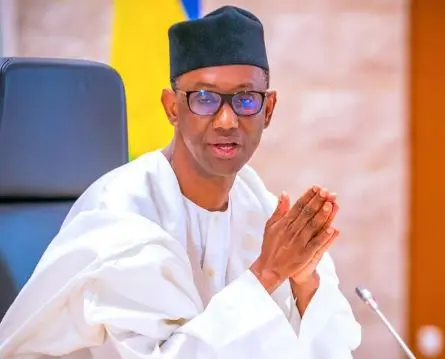
Meanwhile, National Security Adviser, Mallam Nuhu Ribadu, has assured Nigerians that the Federal Government would provide adequate security for voters, politicians, electoral officials and political parties before, during and after the 2027 general elections.
Ribadu gave the assurance while addressing participants at the election security conference in Abuja.
He said the administration of President Bola Tinubu was committed to ensuring that the elections were peaceful, transparent and credible.
“The duty of government and the security agencies is to protect voters, electoral officials and the wider population before, during and after the election. We will protect you. We will protect the voters. We will protect politicians. And even after the election, we will make sure there is no violence,” he said.
The NSA pledged that security agencies would remain impartial and operate within the provisions of the law.
“Security agencies will discharge their responsibilities impartially and in accordance with the law,” he added.
He also stressed the need to respect the constitutional independence of INEC, particularly with a professor of law serving as its chairman.
Ribadu identified misinformation on social media as another major challenge to election security, warning that misleading information could trigger violence and create unnecessary tension.
“Social media is a big problem. It creates false narratives and misinformation, causing problems among people. One individual, sitting somewhere in a village, could say something that triggers trouble,” he said.
He also cautioned politicians against resorting to desperate measures in their pursuit of political power.
“Sometimes they become desperate. There is almost nothing they may not do,” Ribadu stated.
Earlier, Inspector-General of Police Tunji Disu called for stronger collaboration, intelligence sharing and coordinated security operations among relevant agencies to prevent potential threats to the electoral process.
The conference was attended by Ribadu, Disu, Director-General of the State Security Service, Oluwatosin Ajayi, and other electoral and security officials.
INEC to prosecute electoral offenders
In a related development, Amupitan disclosed that INEC would initiate prosecution against identified electoral offenders upon receiving investigative case files from the relevant security agencies.
He made this known at the opening session of the 2026 Annual Conference of the National Association of Judiciary Correspondents (NAJUC) in Abuja.
In a goodwill message delivered by his Chief Press Secretary, Adedayo Oketola, the INEC chairman said the credibility of Nigeria’s democratic process depended on effective cooperation between electoral institutions and the judiciary.
He maintained that credible records from polling units, combined with timely and consistent judicial decisions, would strengthen public confidence in both elections and the courts.
Amupitan warned that public confidence in democracy could be weakened when citizens believe that electoral victories are determined in courtrooms rather than at polling units.
He also criticised the use of frivolous pre-election and post-election litigation to undermine the electoral process.
The INEC chairman further cautioned against the distortion of judicial pronouncements in public discussions, saying legal decisions stripped of their proper context could be manipulated to inflame political tensions.
He called for transparent elections, internal democracy within political parties, predictable judicial decisions and responsible reporting by members of the judiciary press corps.
Meanwhile, immediate past President of the Nigerian Bar Association, Afam Osigwe, SAN, expressed concern that wealthy political actors were increasingly dominating the country’s electoral process.
“The type of electoral process we have is making it difficult for honest persons to contest elections. Moneybags are hijacking the elections,” he said.
He further lamented that individuals who were unsuitable for leadership positions were increasingly fighting to occupy elective offices.
“Wrong persons who have no business seeking leadership positions are the ones fighting for elective offices, and it should not be that way,” Osigwe stated.
He also argued that courts should not be involved in deciding who represents political parties at elections.
The NBA President, Oyinkansola Badejo-Okusanya, SAN, represented by Dr Prince Azubuike, said electoral credibility depended not only on free, fair and transparent elections but also on the integrity of judicial processes through which electoral disputes were resolved.




















You must be logged in to post a comment Login