National Issues
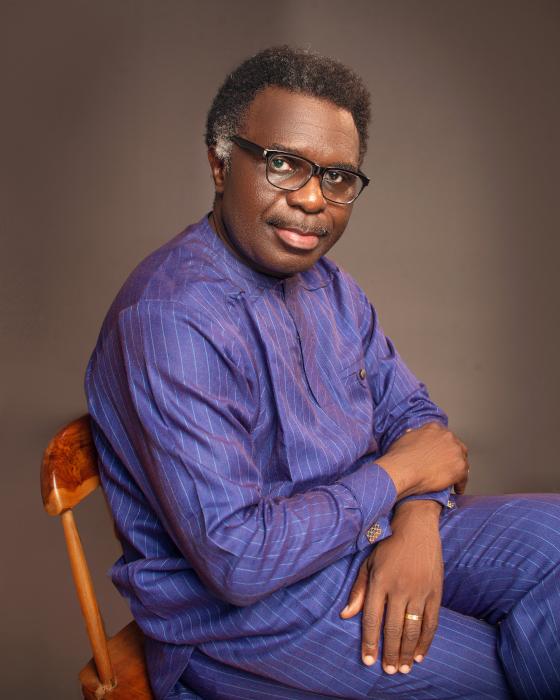
25 Years of Power Promises, 4,000MW of Reality -By Engr. Chris Ebia
But power systems do not respond to structure alone. They respond to coordination, discipline, and time. Within the brief period of that administration, before President Yar’Adua’s passing in 2010, the grid continued to show signs of instability, with an estimated 20 to 25 collapses recorded. Electricity supply remained modest, fluctuating within a narrow and unreliable range. The foundation for reform had been laid, but the system itself had not yet begun to function.


At about 2 a.m., somewhere in Lagos, a factory goes quiet.
The machines stop mid-process. There is no warning, no gradual decline, just sudden silence. Workers step outside, some stretching, others staring into the darkness with a kind of tired familiarity. The public power supply has dropped again. A generator coughs to life, struggles under load, runs briefly, and then goes off. Fuel is low. Production for the night is lost.
By morning, the losses will be calculated. By evening, the same cycle may repeat.
Across Nigeria, this is not an isolated incident. It is the daily rhythm of homes, hospitals, workshops, and industries. What should be an occasional disruption has become a permanent feature of life.
Yet this is not the full story of Nigeria. It is the story of Nigeria’s electricity sector within the Fourth Republic, beginning from 1999.
When Nigeria returned to democratic rule in 1999 under President Olusegun Obasanjo, expectations were high. After years of military rule, there was a general belief that democratic governance would bring not just political stability, but also infrastructure development. At the time, Nigeria had a population of roughly 120 million people. Installed electricity capacity stood at about 5,000 megawatts, but actual power delivered was often below 2,000MW. The system was weak, unreliable, and deeply inefficient.
The response of the Obasanjo administration was bold in financial terms. Billions of dollars were committed to the power sector, including the launch of the National Integrated Power Projects. Contracts were awarded, projects were initiated, and the ambition to transform the sector was clear. However, ambition did not translate into stability. By the time that administration ended in 2007, the national grid remained fragile, recording over 40 collapses within that period. For most Nigerians, electricity supply had not improved in any meaningful sense. The country had spent heavily, but the system had not fundamentally changed.
President Umaru Musa Yar’Adua came into office in 2007 and inherited a sector that required not just funding, but structure. His administration introduced one of the most important reforms in Nigeria’s power sector-the unbundling of the former NEPA into separate entities responsible for generation, transmission, and distribution. This was a necessary step, designed to introduce clarity, efficiency, and eventually private sector participation. It was, from a policy standpoint, the right direction.
But power systems do not respond to structure alone. They respond to coordination, discipline, and time. Within the brief period of that administration, before President Yar’Adua’s passing in 2010, the grid continued to show signs of instability, with an estimated 20 to 25 collapses recorded. Electricity supply remained modest, fluctuating within a narrow and unreliable range. The foundation for reform had been laid, but the system itself had not yet begun to function.
Under President Goodluck Jonathan, the reform process moved into a new phase-privatization. By this time, Nigeria’s population had risen to about 170 million people, increasing the pressure on an already strained system. Generation and distribution companies were transferred to private investors, with the expectation that efficiency, investment, and technical competence would follow. Government support remained significant, with over $8 billion committed to the sector, while installed capacity increased toward 10,000 to 12,000 megawatts.
On paper, these developments suggested progress. In practice, however, the grid remained unstable. Between 2010 and 2015, Nigeria recorded over 90 system collapses. Despite the increase in installed capacity, the amount of electricity actually delivered to Nigerians remained around 4,000MW. The structure of the sector had changed, but its performance had not. The fundamental weaknesses-gas supply constraints, transmission limitations, and a fragile market structure-persisted beneath the reforms.
When President Muhammadu Buhari assumed office in 2015, he inherited a privatized but struggling electricity market. By then, Nigeria’s population had exceeded 200 million people, further widening the gap between demand and supply. The administration introduced several interventions aimed at stabilizing the sector, including financial support schemes for generation companies and internationally backed recovery programmes. Investments in transmission were also continued.
Yet, the underlying issues proved resistant to intervention. Between 2015 and 2023, the national grid recorded over 80 collapses, reflecting a system that remained fundamentally unstable. Installed capacity hovered around 13,000MW, but actual supply continued to fluctuate between 3,500MW and 5,000MW. For the average Nigerian, the experience of electricity did not improve. More money entered the system, more programmes were introduced, but reliability remained elusive.
Now, under President Bola Ahmed Tinubu, the situation has become even more pronounced. Nigeria’s population is estimated at over 220 million people, while the electricity system continues to operate within the same narrow limits. The administration has acknowledged the scale of the problem, approving about ₦4 trillion in intervention bonds, though only a portion has been released so far. However, acknowledgement alone does not stabilize a grid.
In 2024 alone, the national grid collapsed 12 times. Gas supply to thermal power plants remains below half of what is required, largely due to accumulated debts within the sector. As a result, power plants cannot operate at full capacity, even when installed capacity exists. Average electricity delivery still hovers around 4,000MW.
At this point, the pattern is unmistakable.
Across five administrations in the Fourth Republic, Nigeria has increased installed capacity, introduced reforms, privatized assets, and injected vast sums of money into the power sector. Yet, the amount of electricity actually delivered to Nigerians has remained largely unchanged. For more than two decades, the country has operated within the same constrained range of 3,000MW to 5,000MW.
This is not a coincidence. It is a systems failure.
Electricity is not generated in isolation. It depends on a chain-gas supply, generation, transmission, distribution, and market liquidity. In Nigeria, each link in that chain is weak. Power plants exist, but gas supply is inconsistent. Transmission infrastructure is unable to reliably carry available load. Distribution companies struggle with revenue collection and losses. The market itself is weighed down by debt, with limited enforcement of performance standards.
In engineering terms, the components of the system are present, but they are not functioning together as a coherent whole.
Faced with this reality, Nigerians have adapted. Across the country, millions of generators now power homes and businesses. What was intended as backup has become primary supply. The country has, in effect, developed a parallel electricity system-privately funded, inefficient, and costly. Estimates suggest that the combined capacity of these generators far exceeds what the national grid currently delivers.
But this adaptation comes at a price. Businesses face high operating costs, industries struggle to remain competitive, and economic growth is constrained. No serious economy can rely on generators as a primary source of power. No country has industrialized under such conditions.
The way forward is not unknown. The challenges have been clearly identified over the years. Gas supply must be secured through credible and enforceable payment systems. Transmission infrastructure must be strengthened to carry higher loads without collapse. Electricity generation and distribution must be decentralized to reduce dependence on a single national grid. Distribution companies must be held accountable for performance, while metering and loss reduction must be aggressively pursued.
More importantly, there must be continuity in policy and execution. The power sector does not require another round of reforms. It requires discipline-consistent, sustained, and measurable action over time.
After more than two decades of the Fourth Republic, the question is no longer what Nigeria plans to do about electricity. The plans have been written, revised, and rewritten.
The real question is whether Nigeria is prepared to do what is necessary.
Until that answer changes, the grid will continue to fail, not because solutions do not exist, but because they are not fully implemented.
And for millions of Nigerians, darkness will remain not an accident, but a system.
Engr Chris Ebia
Electrical Engineering & MD, MyDream Engineering Solutions ltd
Enugu State, Nigeria
07067115709
engrebia@gmail.com