
Politics
Mind Capture and the Crisis of Political Priorities in Nigeria -By Leonard Karshima Shilgba
The people deserve more than political entertainment. They deserve vision, integrity, and results. Until this shift occurs, the cycle of manipulation and unmet expectations will persist, to the detriment of all.

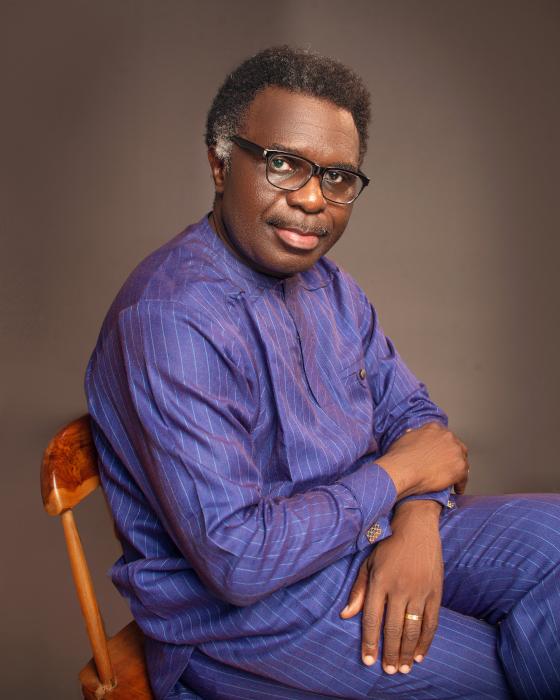
In contemporary Nigeria, an unsettling pattern continues to define political engagement among the elite: a preoccupation with control of party structures, often pursued with little regard for the lived realities of the people. The dominant conversation—who controls what, who leads which faction, who commands influence—has become increasingly detached from the urgent needs, griefs, and aspirations of ordinary citizens.
For the average Nigerian, and indeed for many in Benue State, life is not about political power. It is about survival and dignity. The expectations are modest and clear: affordable food, accessible healthcare, reasonably priced education, clean water, functional transport systems, and safety within communities. These are not extravagant demands; they are the bare essentials of a humane society.
Yet, there exists a stark divergence between these expectations and the priorities of the elite. For many within political, academic, and professional circles, politics has evolved into a contest of ego, influence, and access to wealth. In contrast, the masses seek stability and opportunity. This gap—wide and persistent—has become fertile ground for manipulation.
The strategy is familiar. A calculated display of sympathy, token gestures of generosity, and carefully branded handouts are deployed to simulate care and concern. These acts, often insignificant relative to the vast resources controlled by the elite, are amplified through rhetoric and spectacle. At the same time, incumbents are vilified, narratives are distorted, and confusion is deliberately sown.
Underlying this approach are troubling assumptions: that the people cannot discern truth from deception; that poverty has dulled their capacity for critical reasoning; and that collective memory is short. In essence, the electorate is perceived as gullible, easily swayed, and dependent on elite direction for decision-making.
This is the essence of what may be described as “mind capture.” It is the systematic conditioning of citizens to act against their own interests—sometimes even to the point of self-destructive choices. Political theatrics, including rallies, slogans, and symbolic gestures, serve as distractions, creating fleeting excitement while leaving fundamental problems unaddressed.
Tools of this manipulation are varied but predictable: selective generosity, seasonal displays of affection, and branded gifts that offer temporary relief without structural impact. Vehicles distributed to navigate broken roads, food items meant to be cooked without reliable energy sources, and equipment rendered impractical by economic realities all exemplify this cycle. The ritual repeats, and yet, for many, it appears normalized.
This raises a difficult but necessary question: are the people truly undiscerning, or have they been conditioned into this state over time? It would be simplistic and unjust to equate material poverty with intellectual incapacity. Rather, the issue points to a deeper systemic failure—one in which education, civic engagement, and institutional trust have been undermined.
There is, however, a potential inflection point. If the education system—across universities, colleges, and schools—can be reoriented toward critical thinking, civic responsibility, and independent judgment, a new generation may emerge. Such a generation could challenge entrenched patterns, enlightening even those who have long been caught in cycles of political manipulation. In doing so, they may help communities rediscover the power of informed choice.
At the same time, a looming danger must not be ignored. Across urban and rural landscapes, large numbers of idle young people remain vulnerable—economically disenfranchised and socially disconnected. These young men and women, often found in informal gathering spaces, are increasingly susceptible to recruitment for disruptive and even violent purposes. With minimal incentives, they can be mobilized to inflame tensions, both physically and digitally. This is not merely a political problem; it is a societal crisis. In neglecting them, we risk weaponizing our own future.
It is therefore imperative to shift the national conversation. The fixation on party leadership and internal power struggles must give way to substantive discourse. Questions of development, policy implementation, and economic sustainability should take precedence. How will jobs be created? How will internally generated revenue be expanded? What concrete steps will improve healthcare, education, and infrastructure? These are the questions that matter.
For the elite in Benue State and beyond, the responsibility is clear. Public communication must evolve—away from insults, vulgarity, and empty rhetoric, toward clarity, depth, and actionable ideas. Leadership should not be an exercise in performance, but a commitment to service.
The people deserve more than political entertainment. They deserve vision, integrity, and results. Until this shift occurs, the cycle of manipulation and unmet expectations will persist, to the detriment of all.
The task before us is not merely political; it is moral. It calls for a reawakening of conscience—among leaders and citizens alike. Only then can minds be freed, communities strengthened, and the promise of Nigeria meaningfully realized.


























You must be logged in to post a comment Login