Forgotten Dairies
Benue In Bayelsa? Sunset At Dawn -By Famous Obebi Famous
The killings in Benue State and elsewhere in North Eastern Nigeria, are no longer sporadic violence. They have become a tragic rhythm. Pulsating attacks. Mass burial. Government condemnation. Followed by palpable silence. Then another attack. And the vicious cycle resonates. Human rights organisations say the numbers are staggering. According to a report by Amnesty International, more than 2,600 people were killed in attacks on about 50 communities in Benue State between January 2023 and February 2024 alone.

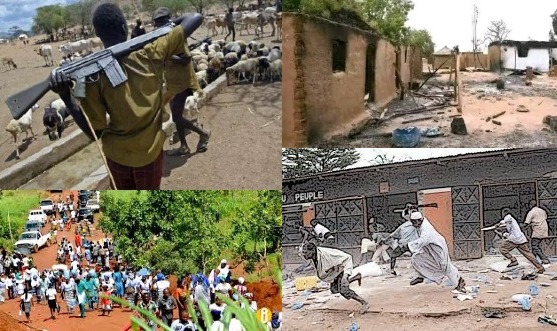
Dawn should bring light and hope. But sometimes dawn arrives with smoke, gloom and death. Even despair: a foreboding fear and silence. The silence of villages where no rooster crows anymore. The painful wails of mangled survivors. Across Nigeria’s Middle Belt, dawn has become a frightening metaphor. It is the hour when gunmen come. Benue knows this story. Too well. And now a troubling question drifts quietly in the eerie winds across the creeks and mangroves of the Niger Delta: Could Benue happen in Bayelsa?
In late 2025, U.S. President Donald Trump publicly warned the Nigerian government over what he described as widespread killings of Christians in the country. He threatened potential military action if the violence continued; a statement widely publicized but firmly rejected by the Nigerian government. The Nigerian government insists that insecurity affects all communities and that Nigeria remains committed to religious freedom.
But the Nation Bleeds
The killings in Benue State and elsewhere in North Eastern Nigeria, are no longer sporadic violence. They have become a tragic rhythm. Pulsating attacks. Mass burial. Government condemnation. Followed by palpable silence. Then another attack. And the vicious cycle resonates. Human rights organisations say the numbers are staggering. According to a report by Amnesty International, more than 2,600 people were killed in attacks on about 50 communities in Benue State between January 2023 and February 2024 alone.
Many of the victims were women. Children. The elderly. Entire farming communities were uprooted. Thousands fled their homes. At least 12,369 people were reportedly displaced during the same period, their farms abandoned, their villages deserted. The violence did not stop there.
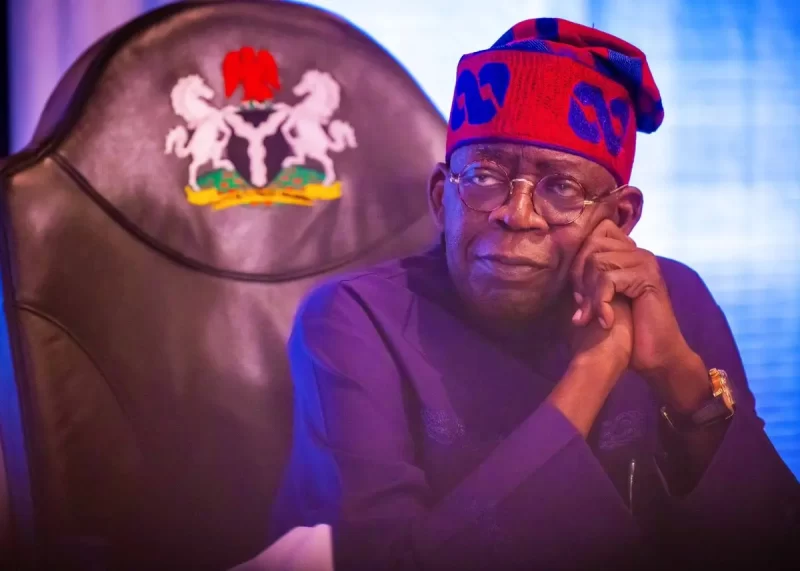
According to an Amnesty International Investigation released in May 2025, in the two years since President Bola Tinubu took office (from May 2023 to May 2025), armed attacks by gunmen and criminal groups across Nigeria had killed at least 10,217 people with Benue State accounting for the highest number of fatalities; 6,896 people.
These are not just statistics. They are erased families. Empty villages. Mass graves hidden beneath cassava fields. One particularly horrific attack occurred in Yelewata community on June 13th 2025 where gunmen reportedly killed around 100 to 200 people in a single night raid, burning homes and trapping families inside, according to a report by Associated Press.
But it is not only Benue that is suffering. The entire North Eastern States of Borno, Yobe have continued to groan under the yoke of armed insurgency and banditry.
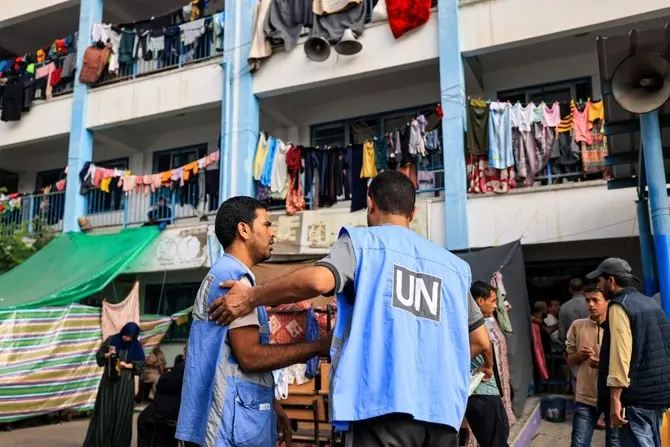
A United Nations Development Programme (UNDP)‑associated report (cited by Reuters) found that the conflict in north‑eastern Nigeria largely driven by Boko Haram and related Islamist insurgents, had killed nearly 350,000 people by the end of 2020
The Middle Belt and North Eastern states of Borno, Yobe, Adamawa, Gombe and Bauchi have thus become Nigeria’s bleeding heart.
Nigeria’s historical Paradox
Nigeria’s present conflicts cannot be separated from history. In 1804, the Islamic scholar Usman Dan Fodio launched the Fulani jihad that created the Sokoto Caliphate. Historians such as Murray Last and Mervyn Hiskett in their seminal works, The Sokoto Caliphate and The Sword of Truth: Life and Times of Shehu Usuman Dan Fodio have respectively documented how that jihad reshaped northern Nigeria politically, socially and religiously. The caliphate expanded rapidly. Islamic governance structures spread across the region. But now there are growing, troubling concerns amongst non-Muslims that there is a sublime and well articulated agenda to expand this dominance across the entire Nigeria.
These worries are not unfounded. Even today, traces of that legacy and worries remain in Nigeria’s constitutional structure. As well as in the nation’s economic effigy and financial insignia, the naira. The naira bears Arabic symbols but not a smidgeon of Christian symbols. Not to mention the rumoured Islamisation of Nigeria fuelled by the actions of former Head of State, President Ibrahim Babangida who was reported to have unilaterally enlisted Nigeria as a member of the Organisation of Islamic Countries in 1986. Yet, ironically, it is often touted and bandied about that Nigeria is a secular state.
The 1999 Constitution of the Federal Republic of Nigeria provides for Sharia Courts of Appeal in several northern states. No equivalent Christian ecclesiastical courts are recognised in the same way. To some scholars, this reflects historical continuity. To others, it illustrates structural imbalance. Either way, history continues to cast a long shadow over Nigeria’s politics.
The Ominous Migration South
For decades, internal migration has shaped Nigeria. Economic hardship in the north. Desertification pushing pastoral communities southward. Young men searching for survival. The result is a steady flow of migrants into southern cities. Across Nigeria’s southern states these northern migrants popularly called Abokis or Hausa/Fulanis can be found as: cattle herders, commercial tricycle riders, shoe repairers, scrap metal collectors, water vendors and petty traders. This movement is legal. Those who know better say there is difference between Hausa and Fulanis. But the ordinary man in the streets and creeks of southern Nigeria draws no such line. They are both grouped as Abokis. The Nigerian Constitution guarantees freedom of movement and residence anywhere in the federation. But migration also carries social tension. Where unemployment is high and policing weak, suspicion grows quickly. Fear travels faster than facts.
The Bayelsa Paradigm
Bayelsa State is small. Just about 11,000 square kilometres of riverine terrain. Its population is slightly above two million people. The state is overwhelmingly Ijaw. And Ijaw culture celebrates hospitality. The stranger is welcome. Often embraced. And even protected. But hospitality has limits. Across Yenagoa, Nembe, Ogbia, Brass, Sagbama, Kolokuma-Opokuma, Southern Ijaw and Ekeremor, residents increasingly whisper about a growing presence of northern migrants. Young men. Mostly unemployed. Often working as tricycle riders or artisans. Most are harmless. But a few incidents have deepened suspicion.
The Saptex Road Killing
One such incident occurred in Yenagoa on April 19, 2023. At Saptex Junction in Yenizue-Epie, a commercial tricycle rider who hailed from the North reportedly stabbed a passenger during an argument over a small fare of N50/N100. The victim, identified as 30-year-old Douglas Joseph, father of three, an indigene of the community, later died from the wound. An angry mob retaliated. The rider was lynched on the spot. Police later deployed anti-riot officers to restore calm. The incident was small.
But its psychological impact was large.
Farmer stabbed and Beheaded
Earlier, on March 14, 2023, according to reports by Punch Newspaper, a 49‑year‑old farmer, Alexander Diri, from Yambiri Community in Zarama, Yenagoa Local Government Area, was stabbed and beheaded by suspected herdsmen after they grazed cattle on farmlands.
Deputy village chief shot dead by suspected herders
Unfortunately, on the same day, it was reported by Daily Trust that Chief Bob Wilson, deputy village chief of Okordia Akumoni community in Yenagoa was shot dead by people suspected to be herders during an invasion of the fishing settlement at Lake Sam.
Body of 23‑year‑old Recovered After Herdsmen Attack Akumoni
In the same vein, according to a report by Daily Post, the decomposed body of Victor Anozie Alex, a 23 years old young man, was found on March 22 after suspected herdsmen attacked Okumoni community in preceding days; he was apparently killed during that attack.
Woman Raped and Killed in Opume, Ogbia
In March 2022, reports by The Guardian disclosed that a 39‑year‑old woman, Waadu Alfred from Opume Community in Ogbia Local Government Area was tied, allegedly raped, and killed (with machete wounds) by suspected herdsmen. Her decomposing body was found after she went missing.
The Otuoke Incident
Another disturbing episode reportedly occurred in Otuoke, Ogbia Local Government Area in early 2026. Otuoke community hosts the Federal University established by former President Goodluck Jonathan. According to posts circulating on social media community pages, an incident reportedly occurred in Otuoke, Ogbia LGA, where a commercial tricycle rider of northern extraction allegedly engaged some local youths in a fracas. The posts claim that community leaders temporarily suspended tricycle operations in the area to prevent escalation and to maintain peace. Details remain unverified by conventional media. But the incident once again stirred anxiety within the community and amongst Bayelsans generally. Social media is abuzz with Bayelsans expressing worry that the northern youths are becoming more and more emboldened.
The Nembe Confrontation
Shortly after the Otuoke incident, social media reports have it that another equally distressing incident took place in Nembe. According to social media chatter, some online community members mentioned confrontation in Nembe, Bayelsa State, between northern youths and local residents. However, no verifiable details or independent conventional news reports confirming this specific incident are available. But there is a pattern being formed here. The trend is expanding. The litany of woes.
Fragile Peace
All said and done, Bayelsa has not yet experienced the kind of widespread violence seen in Benue. But the state’s security environment is fragile. Mass unemployment. Intermittent cult clashes. Youth violence. These problems already exist. Bayelsa State is the centrepiece of Ijaw Nation, and the cynosure of the Niger Delta Struggle for Resource control. It is the home state of late Major Isaac Adaka Boro, the first Nigerian to formally declare a breakaway (Niger Delta) Republic. It is historically strategic. It has had its fair share of military brutality a la the Odi Massacre and the Kaiama decimation. Yet, adding ethnic tension to that mix could be dangerous. A capture of Bayelsa State is a capitulation of the Ijaw nation. History shows that conflicts rarely begin with large massacres. They begin with small incidents. Arguments. Retaliations. Rumours. Then suddenly violence escalates.
The Benue Parallel
Benue did not expect its tragedy. No community ever does. The early warning signs were small. But often ignored. Sporadic farmer herder clashes here and there. Women being raped in their farms. Occasional skirmishes between youths and itinerant northern artisans. Young men being mauled down in their farms. But often ignored and brushed aside just like it is happening across virtually all the eight local governments of Bayelsa State. Isolated killings. Unresolved grievances. Then suddenly armed groups appear. Villages burn. Mass graves multiply.
Consider it just for a fleeting second. If the Benue pogrom were ever to erupt in Bayelsa’s much smaller territory, the consequences could be catastrophic. It is better imagined than described. Benue’s landmass is about 34,000 square kilometres. Bayelsa is barely one-third of that. About 90 per cent of Bayelsa’s population reside in the rural areas. A crisis of similar scale would overwhelm the state.
Much ado about the Double Standard Debate
Nigeria’s Constitution guarantees freedom of religion. Mosques operate freely in southern cities. Churches exist in northern Nigeria as well. But human rights groups have repeatedly documented attacks on churches and Christian communities in parts of northern Nigeria. Critics therefore argue that religious freedom must be reciprocal. Balanced. Fair. Justice, after all, demands equilibrium. The scales must not tilt permanently in one direction.
Time for Leadership to act swiftly. Bayelsa still has time. Time to learn from Benue. Time to act before tensions grow. The responsibility lies with: the Bayelsa State Government under Governor Douye Diri and successive governors. Traditional rulers, the Ijaw National Congress, the Ijaw Youth Council, community leaders and, indeed, the people themselves. Security begins with vigilance.
What Must Be Done
The Ugandan poet Okot p’Bitek captured the tragedy of negligent leadership in his collection, Song of Lawino and Song of Ocol. He mocked leaders who were busy eating each other’s livers out while their people suffered. The metaphor is fittingly brutal. But painfully accurate. History offers another. When Rome burned, Emperor Nero played music. Whether myth or truth, the lesson remains. Leaders distracted. Crisis ignored. Fire spreading. Politicians are busy strategizing. Aligning for 2027
Governor Douye Diri has already taken a very bold step. In February 2026, the governor approved the demolition of a settlement popularly known as “Aboki Quarters” or Arizona at Yenezue-Gene in Yenagoa. A place said to be notorious for illicit drug trade. The demolition was carried out by security agencies during the weekend of 22–23 February 2026. Many Bayelsans hailed the move called on the governor to extend it to other flashpoints such as Arietalin. Few days before, on 18 February 2026, it was reported that the Bayelsa NDLEA arrested 600 suspects and seized 621.556 kg of illicit drugs in operations spanning January to December 2025 in Bayelsa State, with Yenagoa recording the highest number of arrests Yet much remains to be done.
Several measures could help prevent future conflict: As a first throw of the dice, the governor must take steps to halt the massive exodus of youths from the north into Yenagoa. And then, he must strengthen community policing and intelligence networks. Three, is to implement proper population registration systems that must capture names and occupation and other details of non indigenes resident in the state. Most important of all isto create employment opportunities for youths. Equally imperative would be to improve collaboration between federal and state security agencies and promote dialogue between migrant and host communities. Early intervention is always cheaper than post-conflict reconstruction.
The Final Warning
Benue was not supposed to happen. Yet it did. Why? Because leadership failed to take up the gauntlet. History teaches a brutal lesson. Violence rarely announces itself. It whispers first. Then suddenly it roars. Bayelsa must listen carefully to those eerie whispers. Because, if things go south, and the fires finally start, dawn may already have turned into sunset.