Opinion
Can’t Cameroonians Tell Paul Biya That He’s Too Old to Run?, by Isaac Asabor

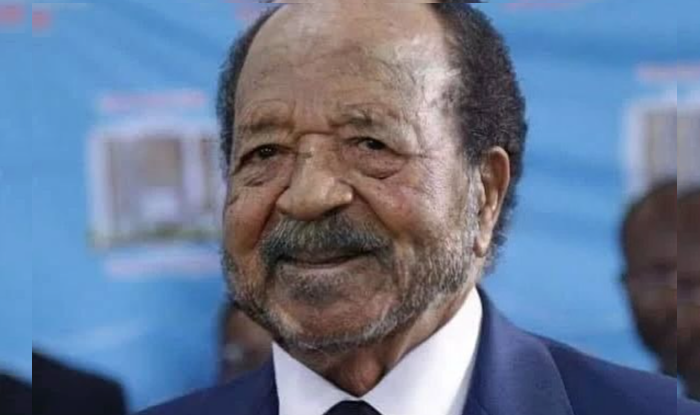
As the 2025 presidential election in Cameroon looms, one question that seems to be on the minds of many is: Why is Paul Biya, at 91(or 93) years old, still holding on to power? After over 40 years at the helm of Cameroon’s leadership, one would think that the time for a dignified retirement had long passed. However, Biya’s continued presence on the political stage raises concerns about the state of democracy in Cameroon and the apparent reluctance of the Cameroonian populace to challenge a leader whose reign has spanned generations.
Without a doubt, Paul Biya, who took office in 1982, has become one of Africa’s longest-serving leaders, a tenure that has outlasted numerous world leaders and seen the country through significant changes. Yet, despite this long tenure, the question remains: What has Biya’s leadership truly achieved for Cameroon? Under his watch, Cameroon has seen both periods of economic growth and stagnation, peace and conflict, particularly with the ongoing Anglophone crisis that has plagued the country for years.
Many Cameroonians have grown weary of the same old rhetoric that accompanies Biya’s campaigns and addresses. The promises of economic prosperity, stability, and development have become hollow to a populace that still grapples with poverty, corruption, and a lack of basic infrastructure. Biya’s continued grip on power seems more a testament to his political cunning and the lack of viable opposition than to any resounding success or popular support.
In his 90s, Paul Biya is not just an old man; he is a leader whose age raises serious concerns about his ability to govern effectively. This is as age brings with it inevitable physical and cognitive decline, which can impair judgment, decision-making, and overall leadership ability. Biya’s advanced age has sparked numerous speculations about his health, particularly as he has spent considerable time receiving medical care abroad.
In a country with a median age of just over 18 years, the stark contrast between the youthful population and their aging leader could not be more pronounced. Young Cameroonians, who represent the future of the nation, are increasingly disconnected from a leader whose experiences and outlook are far removed from the challenges they face today. The question then arises: Why has there not been a stronger push from the Cameroonian people, especially the youth, for Biya to step aside and allow for fresh leadership?
In fact, the reluctance to challenge Biya’s rule may stem from several factors, including fear of repression, political apathy, and a lack of viable alternatives. Biya’s government has not shied away from using force to quell dissent, and this has undoubtedly contributed to a culture of silence and submission among the populace. Additionally, decades of authoritarian rule have left a political landscape where opposition parties are weak, fragmented, and often co-opted by the ruling party.
However, the onus is on the Cameroonian people to demand change as a leader’s legitimacy comes from the consent of the governed, and it is within the power of the people to withdraw that consent if they believe their leader no longer serves their interests. The youth, in particular, must recognize the importance of their voice and their role in shaping the future of their country.
Cameroon, like any other nation, needs leadership that is attuned to the needs and aspirations of its people. It requires leaders who are not only physically capable but also mentally agile and open to new ideas. A nation led by a leader in their 90s, particularly one who has been in power for over four decades, is unlikely to embrace the innovation and change needed to address contemporary challenges.
Cameroon is at a crossroads. The country can either continue on its current path, with an aging leader at the helm, or it can choose a new direction, one that reflects the hopes and dreams of its youthful population. The choice ultimately lies with the Cameroonian people, but one thing is clear: It is time for a change.
As the 2025 election approaches, Cameroonians must ask themselves if they are content with the status quo or if they are ready to demand the leadership they deserve. After 40 years, it is not just Paul Biya’s age that is in question; it is the future of Cameroon itself.
At this juncture, it would have been logical to urge the leadership of ECOWAS to intervene by calling to order, particularly as he unarguably has a tight grip on power. Unfortunately, Cameroon is not a member of ECOWAS as it identifies itself as central African.
The reason why African leaders need to intervene on behalf of the people of Cameroon over Biya’s hold on to power cannot be farfetched as his refusal to relinquish power after over four decades in office has set a dangerous precedent, especially at a time when democratic transitions are vital for the stability and development of the continent. In fact, his autocratic approach threatens to embolden other leaders in the region who may see extended rule as a viable path, thereby undermining democratic institutions and eroding the progress that has been made toward good governance in West Africa.
Despite the foregoing view, the distinction between Cameroon and West Africa, in terms of regional affiliation, does little to mitigate the broader implications of Biya’s “Tightism”. Even though Cameroon is part of the Central African region, the effects of his “Tightism” extend beyond geographical boundaries, affecting the political dynamics in West Africa as well. This underscores the interconnectedness of African politics, where the actions of one leader can have ripple effects across the continent. As ECOWAS continues its efforts to promote democracy and stability in West Africa, the specter of leaders like Biya looms large, reminding us of the persistent challenges to democratic governance on the continent.