
Education
Culture of Silence in Nigerian Campuses Leaves Female Students Vulnerable to Sexual Harassment -By Suleiman Jumain Shuaibat
Until universities begin to treat complaints seriously, until reporting systems genuinely protect victims, and until society stops blaming students instead of those abusing power, silence will continue to shield the problem rather than solve it.

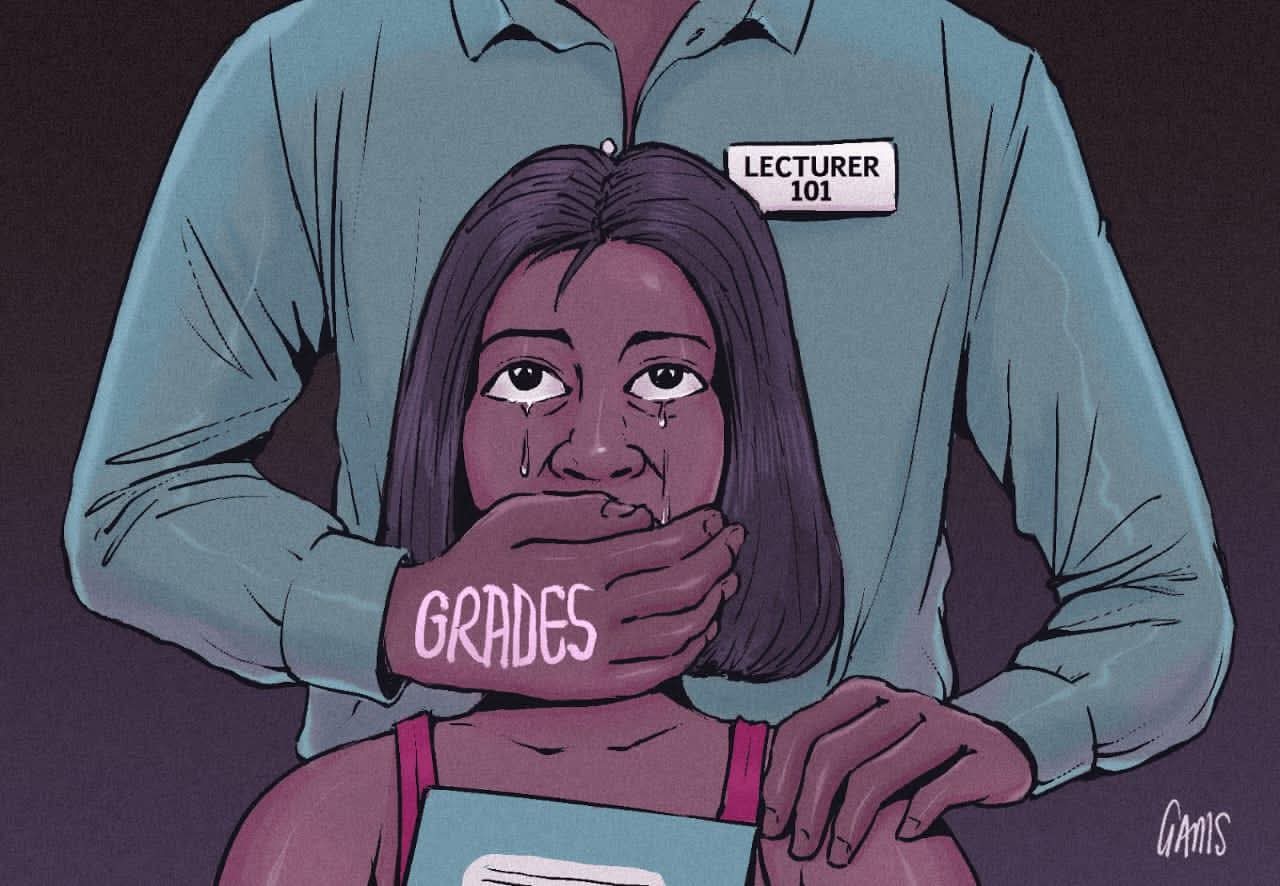
In many Nigerian universities, sexual harassment involving female students and male lecturers is no longer a hidden rumour whispered behind hostel walls. It has become a reality many people acknowledge exists, yet few are willing to confront openly.
Across campuses, the stories often follow similar patterns — a lecturer insisting on unnecessary private meetings, a student subtly made to believe her grades depend on cooperation, or a young woman who suddenly begins avoiding a course because the classroom no longer feels safe.
Yet despite how common these experiences have become, silence remains the dominant response.
The truth is simple: within lecturer-student relationships, power is rarely balanced. Lecturers control grades, assessments, recommendations, and in some cases, a student’s academic future. That imbalance alone makes speaking out difficult because many students already understand what they stand to lose.
For many victims, reporting harassment does not only mean confronting the offender; it also means risking failed courses, delayed graduation, victimisation within departments, or being labelled troublesome by peers and authorities alike.
As a result, many students remain silent — not because they do not recognise the abuse, but because speaking up can feel like risking everything they have worked for.
Studies across Nigerian universities continue to show how widespread the issue has become. A report published by University World News in November 2024 revealed that nearly 63 percent of female students in tertiary institutions have experienced sexual harassment from lecturers or fellow students.
Despite the prevalence of the problem, there is still no comprehensive legal framework fully addressing it. The Sexual Harassment in Tertiary Educational Institutions Prohibition Bill, passed by the Nigerian Senate in 2019, recommends up to 14 years imprisonment for offenders, but it is yet to become law.
Former President Muhammadu Buhari left office in 2023 without signing the bill, and it remains pending under the administration of President Bola Ahmed Tinubu. Meanwhile, students across the country continue to face the same realities on campuses.
Civil Society Organisations (CSOs) have repeatedly warned that the continued delay strengthens a culture where offenders believe they may never face serious consequences.
Consequently, many students no longer trust the system enough to report cases.
One of the incidents that pushed the issue into national discourse was the case of Monica Osagie at Obafemi Awolowo University. She accused a lecturer of demanding sexual favours in exchange for grades, while a recorded phone conversation later surfaced online, sparking nationwide outrage.
The lecturer was eventually disciplined.
However, the case revealed something deeper — how far some students are pushed before they feel safe enough to speak, and how much evidence victims are often expected to provide before they are believed.
Yet not every victim has proof.
That is why many stories never leave hostel rooms.
Even when anonymity is promised, many students still hesitate to report abuse. Within close academic environments, identities can often be guessed through details such as department, timing, or circumstance.
So they remain silent.
And that silence continues to protect the problem.
Another major concern is how institutions sometimes respond after complaints are reported. In many situations, protecting the image of the institution appears more important than confronting the abuse itself.
Complaints may be delayed, quietly settled, or ignored entirely. In some cases, the influence of senior staff affects how far investigations go.
Students notice these patterns.
And once they do, reporting begins to feel pointless.
The message becomes painfully clear: nothing will change.
The Minister of Women Affairs, Imaan Suleiman Ibrahim, acknowledged in 2024 that sexual harassment leaves deep emotional and psychological scars on survivors.
Although support systems have gradually expanded, many survivors still struggle to access adequate help. While there were previously 47 Sexual Assault Referral Centres (SARCs) across 22 states and the Federal Capital Territory (FCT), the number has increased to about 50 centres across 24 states and the FCT, offering free medical, counselling, and legal support to survivors of sexual violence.
Beyond institutions, society itself also contributes to sustaining the silence around sexual harassment.
Whenever cases become public, attention often shifts from the abuse of power to the victim herself. Questions about what she wore, why she visited an office, or whether she encouraged the situation still emerge in public conversations.
And once blame shifts to the victim, the real issue becomes buried.
That alone is enough to discourage many students from speaking out at all.
Some people still dismiss sexual harassment as exaggeration or assume students invite it. But the consistency of reports across different universities suggests otherwise.
It is not a series of isolated incidents.
It is a pattern.
And it has been ignored for far too long.
The sad reality is that sexual harassment within lecturer-student relationships has become so normalised that many people now discuss it as though it is simply part of university life.
But it is not normal.
And it should never be accepted as normal.
Behind the statistics are real students who continue attending lectures, submitting assignments, and sitting in classrooms while carrying fears they rarely speak about.
Until universities begin to treat complaints seriously, until reporting systems genuinely protect victims, and until society stops blaming students instead of those abusing power, silence will continue to shield the problem rather than solve it.
And within that silence, more students will continue paying a price that is rarely reported.


























You must be logged in to post a comment Login