
Education
DELSU Students Appeal For Improved Power Supply At Site 1 And Site 2 Night Reading Hall
The students further appealed for urgent intervention on the dark and unsafe route leading to the Site 2 reading hall. They requested that the administration install streetlights along the path or deploy solar-powered lights to ensure the safety of students who leave the hall late at night.

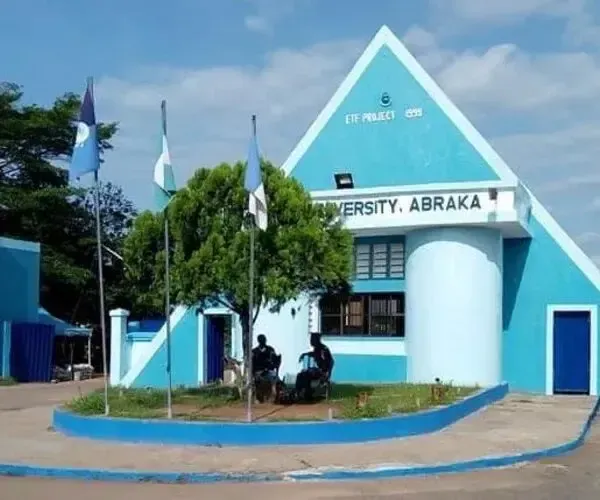
ABRAKA– Students of Delta State University, Abraka, who engage in night reading popularly known as “AWOKO” at Site 1 and Site 2 reading halls have called on the university administration to address persistent challenges of inadequate power supply, poor facilities, and an unlit access route to Site 2 reading hall.
The students, in interviews conducted on June 18, 2026, described night reading as essential to their academic performance due to the quiet and distraction-free environment it offers. However, they noted that frequent power outages and inadequate infrastructure continue to undermine their efforts.
Ovie Blessing, a 300 Level Pharmacology student who reads at Site 1, stated that night reading enhances concentration and comprehension, but the lack of electricity often forces students to rely on torchlights, which affects their eyes.
“During the day, there is always noise, people playing music, people shouting, and lectures running late. But at night, Site 1 is calm. You can actually sit and understand what you are reading. Since I started coming here, my retention has improved and my CGPA is moving up. I was initially using Site 2, but sometimes the distractions are high because many students go there. My major challenge at Site 1 is the lack of power supply in the classroom we normally use for reading. We now rely mostly on torchlights or phones, which can affect our eyes if necessary measures are not taken,” she said.
Emmanuel K., a 400 Level Computer Science student who also reads at Site 1, noted that while night reading promotes focus, the poor power supply makes it difficult for students to use laptops and other academic materials.
“If I stay in my hostel, I will end up scrolling or chatting. But when I come to Site 1 at night, the environment forces me to focus. There are other serious students around, and that peer pressure is good. It pushes you to open your laptop and work. However, the inadequate power supply discourages most students from reading until the next morning,” he said.
Akwevagbe Sheikh Godwin, a 200 Level Mass Communication student, emphasized that night reading at Site 2 has contributed significantly to his academic improvement, but recurring power failure at midnight wastes valuable study time.
“Night reading at Site 2 has changed how I study. The calm environment reduces my anxiety before exams. But when the light goes off at midnight, the sudden darkness is discouraging. It breaks our focus, and some students even develop eye strain from using phone lights. We are appealing for solar power or stable electricity so our mental and physical health will not suffer while we chase good grades,” he said.
Ochuko Precious., a 300 Level Science Laboratory Technology student who reads at Site 2, said the power situation directly affects science students who rely on diagrams, charts, and detailed notes.
“As an SLT student, we deal with a lot of diagrams and practical notes that need good light. When the power cuts at midnight, we can’t see properly and it slows us down. Some of us end up skipping complex topics because we can’t read them with phone torch. If Site 2 had solar or stable light, our performance in courses like Biochemistry and Microbiology would improve,” she said.
The students further appealed for urgent intervention on the dark and unsafe route leading to the Site 2 reading hall. They requested that the administration install streetlights along the path or deploy solar-powered lights to ensure the safety of students who leave the hall late at night.
Speaking collectively, the students appealed to the DELSU administration and the Dean of Student Affairs to prioritize stable electricity supply, facility upgrades at both Site 1 and Site 2 reading halls, and adequate lighting on the access route to Site 2.
“We are committed to academic excellence and are willing to sacrifice our sleep to read at night. Our only request is for an enabling environment. We urge the management to do justice to this matter by ensuring that light and basic facilities are provided consistently, and that the road to Site 2 is made safe for all AWOKO students,” they said.
Night reading has become an established academic practice among Delta State University students pursuing academic excellence, with Site 1 and Site 2 serving as the primary centres. With examinations approaching, students say improved power supply and adequate lighting along access routes are critical to sustaining their study efforts and ensuring their safety during late-night reading sessions.
AYOOLA ELIKANNAH ADEMOLA
ANTHONY ANN HOPE



























You must be logged in to post a comment Login