Global Issues
Despite Challenges and Roadblocks, Oxfam Delivers Diverse Assistance in Africa -By Kestér Kenn Klomegâh
Women and youth are central to Oxfam’s priorities. Across our programmes and advocacy work, Oxfam consistently promotes the inclusion and participation of women and young people, recognising that they are both disproportionately affected by inequality and essential agents of change. For example, in our advocacy frameworks, we explicitly prioritise supporting women’s rights, strengthening civic space, and ensuring the meaningful participation of youth and women in decision-making processes. More broadly, Oxfam’s work is grounded in a feminist approach to social change and a commitment to gender justice, which informs how we design programmes, build partnerships, and influence policies.


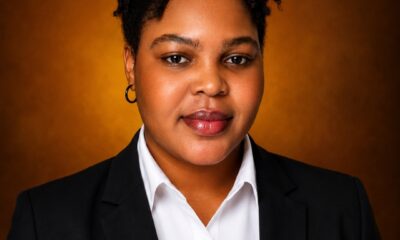
In this conversation, Assalama Dawalak Sidi, Deputy Director of Oxfam-Africa, offers an insight into diverse aspects of Oxfam’s performance, and highlights challenges facing its operations across Africa. Oxfam is non-state global organization working in more than 70 countries to fight inequality, end poverty, and deliver lifesaving humanitarian assistance during crises. It also advocates for systemic cganges in economic justice, climate action, and gender equality. Here are the interview excerpts:
Would you mind giving an assessment of Oxfam’s performance over the past few years in Francophone African countries?
Assalama Dawalak Sidi: Oxfam works along with partners and communities to reduce inequality in Africa because the inequality gap is staggering. A small African elite is hoarding fortunes while hundreds of millions are denied basic public services and face hunger. Today, Africa’s four richest billionaires hold more wealth ($ 57.4 billion) than half the continent (750 million people). So we do interventions ranging from life-saving assistance to helping people rebuild their livelihood, and we hold duty bearers to account and advocate for fairer policies that will enable the redistribution of wealth.
We provide humanitarian assistance to communities affected by natural disasters and conflicts with food, clean water, latrines and we help them rebuild their livelihood. We work directly with farmers to increase production and strengthen their resilience to climate shocks. We advocate for climate and economic justice that places the needs and rights of communities at the heart of our priorities. We work with various stakeholders to improve access to basic social services and strengthen social cohesion through peacebuilding projects. We work to combat abuse and violence against women and advocate for a redistribution of wealth between multinational corporations and countries so that communities can receive their fair share of the benefits from extractive industries.
What have been the challenges and roadblocks in those countries? And the situation in the Africa’s Sahel region
ADS: In the Sahel, Oxfam has put in place a series of adaptation strategies to continue its operations in spite of the numerous challenges, ranging from reduced access to areas in need to new compliance requirements.
So we had to recalibrate our humanitarian, development, and peace-building strategies to operate effectively in increasingly complex environments. We strengthened our community engagement and local ties in order to ensure that our support is flexible and adapted to the context. With transparent communication and systematic dialogue, Oxfam has been able to build trust, credibility and sustain operations.
Is Oxfam also conduct activities in Anglophone countries? Tell us, a bit, about the techniques and strategies in Africa?
ADS: Oxfam operates in 19 countries in sub-Saharan Africa, spread across West Africa, East Africa, Central Africa, and Southern Africa.
We work together with numerous regional and local partners to end the injustice of poverty in Africa. We have field activities that directly change the lives of people we work with, and we do advocacy to change the systems that perpetuate inequality. We advocate for just and fairer economies with accountable governance. We advocate for gender justice and for the rights of women and girls in all their diversity. We fight for climate justice and create safe spaces that allow people to hold the powerful into account. In the event of disaster, we’re there to save lives, protect communities and help them rebuild their future.
This is why, in the context of the Africa Forward Summit, Oxfam chose to focus on pushing governments and international institutions to increase fair financing, address debt distress, protect public services, and ensure that economic policies serve people’s rights rather than creditors’ profits.
Given the current shift provided by the Africa Foward Summit in Nairobi, do you think this trend offers the impetus (conditions) and will drive Oxfam to turn a new page across Africa?
ADS: Summits such as Africa Forward could have created opportunities to rethink partnerships and renew discussions around development and cooperation. But Oxfam’s concern is that the French statement about revitalizing the partnership must be backed by financial commitments that are fair, coherent and rooted in justice. A “new page” cannot be based on speeches alone: it requires increased development financing, fairer debt rules, stronger humanitarian funding, and recognition of the historical imbalances that continue to shape relations between France and African countries.
Private investment alone cannot answer Africa’s development and humanitarian challenges. Investment can play a role, but it must not replace public social services or fair debt solutions. The humanitarian and climate challenges of tomorrow will not be addressed by private investment alone.
What is the technical focus directed at increasing production?
ADS: We shift the focus from food security to food sovereignty by challenging multinationals that have captured food systems for their own profit. We advocate food systems that benefit the people of Africa. We work hand-in-hand with local communities to use their traditional knowledge to adopt agricultural techniques that will make them more resilient to climate change. We demand that climate finance is sufficient and directed towards initiatives that prioritize the adaptation needs of vulnerable communities and facilitate a transition to renewable energy sources.
We demand equitable sharing of the revenues and benefits derived from natural resources. We also empower local communities and indigenous people to defend their land, water and environment, and demand fair compensations for their exploitation.
From Oxfam’s perspective, the priority is not simply to increase production in a narrow economic sense, but to ensure that financing supports people’s needs and rights. That means investing in essential services, resilience, food sovereignty, local economies and fair development pathways, rather than allowing debt repayments and creditors’ profits to take priority over health, education or social protection of the citizens.
Are the youth and women part of Oxfam’s priorities? How do you plan to intensify Oxfam in the continent, after French President Macron creating the investment environment?
ADS: Women and youth are central to Oxfam’s priorities. Across our programmes and advocacy work, Oxfam consistently promotes the inclusion and participation of women and young people, recognising that they are both disproportionately affected by inequality and essential agents of change. For example, in our advocacy frameworks, we explicitly prioritise supporting women’s rights, strengthening civic space, and ensuring the meaningful participation of youth and women in decision-making processes. More broadly, Oxfam’s work is grounded in a feminist approach to social change and a commitment to gender justice, which informs how we design programmes, build partnerships, and influence policies.