Africa
Do Nigerians Really Deserve The Leadership They Get? -By Pius Mordi
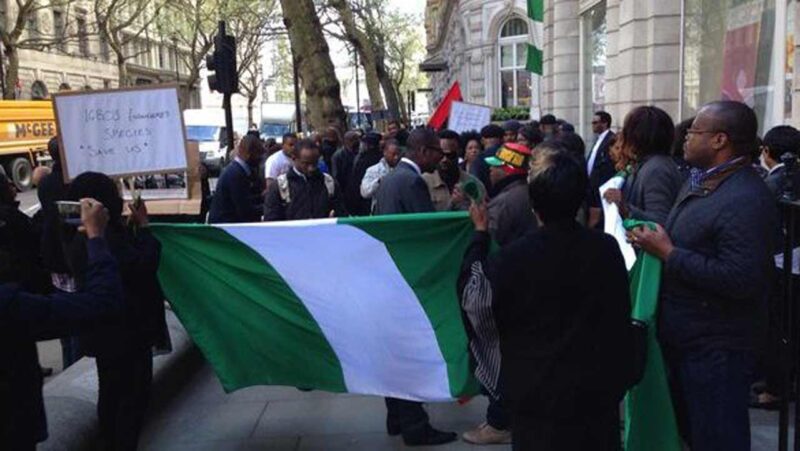
Nigerians are presently involved in a civil rights struggle of a different dimension. It is a struggle to have the right environment to freely choose their leaders. The present corps of lawmakers have become the major impediment to the expression of that right. A lot of injustice have been visited on Nigerians and, somehow, they have condoned every one of them. But if, as Malcolm X, they have their Road to Damascus experience along the line, it may be a different ball game.

‘A people don’t lose freedom overnight. They lose it by accepting injustice one day at a time – Malcolm X’
Although the American media portrayed him as an advocate of violent resistance in the civil rights struggle, he only differed with Martin Luther King Jr in rejecting the pacifist approach of turning the other cheek. To X, every black American should braze up for self defense even if it turns violent unlike King Jr. Ultimately, both of them met violent deaths at the hand of assassins believed to be sponsored by the American state.
In Nigeria, in the midst of growing corruption and misgovernance, the argument by some people is that a society gets the leadership it deserves. The thrust is that if the country keeps getting a cycle of leaders steeped in the betrayal of national interest and common good for their selfishness, then they deserve what they get from such leaders.
In democratic societies, leaders guage what matters to the people, sometimes leveraging on opinion polls to tailor their policies. That much is the case with Donald Trump, US president, who despite his far right inclinations still monitors public opinion polls. After the public outcry over the violence associated with the enforcement style of operatives of the Immigration and Customs Enforcement (I.C.E.), he had to tone down the rhetoric.
The tenuous manner of the conduct of the review of the Electoral Act by the National Assembly cast doubt on the truism of the oft quoted claim that a society deserves the leaders it gets. During the EndSARS protests, the younger generation did not disguise their displeasure with the state of affairs in the country. That set the stage for the general elections of 2023 when driven by the promise that votes would count, there was a wave of optimism that the leadership they desire will emerge.
Prior to the latest review of the Act, previous efforts made under late Muhammadu Buhari were clandestinely frustrated, leaving the National Assembly under Bukola Saraki with no choice than to make do with the then existing version that was latched on by the Supreme Court to endorse the contentious handling of the results of the presidential election. That botched exercise was barely tolerated based on the general desire to ease Buhari’s disastrous years out.
Even though Godswill Obot Akpabio’s Senate successfully orchestrated the scuttling of the desire for a key demand – the real time transmission of results – it cannot be blamed on the absence of strenuous struggles by the legion of groups that sought the incorporation of that requirement into the Electoral Act. Members of the House of Representatives saw the wisdom in the agitation and duly included real time transmission of results in their own version of the review. That did not jell with Akpabio who at the same breath became the chief advocate for the Independent National Electoral Commission (INEC) as well as the technology experts that determined the extent of internet coverage in the country. His game plan was opposed by many civil society groups, opposition parties and every other group of good conscience.
Will Nigerians be eventually be blamed for the emergence of the leadership or candidate that will be declared the winner of the 2027 election? Already, the conduct and outcome of the council election in the Federal Capital Territory have become a flawless template of what will come in 2027.
Unlike Martin Luther King Jr, Malcolm X advocated for “self-defense” and achieving freedom “by any means necessary” throughout his time with the Nation of Islam (NOI). His rejection of the peaceful approach was rooted in a belief that nonviolence made Black Americans defenseless against white brutality.
Malcolm X interpreted the mainstream civil rights focus on nonviolence as “defenselessness.” He argued that it was “criminal to teach a man not to defend himself when he is the constant victim of brutal attacks”. Initially, he seemed to have succumbed to the stereotype white America had about blacks – adoption of drugs. Luckily for him, he had his Road to Damascus experience that made him a credible alternative voice in the civil rights struggle.
What has been served Nigerians by Akpabio’s National Assembly in their Electoral Act is the medicine of “defenselessness”. It is not different from what black Americans were served in the name of being law abiding. Although Malcolm X did not call for outright violent civil disobedience, his Nation of Islam ideology provided a viable option and gave additional impetus to the civil rights struggle.
Nigerians are presently involved in a civil rights struggle of a different dimension. It is a struggle to have the right environment to freely choose their leaders. The present corps of lawmakers have become the major impediment to the expression of that right. A lot of injustice have been visited on Nigerians and, somehow, they have condoned every one of them. But if, as Malcolm X, they have their Road to Damascus experience along the line, it may be a different ball game.