Forgotten Dairies
EFCC Freezing of Osun State Account: A Test for Nigeria’s Democratic Institutions -By Tochukwu Jimo Obi
One of the reasons many Nigerians continue to question the neutrality of key government institutions is the enormous influence the Executive exercises over their leadership. Heads of several strategic agencies often operate under the constant pressure that failure to align with the preferences of those in power could jeopardise their tenure. Whether or not such pressure is directly applied, the perception alone is sufficient to weaken public confidence in the independence of these institutions.

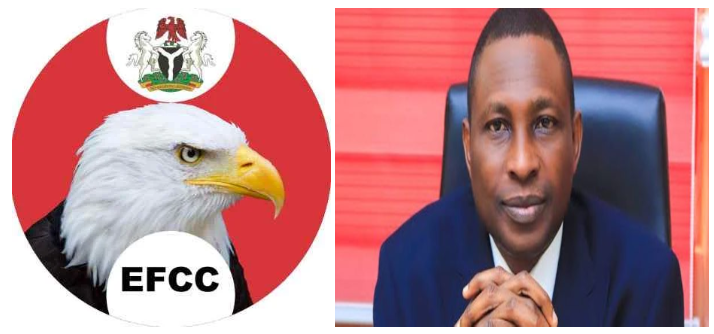
The reported freezing of Osun State Government’s account by the Economic and Financial Crimes Commission (EFCC), coming just days before the state’s governorship election, is, to say the least, unfortunate. Regardless of the reasons advanced for such an action, the timing has inevitably generated public suspicion and political controversy. In a democracy, institutions entrusted with law enforcement must not only be impartial but must also be seen to be impartial. Any action capable of creating the impression of political interference undermines public confidence in both the electoral process and the institutions of government.
Anti graft agencies and other government institutions must resist every attempt to allow themselves to be used, or perceived to be used, by politicians to influence or manipulate elections. Their constitutional responsibility is to enforce the law without fear or favour, irrespective of who occupies political office. When their actions coincide with sensitive political events, they owe Nigerians an even greater duty of transparency and professionalism in order to preserve public trust.
The controversy has also raised questions about the Federal Government’s handling of the matter. Reports that President Bola Ahmed Tinubu directed the EFCC to unfreeze the state’s account have, whether rightly or wrongly, placed his administration in an uncomfortable position. While such intervention may have been intended to prevent a political crisis, it has also fuelled debate about the operational independence of the anti graft agency and whether executive intervention should determine the course of its actions.
Beyond the reported presidential directive lies a far more fundamental constitutional question. Should the EFCC take operational orders from the President? If the Commission is indeed an independent law enforcement agency, should its decisions be subject to presidential directives or reversals? These are legitimate questions that deserve serious national reflection because the credibility of any anti corruption agency depends largely on its ability to function without political influence, irrespective of the government in power.
A similar concern arises from President Tinubu’s directive to the Independent Corrupt Practices and Other Related Offences Commission (ICPC) to investigate the alleged fake Director General of the Presidential Initiative for Food, Irrigation and Poverty Eradication Commission (PFIPC). While no one disputes the need for allegations of fraud to be investigated, the expectation in a mature democracy is that agencies such as the ICPC should independently identify, initiate and prosecute matters within their statutory mandate without waiting for instructions from the Presidency or any other political authority.
One of the reasons many Nigerians continue to question the neutrality of key government institutions is the enormous influence the Executive exercises over their leadership. Heads of several strategic agencies often operate under the constant pressure that failure to align with the preferences of those in power could jeopardise their tenure. Whether or not such pressure is directly applied, the perception alone is sufficient to weaken public confidence in the independence of these institutions.
Nigeria must therefore undertake a comprehensive review of the processes through which the heads of critical democratic institutions are appointed and removed. The appointment of the Chairmen of the Independent National Electoral Commission (INEC), the EFCC and the ICPC should not rest solely with the President. Rather, there should be broad based consultations involving bodies such as the Nigerian Bar Association (NBA), the Nigeria Union of Journalists (NUJ), civil society organisations, faith based organisations and traditional institutions before nominees are presented for confirmation by a joint sitting of the National Assembly. Such an inclusive process would strengthen public confidence and reduce perceptions of political patronage.
Equally important is the issue of tenure security and financial independence. The removal of the heads of these agencies should not be left to the discretion of the Executive alone. Instead, removal should only be initiated through an independent process, such as a recommendation by the National Judicial Council where constitutionally appropriate, followed by the approval of two thirds of a joint sitting of the National Assembly. Furthermore, these institutions should enjoy first line charge funding from the Consolidated Revenue Fund to prevent any government from weakening their effectiveness through financial pressure or delayed budgetary releases.
As the people of Osun State prepare to elect their next governor, all stakeholders must rise above partisan interests. INEC, the security agencies and particularly the Nigeria Police Force must discharge their responsibilities with professionalism, neutrality and fairness. Political parties and their supporters must conduct themselves peacefully and within the confines of the law. Above all, the electorate must reject vote buying and vote selling, exercise their civic responsibility conscientiously and choose the candidate they genuinely believe is best equipped to serve the interests of Osun State. Ultimately, the strength of Nigeria’s democracy depends not only on credible elections but also on strong institutions that inspire confidence by acting independently, impartially and always in accordance with the rule of law.
Tochkuw Jimo Obi, Obosi Anambra state.