Forgotten Dairies
El-Rufai, Amaechi and the loose cannons of Nigeria’s politics -By Abiodun Komolafe
The Tinubu administration can draw valuable lessons from the experience of Konrad Adenauer, Germany’s post-war Chancellor. Adenauer’s approach of actively seeking out contrarian views helped shape Germany’s remarkable economic recovery after World War II and transformed the country into Europe’s largest and most stable economic success story. Similarly, the Tinubu administration would do well to avoid the pitfalls of groupthink and a variety of viewpoints, rather than risking “imprisonment in an echo chamber” that can stifle progress.

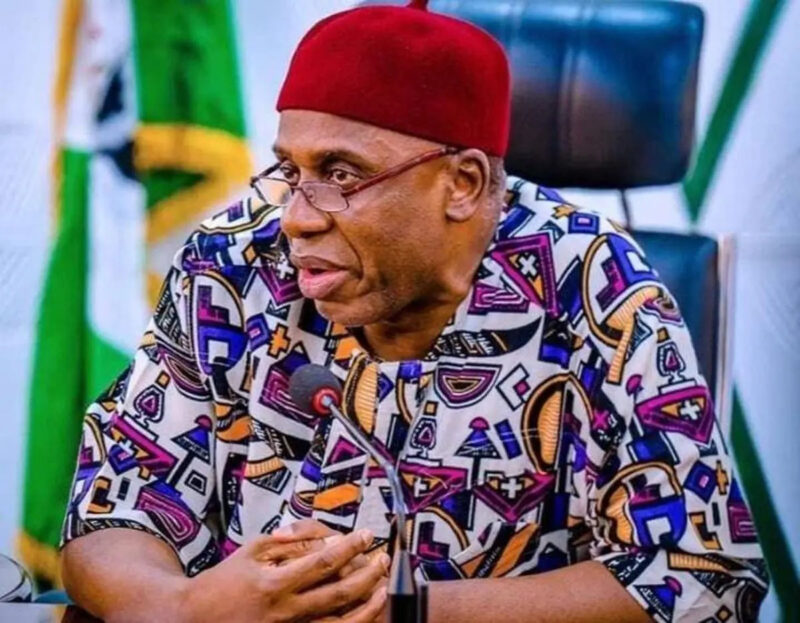
Nasir Ahmad el-Rufai and Chibuike Rotimi Amaechi, two influential figures in Nigerian politics, have been making headlines with their bold comments and actions. Their unconventional approach has sparked debate about whether they’re reckless loose cannons or calculated strategists. As Nigeria navigates its intricate political landscape, El-Rufai, Amaechi, and other key players will undoubtedly influence the country’s future.
El-Rufai and Amaechi recent actions suggest opportunistic tendencies, raising important questions. With the government barely two years old, their intervention seems premature. Rather than a midterm review, their actions lack critical thinking and strategic analysis. As former governors and Federal Ministers, they are expected to offer a viable alternative solution and a roadmap to address Nigeria’s socioeconomic challenges.
It’s a paradox that El-Rufai and Amaechi personify the contradictions of the Nigerian state, a fact that speaks volumes about the country’s complexities. Take, for instance, as gentlemen of significant means, they can afford to engage research assistants, pay consultants, or even establish think tanks. That they have failed to do so is not only an injustice to the country but also diminishes their own standing. Even in the best of times – and we are clearly not in the best of times – critical thinking and in-depth analysis are essential for guiding and guarding any government. This is what seasoned players like the former British Prime Minister Gordon Brown, former Presidents Barack Obama of the United States of America and Nelson Mandela of South Africa,, among others, in many countries of the world, are doing.
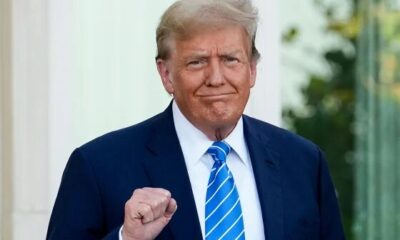
Sadly, the state of our political discourse today is reflected in the petulance of El-Rufai and Amaechi. They exemplify a diminished polity where vituperation and divisive rhetoric have supplanted thoughtful analysis and in-depth evaluation. This is certainly unhelpful in view of the ongoing trade wars unleashed by the actions of President Donald Trump. The world is now in very turbulent waters and Nigerians have to navigate the unfolding drama. Scenario planning has to be done on the effects of what is going on beyond our shores and the Nigerian economy.
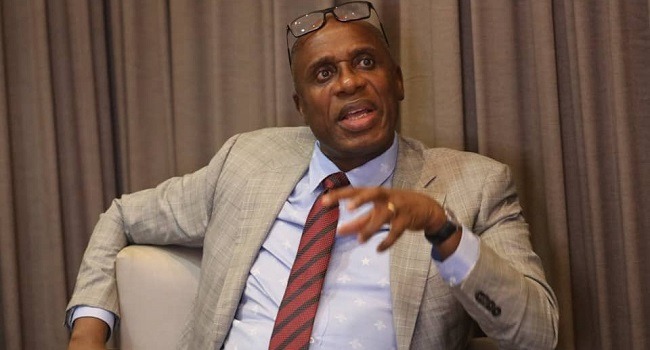
Chief Obafemi Awolowo, Anthony Enahoro, Maitama Sule and Aminu Kano provided insightful, dissenting views that enriched public discourse during their time. Unfortunately, today’s political landscape is marred by the petulant outbursts of the likes of El-Rufai and Amaechi, which have replaced thoughtful analysis with vitriolic attacks. This trend is particularly concerning amidst the global economic uncertainty sparked by President Donald Trump’s trade wars. As the world navigates these turbulent times, Nigeria must develop strategic plans to mitigate the impact of external factors on its economy. Unfortunately, El-Rufai and Amaechi’s self-indulgence is unhelpful and must be discouraged.
El-Rufai in particular has a history of making bold and sometimes divisive comments. For instance, his 2012 tweet threatened anyone who challenged the Fulani, an ethnic group, and his 2019 statement warned election observers who interfered with Nigeria’s election would be sent back in “body bags”, sparking outrage. Given his tendency to speak his mind, it’s surprising that El-Rufai accepted the president’s offer of a ministerial appointment. This raises questions about his true intentions: did he genuinely support Tinubu’s government, or would he have resigned if his nomination had been confirmed?
Amaechi’s candid admission that the fear of poverty motivated him to join politics after graduating in 1987, and has kept him in the game, offers a revealing insight into the drivers of those in power. This revelation is particularly concerning, as it underscores the deep-seated dysfunction within Nigeria’s political system. In reality, politics should be a vocation, not a career.
However, in Nigeria, politics has become a career path due to the country’s limited opportunities for economic advancement. This stunted political economy has led to a situation where individuals view politics as a means of personal gain rather than a calling to serve. Consequently, those who approach politics as a career often have limited expertise and a narrow perspective, which can hinder their effectiveness as administrators.
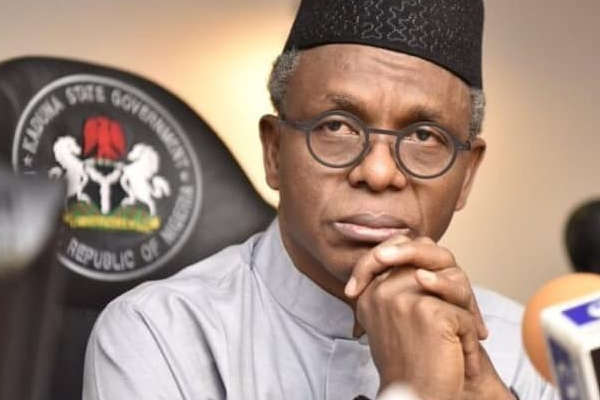
Mallam Nasir Elrufai
The first generation of politicians, including Awolowo, Bode Thomas, Fani Kayode, Drs. M.A. Majekodunmi, Omotayo Omitowoju and Michael I. Oparah, brought a unique perspective to politics, having established themselves in their respective professions before entering public service. This background was evident in their thoughtful approach and impactful contributions.
On the contrary, the 1966 coup marked a turning point, as many politicians returned to their pre-politics careers. Unfortunately, today’s political landscape is dominated by one-dimensional politicians lacking diverse career experiences and management expertise, with their policies and decisions twisting and turning like a barber’s chair, which is detrimental to Nigeria’s progress.
Life, as the saying goes, is a complex chemistry experiment, and humans are the lab rats, constantly seeking the right mix of ingredients for a stable and fulfilling existence. In this laboratory, the ruling elite act as master chemists, manipulating power, privilege and ideology to maintain their grip on the state. They use propaganda, repression and allied wrong channels or tactics to preserve the status quo. The tragedy of Nigerian politics lies in the fact their statements often come across as provocative and overly broad. This approach can be alienating and unhelpful in finding solutions to the country’s challenges. Furthermore, it has led a situation where most of those who claim to be leading us “misappropriate, misapply, mislead and misdirect the electorate”.
So, what’s the alternative chemistry of life? It’s a mixture of active citizenship and collective action. It’s a formula that recognizes the inherent value of every human being, regardless of his or her background, identity or socioeconomic status. It’s a chemistry that’s messy, unpredictable and sometimes explosive – but it’s also the only way to create a truly just and equitable society.

Well, a time like this demands advice for the Bola Tinubu-led administration. To foster growth, the government should consult widely with individuals outside its echo chamber. This approach is reminiscent of former US President Franklin Delano Roosevelt’s strategy during the New Deal era in the 1930s. When the New Deal wasn’t yielding the desired results, Roosevelt sought multiple lenses, bringing in contrarians and individuals with opposing views. Although their insights were sometimes disagreeable, they proved invaluable and refreshing.
A notable example of innovative policymaking is the establishment of the Small Businesses Administration, which inspired our own Small and Medium Enterprises Development Agency of Nigeria (SMEDAN). Interestingly, the idea for this game-changing initiative originated from a Letter to the Editor published in The Washington Post, written by an unknown lawyer from a small town. The letter highlighted the devastating impact of economic policies on small businesses nationwide. Recognizing the merit of the suggestions, the administration acted upon them, earning widespread acclaim and support for the government.
The Tinubu administration can draw valuable lessons from the experience of Konrad Adenauer, Germany’s post-war Chancellor. Adenauer’s approach of actively seeking out contrarian views helped shape Germany’s remarkable economic recovery after World War II and transformed the country into Europe’s largest and most stable economic success story. Similarly, the Tinubu administration would do well to avoid the pitfalls of groupthink and a variety of viewpoints, rather than risking “imprisonment in an echo chamber” that can stifle progress.
Effective time management and planning are also essential qualities of successful leaders. Again, Lee Kuan Yew’s ability to prioritize and implement policies drove Singapore’s success, while Mandela’s skillful time management enabled him to achieve great things despite adversity. In contrast, the failures of Saddam Hussein and Robert Mugabe to prioritize their countries’ needs and manage their time effectively led to widespread suffering and ultimately, their downfall.
May the Lamb of God, who takes away the sin of the world, grant us peace in Nigeria!
*KOMOLAFE wrote from Ijebu-Jesa, Osun State, Nigeria (ijebujesa@yahoo.co.uk)