
Forgotten Dairies
Atiku’s Fuel Subsidy U-Turn Signifies A Leader Willing To Listen To Nigerians -By Isaac Asabor
If Atiku’s evolving position on fuel subsidy is genuinely driven by that conviction, then what his opponents describe as a U-turn could instead be evidence of something Nigeria desperately needs, “a leader willing to listen to the vulnerable before asking them to endure another economic sacrifice.”

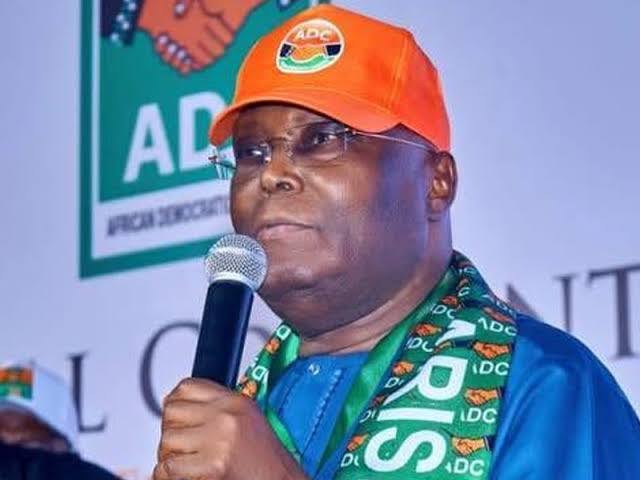
Politics is often a game in which consistency is mistaken for wisdom. Once a politician takes a position, his opponents expect him to defend it forever, even when circumstances change, evidence emerges and the consequences of that position become painfully obvious.
This is why the criticism trailing former Vice President Atiku Abubakar’s apparent shift in position on fuel subsidy deserves closer scrutiny. His political opponents and critics may choose to portray the reversal as inconsistency, opportunism or another political U-turn. But there is another, arguably more compelling, interpretation: Atiku’s willingness to reconsider the subsidy question suggests that he is capable of listening to Nigerians, particularly those bearing the heaviest burden of economic hardship. And that quality should not be dismissed.
For years, Nigeria’s fuel subsidy debate has been dominated by economic theories, fiscal calculations and arguments about market efficiency. There is certainly a place for all of these. A country cannot sustainably spend beyond its means, and no serious government should ignore the dangers of wasteful subsidies, corruption or distorted markets. But government is not an economics textbook.
A government exists ultimately to serve human beings. When an economic policy designed to improve the efficiency of the economy begins to produce unbearable consequences for millions of citizens, responsible leadership requires more than defending the policy because it conforms to orthodox economic thinking. It requires the courage to pause, listen and ask whether the medicine is becoming more dangerous than the disease. That, in my view, is the more important meaning of Atiku’s position.
The removal of fuel subsidy was presented to Nigerians as a necessary economic reform. The argument was straightforward: subsidy payments were draining government resources, encouraging arbitrage and corruption, distorting the petroleum market and preventing Nigeria from deploying its scarce resources more productively.
On paper, the argument was compelling. But economics does not exist on paper alone. The consequences of the policy have been experienced in the homes of ordinary Nigerians. Transport fares have risen. The cost of moving agricultural produce from farms to markets has increased. Businesses that depend on generators have faced higher operating costs. Food prices have surged. Household incomes have been stretched. Workers who were already struggling to survive have found themselves spending a greater proportion of their earnings simply getting to work and feeding their families.
For the poorest Nigerians, the fuel subsidy debate is not an abstract discussion about fiscal sustainability. It is about whether there will be enough money left after transportation costs to buy food.
It is about whether a parent can afford to take a sick child to hospital. It is about whether a small trader can keep a generator running long enough to preserve goods. It is about whether a young graduate earning a modest salary can afford to commute to work every day. These are the realities that economic theories sometimes fail to capture. And this is precisely why Atiku’s willingness to reconsider the subsidy question could be interpreted not as political weakness but as evidence of political empathy.
Leadership is not necessarily about stubbornly maintaining a position because one once declared it publicly. Leadership can also mean recognizing when a policy is producing consequences that demand reconsideration.
There is nothing inherently wrong with changing one’s mind when circumstances change or when new evidence becomes available. In fact, the refusal to change one’s position despite overwhelming evidence can be a greater sign of poor leadership than changing course.
Nigeria has seen too many policies defended long after ordinary citizens began paying an unacceptable price for them. The country therefore needs leaders who understand that policy is ultimately about people.
Atiku’s critics will undoubtedly argue that his changed position is politically motivated. They may contend that he is merely responding to public sentiment ahead of the 2027 presidential election. Such criticism is legitimate in a democracy. Politicians should be scrutinized, and Nigerians should not accept political promises uncritically.
But even if political calculations are involved, the central question should remain: what is the substance of the position being advocated? If a politician who previously supported or accepted a particular economic direction now recognizes that its consequences have become too painful for vulnerable Nigerians and proposes a different approach, should Nigerians reject the new position simply because it represents a change? That would be an unfortunate way to judge leadership.
Indeed, one could argue that the willingness to reverse course demonstrates precisely the quality Nigeria needs at this moment: the ability to listen. A president should not become so attached to economic doctrine that he stops hearing the cries of the people.
Nigeria is not merely a collection of economic indicators. It is a country of more than 200 million human beings, each with different vulnerabilities and different capacities to absorb economic shocks. A policy that may appear rational from the perspective of government accounts can become devastating when transferred to the kitchen table of a low-income household. This distinction is critical.
Economic reform is necessary. But reform without adequate social protection can become a source of social dislocation.
There is therefore a strong argument that the next Nigerian president should approach subsidy policy with a more nuanced philosophy. The country must reduce waste and corruption, encourage domestic refining, strengthen the petroleum sector and protect public finances. But these objectives should be pursued alongside deliberate measures to shield the poorest citizens from the consequences of reform. That is where Atiku’s apparent shift becomes politically significant.
His shift suggests an understanding that economic reform cannot be reduced to the simplistic proposition that whatever saves government money must automatically be good for the people. The real test is whether Nigerians become better off.
If government saves billions of naira while millions of families are pushed deeper into poverty, policymakers cannot simply congratulate themselves on achieving fiscal savings. The ultimate objective of public policy must be human welfare.
This is not an argument for an unlimited or permanent fuel subsidy. Nigeria has legitimate reasons to be concerned about the enormous resources that can be consumed by poorly designed subsidy regimes. It is also possible to reform the petroleum sector without returning to the waste and opacity that characterized previous arrangements. The more important question is how reform is implemented.
A responsible government could consider targeted interventions for vulnerable households, public transportation support, investment in mass transit, stronger domestic refining capacity, energy alternatives and transparent mechanisms for cushioning the poorest citizens.
The objective should be to ensure that economic reform does not become economic punishment. This is where the politics of empathy matters.
A president who can hear the frustration of a market woman, the complaints of a commercial driver, the struggles of a civil servant and the anxiety of a young entrepreneur is more likely to design policies that reflect the realities of the country.
Nigeria does not need leaders who merely understand spreadsheets. It needs leaders who understand what those numbers mean in people’s lives. This is as inflation is not merely a percentage. It is the smaller quantity of food a family can purchase with the same income.
Transportation inflation is not merely a statistic. It is the worker who must decide whether to take a second job or stop commuting.
Rising energy costs are not merely an economic indicator. They are the small manufacturer wondering whether the business can survive another month. This is why Atiku’s critics may be missing the larger point.
A political leader’s willingness to acknowledge that a previous position may require reconsideration should not automatically be treated as weakness. Sometimes, it is evidence of maturity.
The most dangerous leader is not necessarily the one who changes his mind. It is the one who refuses to change his mind when the evidence is staring him in the face. In fact, there is also a lesson here for Nigerian voters as the country approaches the 2027 elections.
Nigerians should judge presidential candidates not merely by the positions they held yesterday but by the policies they propose for tomorrow. They should demand clarity, consistency of purpose and credible implementation plans. But they should also distinguish between inconsistency born of political opportunism and flexibility born of responsiveness to changing realities. The latter can be a virtue.
If Atiku’s reversal on fuel subsidy reflects a genuine recognition that economic policy must place vulnerable Nigerians at the centre, then it deserves to be examined on its merits rather than dismissed because it contradicts something he may have previously said.
After all, democracy is not a competition to determine who can defend yesterday’s argument most stubbornly. It is a system through which leaders are expected to respond to the needs of the people.
Nigeria’s economic crisis requires difficult decisions. There will be no magic wand, and no presidential candidate should pretend otherwise. Whoever eventually occupies Aso Rock will inherit difficult choices involving energy, taxation, debt, employment, infrastructure, food security and social welfare.
But difficult choices do not have to mean insensitive choices. A government can pursue reform while protecting the vulnerable. It can promote market efficiency while investing in social protection. It can reduce waste while ensuring that ordinary citizens do not become collateral damage in the pursuit of fiscal discipline. That balance requires something beyond technical competence. It requires empathy.
And if Atiku’s changed position on fuel subsidy represents a genuine evolution in his thinking, Nigerians should be willing to acknowledge that possibility. The question should not simply be, “Why did he change his position?” The more important question is, “What does this new position mean for the Nigerian who is struggling to survive?” If the answer is that he is now more prepared to put vulnerable Nigerians at the heart of economic policymaking, then his U-turn may turn out to be more than a political manoeuvre. It may be a demonstration that leadership sometimes requires the humility to listen.
And in a country where millions of citizens are tired of being told that economic pain today will produce prosperity tomorrow, perhaps that is precisely the kind of leadership Nigeria needs: not a leader imprisoned by economic orthodoxy, but one prepared to adjust policy when reality proves that the people are hurting.
Ultimately, the strength of a leader is not measured by how stubbornly he clings to a position. It is measured by whether he can recognize when the people are hurting, listen to them and change course when necessary.
If Atiku’s evolving position on fuel subsidy is genuinely driven by that conviction, then what his opponents describe as a U-turn could instead be evidence of something Nigeria desperately needs, “a leader willing to listen to the vulnerable before asking them to endure another economic sacrifice.”



















You must be logged in to post a comment Login