Africa
Electronic Transmission Of Results: Nigeria’s Senate Chose Ambiguity Over Trust -By Jeff Okoroafor
Nigeria’s Senate says it did not ban electronic transmission of election results, only rejected making it mandatory. I argue the decision leaves transparency optional and public trust fragile.


Nigeria’s Senate insists it did not reject electronic transmission of election results — only mandatory electronic transmission. The clarification is technically accurate and politically inadequate.
After a fiercely contested 2023 election that left millions of Nigerians doubtful of the integrity of their votes, the country stood at a crossroads. Lawmakers could either harden transparency into law or preserve the flexibility that has long defined — and weakened — Nigeria’s electoral process. They chose the latter.
The decision to block a proposal mandating the electronic upload of polling-unit results did not outlaw technology. It did something more consequential: it ensured that transparency would remain optional.
That distinction is precisely why the public reaction has been so sharp.
Electronic transmission is often framed as a technical issue — a matter of bandwidth, electricity, and devices. In reality, it is a political one. It is about whether election outcomes are verifiable in real time, or reconstructible after the fact. It is about whether trust is designed into the system, or retroactively demanded from voters once disputes erupt.
Nigeria has tried the discretionary model before. Under the current Electoral Act, the country’s electoral commission, INEC, already has the authority to transmit results electronically “in a manner as prescribed by the Commission.” That same discretion governed the 2023 elections. The result was a patchwork of uploads, unexplained delays, and conflicting narratives that quickly migrated from polling units to courtrooms.
To many Nigerians, the lesson was obvious: permission without obligation is not reform.
Senate President Godswill Akpabio has pushed back against criticism, warning against what he calls misinformation and insisting that electronic transmission remains part of the law. He is correct — but the reassurance lands hollow. A safeguard that depends entirely on institutional goodwill is not a safeguard at all, especially in a democracy where electoral legitimacy is already fragile.
Supporters of the Senate’s decision argue that Nigeria’s infrastructure cannot sustain rigid mandates. The country’s digital divide is real. Network failures are common. Power supply is unreliable. These are serious concerns — but they are not a justification for legal ambiguity.
No serious reform proposal demanded technological absolutism. What reformers asked for was accountability: a clear expectation that results should be uploaded electronically where conditions permit, and a clear obligation to explain when they are not. That modest standard would not have crippled INEC. It would have disciplined discretion.
The Senate rejected even that.
In doing so, lawmakers revealed an enduring feature of Nigeria’s electoral politics: an instinctive resistance to binding rules where discretion offers comfort. Flexibility is defended as pragmatism. In practice, it often functions as insulation — protection against scrutiny when processes fail or are manipulated.
This is why the argument that the Senate has not “gone backwards” misses the deeper concern. Nigeria’s democracy is not collapsing because of one amendment. It is eroding through accumulation — through repeated decisions to preserve vague authority instead of enforceable clarity.
In stable democracies, election laws are written to constrain power, not accommodate it. Transparency mechanisms are not left to internal guidelines; they are embedded in statute. Nigeria’s refusal to take that step reflects not technical caution, but political hesitation.
The cost of that hesitation is borne by voters. Each election conducted under ambiguous rules deepens cynicism. Each assurance that transparency is “still allowed” sounds less like confidence and more like damage control.
The Senate had an opportunity to send a signal — not to international observers, but to its own citizens — that the failures and controversies of recent elections would not be repeated by design. It chose not to.
Electronic transmission remains legal in Nigeria. What remains missing is the courage to make it unavoidable.
Until that changes, Nigeria’s elections will continue to rely not on law, but on trust — and trust, once exhausted, is far harder to restore than any technology.
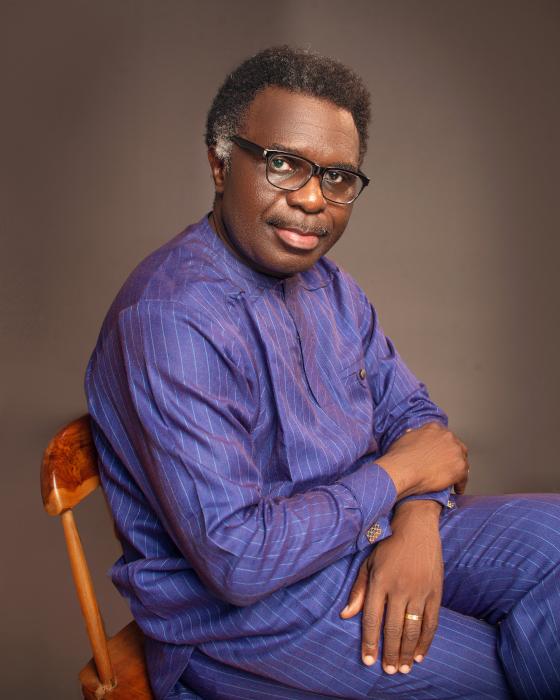
Jeff Okoroafor is a social accountability advocate and a political commentator focused on governance, accountability, and social justice in West Africa.