
Forgotten Dairies
“Federal,” Must the People Be Sentenced to Federal Neglect? Benue cannot build its economy on roads it is not allowed to fix -By Leonard Karshima Shilgba
If the Federal Government has the resources and institutional capacity to rehabilitate every federal road in Benue promptly, then let it do so. But if it does not have the resources, capacity, or urgency to maintain every road under its control, then it should permit the State Government to intervene.

When a Road Is
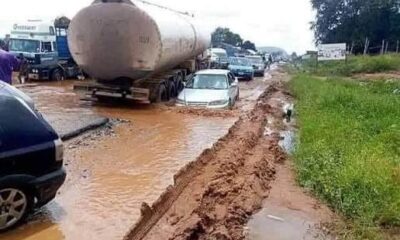
There is a peculiar tragedy at the heart of Nigeria’s federal system: a road can be physically inside a state, economically indispensable to that state, used overwhelmingly by its people, and yet be controlled by a government hundreds of kilometres away that may neither repair it promptly nor permit the state to do so.
Benue State has lived with this contradiction for decades.
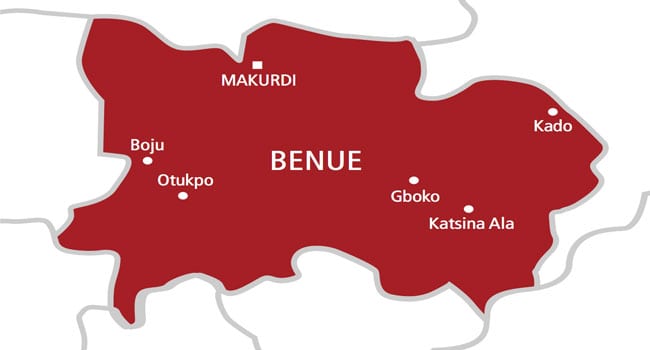
Consider the network that holds the state’s economy together: Makurdi–Gboko–Katsina-Ala; Makurdi–Aliade–Otukpo–Otukpa; Gboko–Ihugh–Adikpo; Vandeikya–Adikpo–Katsina-Ala; Aliade–Gboko; Katsina-Ala–Zaki Biam; Otukpa–Ayangba, and other important corridors. Some connect major population centres; others carry farmers, traders, students, workers, manufactured goods and agricultural produce between Benue’s economic zones and neighbouring states.
Yet too many of these roads have become symbols of governmental disconnection.
The Federal Ministry of Works itself continues to identify major Benue corridors as federal projects requiring rehabilitation and intervention. In 2026, for example, the Federal Government reported interventions on the Katsina-Ala–Takum, Katsina-Ala–Calabar, Old Makurdi–Wukari, Otukpo–Oshegbudu–Oweto and Makurdi–Otukpo–9th Mile–Enugu corridors.
But the question Benue must now ask is bigger than whether one particular administration is repairing one particular road.
Why should the people of Benue have to wait for Abuja before they can repair the roads that connect Benue to Benue?
The strange journey of a state government that wants to repair a road in its own state
The answer lies partly in Nigeria’s inherited legal architecture.
Under the Federal Highways Act, federal highways are placed under the management, direction, and control of the Federal Minister responsible for roads. The Minister is given responsibility for their planning, design, construction, and maintenance.
That means a governor who looks at a collapsing federal highway and says, “My people are dying on this road; I have the money; let me fix it,” cannot simply mobilise his Ministry of Works and commence construction as he would on an ordinary state road.
He must first enter the federal regulatory space.
In practical terms, the process can involve:
- A formal request by the State Government to the Federal Government/Federal Ministry of Works to intervene on the federal highway.
- Technical engagement with the Federal Ministry of Works, because the road remains a federal asset and its design, engineering standards, alignment, and right-of-way requirements fall under federal control.
- Technical assessment and approval of the proposed intervention, including the scope of work, design standards, drainage, bridges, pavement structure, junctions, and other highway components.
- Resolution of right-of-way issues, including existing federal highway setbacks, structures, utilities, and affected properties.
- Environmental, utility, and other statutory considerations, depending on the nature and scale of the intervention.
- Agreement on who is paying and who is executing the work. If the Federal Government is funding it, the project must pass through federal budgeting and procurement processes. If the State Government is financing it, the State still cannot simply assume ownership of a federal highway and alter it without federal authorization.
- Federal approval/authorization before construction, even where the urgent motivation and funding originate from the State.
The underlying legal reason is simple: the Federal Highways Act gives the Federal Government control over federal highways. Indeed, the Act also gives the Minister extensive powers relating to right-of-way and works associated with federal highways.
This is where the absurdity begins.
The State has the political responsibility to respond to the suffering of its citizens.
The Federal Government has the legal control.
And the citizens are caught between the two.
The Wurukum lesson
The experience surrounding the Wurukum corridor in Makurdi provides an unusually vivid illustration.
Governor Hyacinth Alia’s administration sought federal intervention in the Wurukum area and the broader Makurdi–9th Mile corridor. The Federal Government subsequently approved the inclusion of the Wurukum flyover in the federal dualization project. Contemporary reporting records that the request for the flyover originated from Governor Alia and was subsequently approved by the Federal Government.
By 2025, the project had moved into the stage of right-of-way verification and compensation, with the State participating in the process.
There is an important distinction here: the public record is clearer about federal approval of the Wurukum flyover and the Lafia–Makurdi–9th Mile corridor than about a single 2023-to-2025 approval date for the entire Wurukum–Renewed Hope Estate road. The State’s own 2025 Executive Council records show the Wurukum–Air Force Base road extension and dualization being taken forward as a major State infrastructure project, while subsequent statements emphasized that the Wurukum–Renewed Hope Estate–Angbaaye corridor is a federal highway and therefore requires Federal Ministry standards/approval.
That distinction actually strengthens the argument.
Whether the delay is measured in two years or through several stages of federal engagement, the underlying problem remains the same: a state government cannot freely determine the fate of a major road within its own territory when the road has been classified as “federal.”
And that is the constitutional and administrative anomaly Benue—and Nigeria—ought to confront.
What exactly is “federal” about a road that never leaves Benue?
This is the question that deserves a national debate.
A road does not become economically national merely because somebody in Abuja once classified it as a federal highway.
Take a hypothetical road running entirely from Town A in Benue to Town B in Benue.
It does not cross an international boundary.
It may not even cross a state boundary.
Its principal function may be to move Benue’s farmers to Benue’s markets, Benue’s students to Benue’s institutions, Benue’s workers to Benue’s workplaces, and Benue’s traders from one Benue commercial centre to another.
Why should its construction and maintenance necessarily be controlled from Abuja?
There is, of course, a legitimate national interest in major inter-state highways. Roads connecting states, regions, ports, borders and national economic corridors plainly require federal coordination.
But that argument does not automatically justify treating every important road within a state as though it were equally a national highway.
Indeed, Nigeria’s own constitutional reform debate recognizes that this issue requires reconsideration. A bill before the National Assembly has proposed moving the construction of roads other than Trunk A federal roads to the Concurrent Legislative List, expressly to give state governments and private-sector actors greater power to finance road rehabilitation and reconstruction.
That is an admission that the present arrangement deserves serious scrutiny.
Federal ownership without federal performance is indefensible
There is another side to this argument that must not be overlooked.
If Abuja insists that a road is federal, then Abuja must accept the corresponding responsibility.
One cannot reasonably tell Benue:
“You cannot repair this road because it belongs to the Federal Government.”
and then fail to repair it for years.
That is not federalism.
It is federal control without commensurate federal service delivery.
The Federal Government’s own records demonstrate how long some Benue federal roads have remained in the federal project system.
For example, federal records have historically listed rehabilitation of the Makurdi–Gboko–Katsina-Ala road and the 9th Mile–Otukpo–Makurdi road among federal highway projects. A 2017 Federal Ministry document showed the Otukpo–Otukpa section of the 9th Mile–Otukpo–Makurdi road as a federal rehabilitation project dating back to 2009.
The Makurdi–Gboko–Katsina-Ala corridor has likewise appeared repeatedly in federal project records, including a rehabilitation contract awarded in 2019.
And in 2026, the prolonged neglect of the Makurdi–Gboko–Ugbema–Katsina-Ala road had become sufficiently serious that the Independent Corrupt Practices and Other Related Offences Commission was reported to be investigating the circumstances surrounding the non-execution of its maintenance contract.
So the question is no longer merely:
“Who owns the road?”
The question is:
“Who is responsible for ensuring that the road remains safe and usable—and what happens when that responsibility is not discharged?”
The human cost is greater than a pothole
A failed road is not merely an inconvenience.
It is an economic tax imposed on the poor.
It means the farmer pays more to transport produce.
The trader loses goods because journeys take longer.
The bus operator spends more on tyres, suspension, and repairs.
The haulage operator passes the cost to consumers.
The ambulance takes longer.
The teacher struggles to reach school.
The student spends more time travelling.
The pregnant woman travelling to a hospital faces greater risk.
And when a major road becomes impassable, entire communities become economically isolated.
This is particularly damaging to a state such as Benue whose economic promise depends heavily on agriculture, agro-processing, commerce, and movement between its geographically dispersed population centres.
A state that calls itself the Food Basket of the Nation cannot afford a road network that makes it difficult to move food from farm to market.
And a state aspiring to industrialize cannot attract serious investment when its internal economic arteries are unreliable.
Benue’s problem is not a shortage of roads. It is a shortage of connectivity.
This distinction matters.
Benue does not merely need isolated road projects.
It needs a network.
Makurdi must efficiently connect with Gboko.
Gboko must connect efficiently with Katsina-Ala, Aliade, and Ihugh.
Katsina-Ala must connect with Zaki Biam and the eastern corridors through Vandeikya.
Makurdi must efficiently connect through Aliade to Otukpo and Otukpa.
Otukpo must connect efficiently toward Ayangba (in nearby Kogi) and the eastern and western markets.
Vandeikya must connect efficiently with Adikpo and Katsina-Ala.
Ihugh must not remain an isolated university location because the road connecting it to Gboko and Adikpo is unreliable.
A modern economy is a network economy.
You cannot build economic transformation around disconnected islands of good infrastructure.
There is an alternative
Nigeria does not necessarily have to abolish federal highways.
The better question is whether the classification and control system should be rationalized.
A sensible federal road policy could distinguish among:
1. National trunk corridors
Roads of genuinely national strategic importance—inter-state, international, major economic corridors—remain federal.
2. Regional/inter-state connectors
These could be jointly financed and managed by the Federal Government and affected states.
3. Intra-state arterial roads
Roads that lie entirely within one state and primarily serve that state’s internal economy should, subject to agreed standards, be transferred to the State Government.
4. Emergency intervention powers
Where a federal road is dangerously degraded, a State Government should have an automatic statutory right to undertake emergency repairs after notifying the Federal Ministry of Works, subject to national engineering standards.
That last provision alone could save lives.
A governor should not have to spend months navigating bureaucratic channels while a bridge collapses or a road becomes a death trap.
And there is already a precedent for rethinking the arrangement
The Federal Government has previously contemplated transferring certain federal roads within 5–10 kilometres of state capitals to state control and maintenance, with provisions for reimbursement where states meet specified conditions for intervention.
That principle deserves to be revisited and radically expanded.
Why stop at 5–10 kilometres?
Why not ask the more fundamental question:
What is the appropriate level of government to manage each category of road?
The answer should be based on function, not historical bureaucratic ownership.
Benue should not be punished for being “federal”
There is something particularly troubling about the geography of Benue’s predicament.
Benue sits at a strategic junction connecting the North-Central region with the East, South, and Northeast. The Federal Government itself describes several of these corridors as important for the movement of agricultural produce, mineral resources, and people.
In other words, good roads in Benue are not merely a Benue interest.
They are a Nigerian interest.
When a truck carrying food from Benue spends hours negotiating failed sections of road, the Nigerian consumer ultimately pays.
When an articulated vehicle breaks down on a major corridor, national commerce suffers.
When the Makurdi–Otukpo–Enugu corridor fails, the effect is not confined to Benue.
When the Makurdi–Gboko–Katsina-Ala corridor fails, the economic consequences extend beyond the towns along the road.
I have seen trucks conveying timber and other goods from the Southern axis frequently tumble over at a particular notoriously terrible spot in Ihugh town on the “federal road” connecting Ihugh and Gboko. I am often disillusioned at this.
So perhaps Abuja should stop looking at these roads as favours being done to Benue.
They are national economic infrastructure in dire need of the attention of the Federal Government.
The federal government should give Benue room to build
The most frustrating part of this story is that Benue is not asking Abuja to abandon its responsibilities.
It is asking Abuja to perform them—or allow Benue to perform them.
If the Federal Government has the resources and institutional capacity to rehabilitate every federal road in Benue promptly, then let it do so.
But if it does not have the resources, capacity, or urgency to maintain every road under its control, then it should permit the State Government to intervene.
Let Abuja prescribe the engineering standards.
Let Abuja inspect the designs.
Let Abuja retain whatever genuinely national regulatory powers are necessary.
But let the government closest to the people act when the people are suffering.
The road to a new federalism may begin with a road
Nigeria has debated restructuring, devolution of powers, and true federalism for decades.
Perhaps we should approach the debate less through abstract constitutional rhetoric and more through the daily experience of citizens.
Ask the man travelling from Makurdi to Katsina-Ala:
Who should be responsible for this road?
Ask the farmer transporting produce from Vandeikya.
Ask the trader travelling from Otukpo to Otukpa.
Ask the student travelling to Ihugh.
Ask the transporter whose vehicle suspension is destroyed by a road that has been awaiting rehabilitation for years or decades.
Ask the family whose relative never arrived because a terrible road turned an ordinary journey into a fatal one.
Their answer is unlikely to be complicated.
They will simply say:
“Whoever has the power to fix it should fix it.”
That is the essence of responsible government.
Benue needs a Road Revolution—not another round of memoranda
The State Government should therefore lead a national conversation around the restructuring of the federal highway network in Benue.
It should compile, corridor by corridor:
- the condition of every major federal road;
- traffic volumes and economic significance;
- accident and fatality data;
- years of federal neglect;
- outstanding federal contracts;
- current budgetary allocations;
- estimated rehabilitation costs;
- the economic value of each corridor;
- and which roads should remain federal, become jointly managed, or be transferred to the State.
The objective should not be another plea to Abuja.
It should be a new compact between Abuja and Benue.
Where a road is genuinely national, Abuja must maintain it.
Where a road primarily serves Benue, Benue should have the authority to maintain it.
Where a road serves both, both governments should finance it.
And where an emergency threatens lives, bureaucracy must never be allowed to become an accomplice to preventable deaths.
Nigeria cannot continue operating a road governance system designed around administrative ownership when the economy operates around connectivity.
The central question is therefore no longer whether a road is called “federal.”
The question is whether the classification serves the Nigerian people.
Because a federal road that is permanently neglected is not a symbol of federalism. It is a symbol of governmental failure.
And Benue has waited long enough.
© Shilgba
Leonard Karshima Shilgba, PhD (Yokohama)























You must be logged in to post a comment Login