Politics
From Privacy Advocate To Privacy Paradox: El-Rufai Eats His Words -By Isaac Asabor
The question now is simple: will El-Rufai acknowledge this glaring contradiction and recalibrate his approach, or will he entrench a pattern of selective principle application? For Nigeria’s democracy, the stakes are high. Citizens deserve leaders who respect privacy consistently, not selectively. Anything less is not just hypocrisy; it is a violation of the trust fundamental to a functioning democracy.

In May 2013, Nigeria saw an unusual moment of alignment among telecom operators, civil society, and even government officials on a singular issue: the sanctity of private communication. The Federal Government had proposed intercepting telephone services as a tool to curb rising insecurity. The idea, however, triggered alarm across the board, among telecom operators, consumer rights advocates, and voices within government itself.
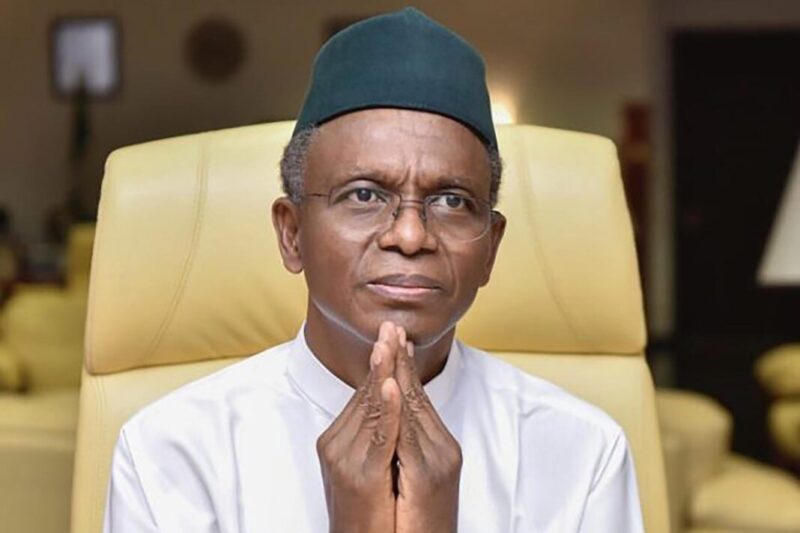
At the center of the debate was Nasir El-Rufai, then in his capacity as the former minister of the Federal Capital Territory, who made a principled stand. He argued that lawful interception must be carefully circumscribed by legislation, not regulation, and always require judicial oversight. “We should never allow any law or regulation to give government a blank cheque to monitor citizens’ emails, phone calls, SMS without probable cause,” he warned. His position was clear, precise, and aligned with international norms: privacy is a fundamental right, not a convenience, and government powers must never bypass the rule of law.
Fast forward to 2026, and the narrative around El-Rufai has shifted dramatically. Recent, widely publicized statements suggest he is not only aware of the illegality of intercepting private phone conversations but also condones it. In a televised interview, he admitted to monitoring calls, including those of National Security Adviser Nuhu Ribadu, without court orders, defending such acts by saying governments “do it all the time” to monitor opponents. He further boasted of having “ways” to listen to conversations of officials, framing it as a necessary measure to counter government actions against him. Given the weight of his confession, it suffices to say that he can also monitor the telephone conversation of Journalists and activists in civil society sector.
The contradiction is stark. The man who once championed judicial oversight and legal safeguards now appears to embrace the very practices he decried. Where he once warned against the temptation to bypass due process for expedience, he now suggests that unauthorized interception is routine and acceptable, so long as it serves political ends. El-Rufai has eaten his words.
This volte-face is more than a personal failing, it is emblematic of a broader problem in Nigerian politics, where past principles are abandoned at the altar of convenience. The 2013 debate highlighted critical lessons: telecom operators stressed that interception should be backed by legislation to mitigate civil liability risks; civil society warned that absent safeguards, such powers could easily escalate into human rights violations. El-Rufai’s warnings were not abstract, they were actionable prescriptions meant to protect citizens from abuse.
By contrast, his 2026 assertions have provoked widespread condemnation. The Presidency, human rights lawyers, and civil society groups labeled his remarks “reckless” and a “brazen assault on Nigeria’s constitutional democracy.” Section 37 of the 1999 Constitution guarantees the privacy of citizens’ homes, correspondence, and telephone conversations, yet El-Rufai appeared to trivialize these protections. Critics argue that no individual, regardless of political standing, is above the law.
National security, often cited to justify intrusive measures, cannot erase the need for judicial checks. The principle that security objectives do not negate legal and constitutional safeguards was central to El-Rufai’s own past advocacy. By disregarding it now, he undermines not only his credibility but the very notion of rights protection he once championed. Citizens are left with a disconcerting message: yesterday’s principles can be violated today if politically convenient.
What makes this development particularly troubling is the precedent it sets. Nigeria has a history of policymakers endorsing overreach under the guise of national interest, only to claim immunity from criticism. El-Rufai’s 2013 stance was a rare moment of principled leadership, a potential bulwark against abuse of power. Abandoning that stance risks normalizing unchecked surveillance and weakening the social contract between the governed and those who govern.
The lesson is clear: strong, consistent legal frameworks are indispensable. Regulation alone cannot guarantee privacy; Nigeria needs comprehensive legislation that clearly defines lawful interception, specifies oversight mechanisms, and enforces penalties for abuse. Until such laws exist and are respected, government-sanctioned monitoring will remain a slippery slope toward rights violations.
In retrospect, El-Rufai’s 2013 statements read almost like a blueprint for responsible governance in the digital age. They emphasized judicial oversight, statutory backing, and a careful balancing of state and citizen interests. Today, those statements serve as a stark reminder that when leaders abandon principles, the cost is not merely reputational; it is borne by citizens whose rights are entrusted to those leaders.
The question now is simple: will El-Rufai acknowledge this glaring contradiction and recalibrate his approach, or will he entrench a pattern of selective principle application? For Nigeria’s democracy, the stakes are high. Citizens deserve leaders who respect privacy consistently, not selectively. Anything less is not just hypocrisy; it is a violation of the trust fundamental to a functioning democracy.
El-Rufai once rightly argued that privacy is a right, not a privilege. The nation is watching to see whether he will stand by that conviction, or confirm that, for some politicians, words are only binding when convenient.