Africa
From Stability to Trust: Nigeria’s Economic Test Before 2027 Currency Recovery, Capital Buffers, and the Institutional Pivot -By Leonard Karshima Shilgba
Nigeria’s $46.1 billion external reserve position, now at a multi-year high, gives the Central Bank genuine capacity to defend the Naira without reverting to trade bans or capital controls that previously strangled enterprise. Yet, this stability has a cost. In its determination to tame inflation, the financial system has swung toward extreme caution. Commercial banks parked over ₦33 trillion in the Standing Deposit Facility in January 2026 alone. Currency stability has improved—but credit circulation remains constrained.


Against the pessimism that dominated late 2025, the Nigerian Naira has emerged as an unexpected bright spot. Closing the week at approximately ₦1,391/$1 on the Nigerian Autonomous Foreign Exchange Market (NAFEM), the currency has sustained a rally that leaves it more than 10% stronger than its opening level in 2025. This is not a speculative blip. It is the visible consequence of structural corrections long overdue.
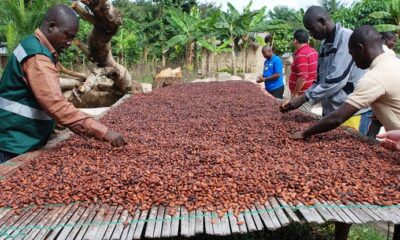
Two forces explain this recovery. First, improved FX inflows—especially from non-oil exports—have strengthened supply. Second, the Central Bank of Nigeria’s disciplined withdrawal of excess Naira liquidity has punctured speculative demand. Most importantly, the long-distorted gap between the official and parallel FX markets has effectively vanished, now trading within a 2% margin. For investors, this convergence signals credible price discovery and renewed confidence.
Yet markets alone do not determine the political and social economy. Nigerians experience both the cost and the benefits of these reforms directly—and that is where perception becomes decisive.
Stability Without Relief Is Politically Fragile
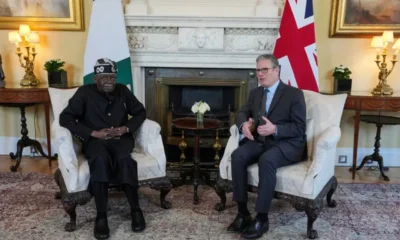
The Tinubu administration faces three interlinked challenges.
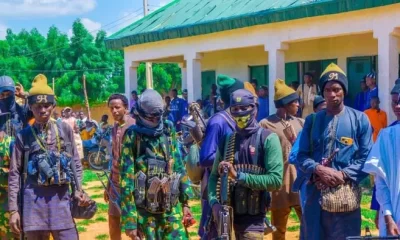
The first is physical insecurity, which continues to disrupt agriculture, commerce, schooling, and family life across large parts of the country. No macroeconomic gain will be felt where farmers cannot farm, traders cannot travel safely, or communities live in fear.
The second is translation—the conversion of macroeconomic stabilization into tangible, everyday benefits. Nigerians hear that indicators are improving, yet high prices, tight credit, and fragile incomes persist.
The third, and most politically consequential, is communication. Economic reform that is not clearly explained feels punitive; reform that is not empathetically communicated feels indifferent. In an election year, that perception can harden quickly.
The Opposition has filled this communication vacuum with a simple narrative: things are harder, money is scarce, prices are rising, Nigerians are unsafe—and the government is to blame. That message resonates because citizens are living through the pain of adjustment.
What is missing is an honest alternative. Fuel subsidy restoration is fiscally unsustainable and legally constrained by the Petroleum Industry Act. A return to multi-tier exchange rates would revive arbitrage, scare away foreign capital, and undo the fragile FX stability now emerging. The Opposition’s silence on alternative solutions does not make it unattractive to the electorate as a viable alternative nor does it neutralize hardship—and hardship shapes perception.
A Stronger Naira, a Tighter Economy
Nigeria’s $46.1 billion external reserve position, now at a multi-year high, gives the Central Bank genuine capacity to defend the Naira without reverting to trade bans or capital controls that previously strangled enterprise. Yet, this stability has a cost. In its determination to tame inflation, the financial system has swung toward extreme caution. Commercial banks parked over ₦33 trillion in the Standing Deposit Facility in January 2026 alone. Currency stability has improved—but credit circulation remains constrained.
This creates a paradox: macro-stability without micro-access. Medium, Small, and Micro Enterprises (MSMEs)—responsible for roughly 40% of GDP—remain largely excluded from affordable financing. Stability that does not reach producers, traders, and employers risks becoming politically hollow.
Markets Are Optimistic—Voters Are Cautious
The Nigerian Exchange Market ended the last week of January 2026 with a ₦45 billion increase in market capitalization, led by industrial goods and Tier-1 banks. Consumer goods stocks remain subdued, weighed down by high borrowing costs and weak household demand.
International observers are taking note. Nigeria is now projected to rank among the top contributors to global real GDP growth in 2026, alongside economies such as Indonesia and Brazil. These signals strengthen investor confidence—but they do not substitute for domestic legitimacy. Elections are not won on IMF projections.
Beyond Stability: The Institutional Imperative
Recent economic analyses have rightly observed that Nigeria has moved from emergency crisis management into a phase of stabilization. While broadly accurate, this assessment understates the urgency of converting macroeconomic stability into tangible relief and institutional trust.
Stability is not a destination—it is a narrow corridor. Linger too long, and public patience erodes; move too fast, and inflation resurges. The real challenge is not merely affordability; it is perceived fairness and credible governance. Nigerians are asking harder questions than price indices reveal:
- Is the burden shared fairly?
- Are institutions reforming, or merely enforcing pain?
- Will today’s sacrifice translate into dignity tomorrow?
Affordability without fairness still feels unjust. Growth without credibility still feels exclusionary.
The Agenda Before October 1, 2026
First, security must be treated as economic infrastructure. Every secured farm, road, and school reduces costs and safeguards livelihoods. Security spending should be explicitly linked to household welfare outcomes.
Second, fiscal policy must now lead. Interest rates cannot build roads, ports, or power plants. Infrastructure is Nigeria’s most potent anti-inflation and pro-employment lever.
Third, idle capital must be deliberately mobilized. Targeted credit guarantees, risk-sharing mechanisms, and sector-specific financing can unlock MSME productivity without reigniting speculative pressure.
Finally, communication must become an institutional function of governance. Nigerians need clear timelines, measurable benchmarks, and plain explanations—what was unavoidable, what has been achieved, and what relief is realistically ahead. Not slogans. Not silence.
The Political Test Ahead
The Tinubu administration has corrected distortions that nearly broke Nigeria’s economy. The Naira’s recovery, FX convergence, reserve accumulation, and renewed investor confidence are real and consequential.
But politics is not audited in reserve statements. It is lived in markets, classrooms, farms, and homes.
Between now and October 1, 2026, the task is unmistakable:
convert stability into shared relief, reform into reassurance, and data into dignity.
In politics, perception rivals truth.
But truth that is felt still wins.