Opinion
Nigeria Does Not Need Kakhi Heroes And Heroines -By Henry Chukwuemeka Onyema
I do not know who will do it but INEC requires a comprehensive surgery. Finally the economy must be addressed. We do not need our khaki heroes and heroines to be saved.

These are angry times for Nigeria and Nigerians. Apart from the severe economic downturn of the citizenry, most who never had much to start with, due to largely but by no means exclusively the removal of petroleum subsidy by President Tinubu, the political space which has been fouled up since the February presidential elections seems to become more poisonous each day.
The recent drama of the Presidential Election Petitions Tribunal only increased the cancerous odour.
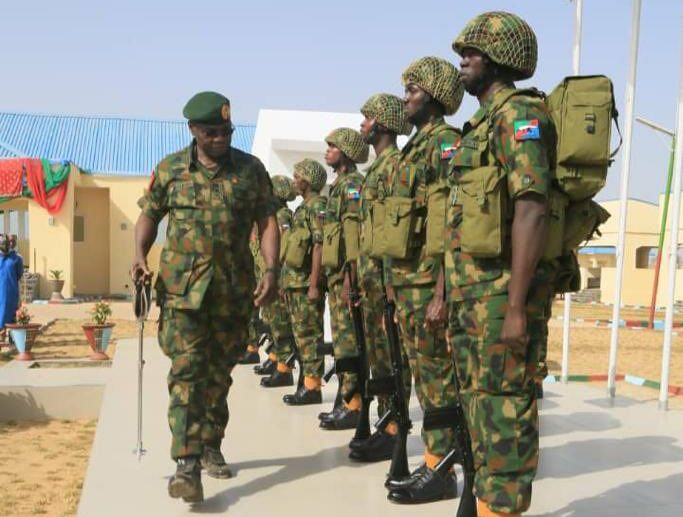
Quite a large percentage of Nigerians, especially in the under 40 age bracket, have openly advocated for revolution, insurrection or even military intervention as a solution. Given the scenario being played out in mostly Francophone Sub-Saharan Africa where increasingly young military officers are unseating gerontocractic governments against the backdrop of widespread national frustration, it is tempting to say that these advocates are riding on the crest of a pan African youth movement. It is easy to give legitimate credence to their calls, especially when one dispassionately examines what has been going on in the political space since February 25. Apparently pushed to the wall by the INEC electoral robbery and the PEPT judgment, frustrated youths of the generations Z and Alpha, not known for their long-distance approach, now see the gun as an attractive option in Nigeria.
I am unapologetically dissatisfied with the system of things in the contemporary Nigerian political and legal spaces. But the greatest tragedy anyone can unleash upon this country is returning her to military rule. This position may be unpopular but then nation building is not a popularity contest.
The space does not allow me to delve into the history of military interventions in our body polity from January 15 1966 to May 29 1999. That you did not live through the military era (I did) does not mean you are free from the impacts of the three decades of their interventions. The 1999 constitution Nigeria has been wrestling with is their creation. Former presidents Obasanjo and Buhari governed us with military fists enclosed in the folds of their agabada and caftan. The class of 1966 to 1999 dominated and still dominates our public institutions.
Directly or indirectly through their children, descendants and minions. The sociopolitical and security upheavals ravaging the country today are rooted in political mismanagements dating back to the era of the jackboots. Military dictatorship only froze them. Then there was the civil war which only God knows when we will recover from, though most of its architects and the generation who witnessed it firsthand are joining the ancestors. Whatever good the military did (and truth be told, they have a lot of credits to their name), these are incidental. Contemporary Nigeria does not need military rule, even if she becomes an island surrounded by a sea of new khaki messiahs elsewhere in Africa. My position is based on these factors.
First, the Nigerian military class is riddled by the tribal, religious and political contradictions in the civilian space. Anyone looking for idealistic supermen who will emerge from the barracks to turn things right will be badly disappointed. The military officers are not from Neptune: the antecedents of the generals should not make any right-thinking Nigerian look up to them for political salvation. The lower and middle cadre officers will be hamstrung by the same factors that made nonsense of the intervention of ostensible radical soldiers in January 1966 and April 1990: they are not in the command structure thus they cannot command the cohesive allegiance which the military requires to function; they may be high on hotheaded idealism like their civilian counterparts clamoring for coups; they cannot escape ethnic and religious colorations; the entrenched political/military establishment will fight back ruthlessly and most likely successfully; and worst of all, if they come to power they will be at sea with the complexities of Nigeria and most likely depend on the political class they shot out of power.
Second, are there actors seeking to capitalize on the current situation to regain power, maybe because the current dispensation, flawed as it is, has upstaged their interests? Professor Wole Soyinka is not the flavour of the month with many members of the ‘Obidient’ movement.
Frankly I have reservations about his interventions in the current political drama. But that is not the point of this article. My attention is on some of the things he said at the ‘Africa in the World’ event in South Africa which ended on September 16. This latest intervention of his which declared that Peter Obi of the Labour Party came third in the elections struck me with these lines: ‘….they (supporters of Peter Obi) didn’t know it but they were being used. Before the elections ever took place, there was a certain clandestine force=reactionary. It included some ex generals who were already calling for an interim government before the elections began….Maybe not consciously, all of them, but some were definitely trying to create a situation to bring back the military.’
A man of Soyinka’s pedigree cannot make these statements for fun. In civilized climes security chiefs will secretly but courteously call upon the Nobel Laureate to substantiate these assertions. At his age, Soyinka is an institution and should be treated as such. If there are people who want to leverage on the situation to restore military rule, then we should nip their efforts in the bud.
Let us not be deceived. A coup in this day and age in Nigeria will not be like the peaceful takeovers in Niger and Gabon.
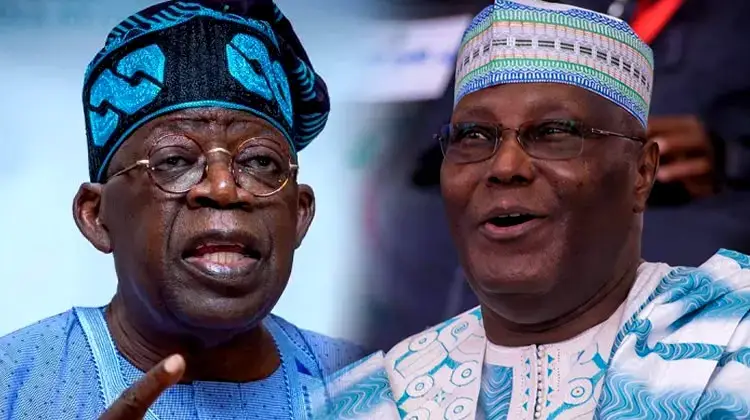
Irrespective of whom you supported in the last elections, the military will have their agenda and it will have nothing to do with Peter Obi, Atiku Abubakar and definitely Bola Tinubu in Aso Rock. Love or hate him, Tinubu has a coterie of officers who will defend his administration. Then there are the foreign neocolonial powers.
The best ways out of this quagmire include: the Supreme Court of Nigeria should be just and seen to be just; the man at Aso Rock should resist the temptation to build an ethnic cabal of inner circle power wielders; the opposition, as long as they do not threaten national security, should not be muzzled or cajoled; all the political gladiators must in their own interest avoid tempting our men and women on horseback into seeing themselves as our saviours; whoever loses at the Supreme Court should restrategize for 2027. I do not know who will do it but INEC requires a comprehensive surgery. Finally the economy must be addressed. We do not need our khaki heroes and heroines to be saved.
Henry C. Onyema lives in Lagos. He is an author and historian. Email: henrykd2009@yahoo.com