Africa
Nigerian Politics and the Prophetic Economy -By Patrick Iwelunmor
If this moment forces a national introspection about how far we have allowed spirituality to encroach into political decision-making, then it may yet serve a constructive purpose. Nigeria deserves leaders chosen by conviction, not by prophecy, and a democracy guided by institutions, not visions negotiated in private rooms.

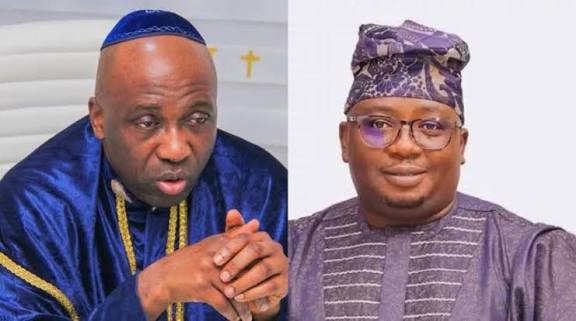
The unfolding drama between Minister Bayo Adelabu and Primate Elijah Ayodele may appear, on the surface, like another familiar dispute between a politician seeking divine backing and a cleric asserting spiritual authority. Yet beneath the noise lies a more troubling national conversation about the growing dependence of the Nigerian political class on religious intermediaries, and the quiet evolution of what has become a prophetic economy. It is an economy powered by fear, ambition, desperation and a belief that state power must be negotiated not only in the streets, polling units and political war rooms, but also at altars and shrines where spiritual legitimacy is claimed and traded.
The allegations are dramatic enough to trend: a minister seeking office, a cleric demanding symbolic items worth millions, a disagreement that escalates into prophecies, public declarations and finally a petition to the Department of State Services. But the real issue is larger than the two men involved. The heart of the matter is what it says about a political culture where electoral victory is increasingly seen not as the outcome of effective governance, grassroots persuasion or social credibility, but as something that must be purchased through spiritual channels. When the state regularly turns to the church for political success, the line between public authority and private spiritual influence blurs in ways that leave the democratic process dangerously exposed.
Nigeria is a deeply religious country. This is neither new nor inherently problematic. The average Nigerian, regardless of faith, instinctively turns to God for guidance, protection and victory. What is new is the growing transactional framework that has taken root. Many clerics have evolved into political consultants with cassocks, issuing strategic spiritual roadmaps and personalised prophecies tailored to political ambitions. Politicians, in turn, have elevated these voices into a parallel advisory class that now competes with party structures, think tanks and campaign professionals. In some cases, spiritual endorsement is pursued with more vigour than manifesto development.
This reliance creates an unhealthy power centre. Prophets, pastors and spiritual intermediaries become gatekeepers of political destiny, and their words, whether benign or manipulative, shape public opinion as much as political rallies do. For a country struggling to strengthen its institutions, this trend carries implications that stretch far beyond any single controversy. When clerics can declare winners and losers before ballots are cast, or assign divine consequences to political decisions, the supremacy of the people’s vote becomes weakened, symbolically and psychologically. A prophecy can become a self-fulfilling political force, not by divine intervention but by influencing voter behaviour or intimidating opponents.
Politicians are not passive in this exchange. They willingly seek out these figures, sometimes because they believe spiritual assurance can protect them from the unpredictability of Nigerian elections, and sometimes because they fear the reputational damage that could follow if a well-known cleric declares them doomed. In an environment where religion commands mass loyalty, a negative prophecy can become a political liability. Many politicians, therefore, engage preemptively, not necessarily because they believe, but because they cannot afford to ignore the influence these figures wield.
This dynamic transforms the church into an unofficial political theatre where messages, visions and declarations have electoral consequences. Clerics increasingly position themselves as stakeholders, sometimes even as kingmakers and politicians respond accordingly. Meanwhile, voters are left navigating a political landscape clouded by spiritual claims that are rarely verifiable and often emotionally charged. Democracy becomes less about choice and more about narratives of divine endorsement.
But beyond influence, there is an economic layer that cannot be ignored. Spiritual consultations come with costs: offerings, symbolic items, special prayers and other ritual requirements that can run into tens or hundreds of millions. This is the prophetic economy, an informal marketplace where divine favour appears commodified, and where political actors feel compelled to participate to avoid being spiritually outmanoeuvred by their rivals. Whether the demands are genuine spiritual instructions, exaggerated expectations or simple miscommunication is not the central issue. The concern is that the political class, already struggling with transparency, now channels significant sums into religious transactions that have no accountability, no oversight and no institutional justification.
This does not mean politicians should abandon their faith, nor does it imply that clerics should refrain from participating in national conversations. Religious institutions have historically shaped cultural values, mediated conflicts and provided moral guidance. But when political aspirations become entangled with spiritual negotiations, democracy acquires distortions that will be difficult to correct. Electoral victory should depend on competence, credibility and the will of the people, not on the power of private prophecies.
The Adelabu-Ayodele saga should therefore not be viewed as a scandal of personalities but as a symptom of a deeper structural issue. It is a reminder of the urgent need to reaffirm the boundaries between faith and statecraft. Nigeria cannot afford a political future where clerical influence substitutes for political legitimacy, or where spiritual consultation becomes a parallel electoral process. No democracy thrives when its spiritual institutions become shadow political battlegrounds.
If this moment forces a national introspection about how far we have allowed spirituality to encroach into political decision-making, then it may yet serve a constructive purpose. Nigeria deserves leaders chosen by conviction, not by prophecy, and a democracy guided by institutions, not visions negotiated in private rooms.