
Africa
Africa Squeezed Between Import Substitution and Dependency Syndrome -By Kestér Kenn Klomegâh
Russian exporters have nothing to complain. Africa’s dependency dilemma still persists. Therefore, Russia to continue expanding food exports to Africa explicitly reflects a calculated economic and geopolitical strategy. In the end of the analysis, the debate plays out prominently and also the primary message: Africa cannot afford to sacrifice food sovereignty for geopolitical solidarity.

Squeezed between import substitution and dependency syndrome, a condition characterized by a set of associated economic symptoms—that is rules and regulations—majority of African countries are shifting from United States and Europe to an incoherent alternative bilateral partnerships with Russia, China and the Global South.
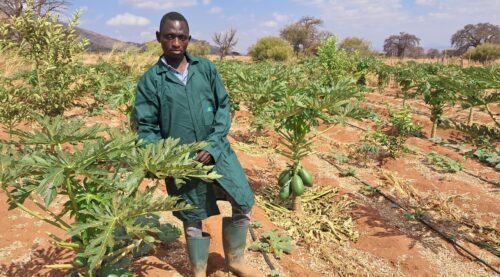
By forging new partnerships, for instance with Russia, these African countries rather create conspicuous economic dependency at the expense of strengthening their own local production, attainable by supporting local farmers under state budget. Import-centric partnership ties and lack of diversification make these African countries committed to import-dependent structures. It invariably compounds domestic production challenges. Needless to say that Africa has huge arable land and human resources to ensure food security.
A classical example that readily comes to mind is Ghana, and other West African countries. With rapidly accelerating economic policy, Ghana’s President John Dramani Mahama ordered the suspension of U.S. chicken and agricultural products, reaffirming swift measures for transforming local agriculture considered as grounds for ensuring sustainable food security and economic growth and, simultaneously, for driving job creation.
President John Dramani Mahama, in early December 2025, while observing Agricultural Day, urged Ghanaians to take up farming, highlighting the guarantee and state support needed for affordable credit and modern tools to boost food security. According to Mahama, Ghana spends $3bn yearly on basic food imports from abroad.
The government decision highlights the importance of leveraging unto local agriculture technology and innovation. Creating opportunities to unlock the full potential of depending on available resources within the new transformative policy strategy which aims at boosting local productivity. President John Dramani Mahama’s special initiatives are the 24-Hour Economy and the Big Push Agenda. One of the pillars focuses on Grow 24 – modernising agriculture.
Despite remarkable commendations for new set of economic recovery, Ghana’s demand for agricultural products is still high, and this time making a smooth shift to Russia whose poultry meat and wheat currently became the main driver of exports to African countries. And Ghana, noticeably, accepts large quantity (tonnes) of poultry from Russia’s Rostov region into the country, according to several media reports. The supplies include grains, but also vegetable oils, meat and dairy products, fish and finished food products have significant potential for Africa.
The Agriculture Ministry’s Agroexport Department acknowledges Russia exports chicken to Ghana, with Ghanaian importers sourcing Russian poultry products, especially frozen cuts, to meet significant local demand that far outstrips domestic production, even after Ghana lifted a temporary 2020 avian flu-related ban on Russian poultry.
Moreover, monitoring and basic research indicated Russian producers are actively increasing poultry exports to various African countries, thus boosting trade, although Ghana still struggles to balance imports with local industry needs.
A few details indicate the following:
* Trade Resumed: Ghana has lifted its ban on Russian poultry imports since April 2021, allowing poultry trade to resume. Russian regions hve, thus far, consistently exported these poultry meat and products into the country under regulatory but flexible import rules on a negotiated bilateral agreement.
* Significant Market: In any case, Ghana is a key African market for Russian poultry, with exports seeing substantial growth in recent years, alongside Angola, Benin, Cote d’Voire, Nigeria and Sierra Leone.
* Demand-Driven: Ghana’s large gap between domestic poultry production and national demand necessitates significant imports, creating opportunities for foreign suppliers like Russia.
* Major Exporters: Russia poultry companies are focused on increasing generally their African exports, with Ghana being a major destination. The basic question: to remain as import dependency or strive at attaining food sufficiency?
* Product Focus: Exports typically include frozen chicken cuts (legs and meat) very vital for supplementing local supply. But as the geopolitical dynamics shift, Ghana and other importing African countries have to review partnerships, particularly with Russia.
Despite the fact that challenges persist, Russia strongly remains as a notable supplier to Ghana, even under the supervision of John Mahama’s administration, dealing as a friendly ally, both have the vision for multipolar trade architecture, ultimately fulfilling a critical role in meeting majority of African countries’ large consumer demand for poultry products, and with Russia’s trade actively expanding and Ghana’s preparedness to spend on such imports from the state budget.
Following two high-profile Russia–Africa summits, cooperation in the area of food security emerged as a key theme. Moscow pledged to boost agricultural exports to the continent—especially grain, poultry, and fertilisers—while African leaders welcomed the prospect of improved food supplies.
Nevertheless, do these African governments think of prioritising agricultural self-sufficiency. At a May 2025 meeting in St. Petersburg, Russia’s Economic Development Minister, Maxim Reshetnikov, underlined the fact that more than 40 Russian companies were keen to export animal products and agricultural goods to the African region.
Russia, eager to expand its economic footprint, sees large-scale agricultural exports as a key revenue generator. Estimates suggest the Russian government could earn over $15 billion annually from these agricultural exports to African continent.
Head of the Agroexport Federal Center, Ilya Ilyushin, speaking at the round table “Russia-Africa: A Strategic Partnership in Agriculture to Ensure Food Security,” which was held as part of the international conference on ensuring the food sovereignty of African countries in Addis Ababa (Ethiopia) on Nov. 21, 2025, said: “We see significant potential in expanding supplies of Russian agricultural products to Africa.”
It mentioned that the Agriculture Ministry’s Agroexport Department, and the Union of Grain Exporters and Producers, exported over 32,000 tonnes of wheat and barley to Egypt totaling nearly $8 million during the first half of 2025, Kenya totaling over $119 million.
Interfax media reports referred to African countries whose markets are of interest for Russian producers and exporters. Despite existing difficulties, supplies of livestock products are also growing, this includes poultry meat, Ilyushin said. Exports of agricultural products from Russia to African countries have more than doubled, and third quarter of 2025 reached almost $7 billion.
The key buyers of Russian grain on the continent are Egypt, Algeria, Kenya, Libya, Tunisia, Nigeria, Morocco, South Africa, Tanzania and Sudan, he said. According to him, Russia needs to expand the geography of supplies, increasing exports to other regions of the continent, increase supplies in West Africa to Benin, Cameroon, Ghana, Liberia and the French-speaking Sahelian States.
Of course, Russian exporters have nothing to complain. Africa’s dependency dilemma still persists. Therefore, Russia to continue expanding food exports to Africa explicitly reflects a calculated economic and geopolitical strategy. In the end of the analysis, the debate plays out prominently and also the primary message: Africa cannot afford to sacrifice food sovereignty for geopolitical solidarity.
With the above analysis, Russian exporters show readiness to explore and shape actionable strategies for harnessing Africa’s consumer market, including that of Ghana, and further to strengthen economic and trade cooperation and support its dynamic vision for sustainable development in the context of multipolar friendship and solidarity.
—




















You must be logged in to post a comment Login