
Africa
Was Reno’s Ambassadorial Appointment Meant To Close His Mouth? -By Isaac Asabor
Nigerians remember Reno’s videos. They remember his fiery tweets. They remember the interviews where he tore Tinubu to pieces. They remember how Reno presented himself as a defender of truth and accountability. And now, they see his sudden friendliness toward the government he once described as morally bankrupt, cemented by a Senate that didn’t even bother to question him.

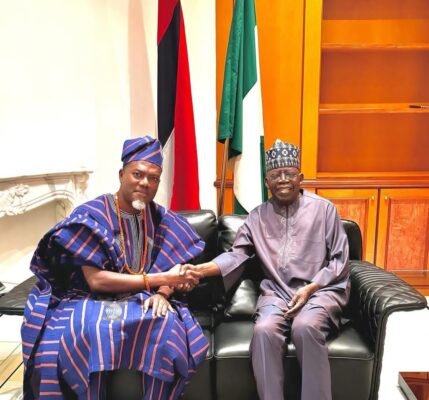
Nigeria’s political landscape has always been full of contradictions, but some moves are so blatant that they demand deeper scrutiny. Reno Omokri’s sudden elevation from a ferocious critic of Bola Ahmed Tinubu to an ambassadorial appointee is one of those moments. It is the kind of abrupt transformation that forces Nigerians, already skeptical and exhausted by political theatrics, to ask a very simple, unavoidable question: “Was this appointment meant to close Reno Omokri’s mouth?”
The reason for the foregoing question cannot be farfetched as it is well known that before Tinubu’s emergence as president, Reno Omokri was not just another chatterbox on social media. He was one of Tinubu’s most persistent antagonists, consistent, loud, and relentless. His criticism was not casual or occasional; it was systematic, active, and aggressive. He took every opportunity to highlight what he described as Tinubu’s defects. And he did not merely “raise questions”; he made outright allegations.
Reno questioned Tinubu’s identity, sparking conversations about names, certificates, and origins. He tore into Tinubu’s age, amplifying doubts about inconsistencies in his public records. He challenged Tinubu’s educational background, publicly poking at the Chicago State University saga and demanding clarifications. He criticized Tinubu’s health, pointing to his gait, his posture, his medical trips, and claiming he was unfit to withstand the pressure of national leadership.
And it did not stop there. Reno held nothing back in his criticism; he even accused the president of involvement in drug-related dealings, a claim he trumpeted repeatedly while positioning himself as a moral crusader.
Then there were the political accusations. Reno repeatedly described Tinubu’s grip on Lagos as a “political cartel system.” He accused him of installing loyalists, controlling the state’s finances from the shadows, and engineering a dynasty that served his personal interests more than the public good. He also questioned the source of Tinubu’s wealth, claiming that the former Lagos governor had amassed fortunes through questionable channels.
These accusations were not whispered in closed rooms. Reno blasted them loudly across Twitter (now X), YouTube, television studios, newspapers, radio platforms, podcasts, every stage big enough to carry his political evangelism. He styled himself as a conscience of the nation, a protector of democracy, a watchman over Nigeria’s political morality. And Tinubu, in his narrative, was the worst thing that could happen to the country.
This campaign of criticism was intense, consistent, and high-profile. Reno built an entire online persona on it. Many Nigerians who opposed Tinubu cheered him on. Reno even travelled to different countries, releasing videos dragging Tinubu in markets, streets, monuments, and airports.
But for a man who claimed Tinubu was unfit, corrupt, compromised, and dangerous, the sudden silence after an ambassadorial appointment is too convenient to ignore. The timing is suspect, and the transformation is dramatic. Worse still, the silence is deafening.
And nothing exposes the suspicious nature of this appointment more than the manner in which Reno’s screening played out before the Senate. It did not just lack scrutiny; it was practically choreographed to avoid it. A heated confrontation erupted between Senator Ali Ndume and Senator Adams Oshiomhole during the screening, not over probing Reno, but over whether he should even be questioned at all. Ndume pushed for Omokri to “take a bow and go,” citing a 25-year acquaintance and vouching for his character, while Oshiomhole demanded at least the courtesy of remarks before such a motion could stand. The disagreement degenerated into both men calling each other names, “tout” and “hypocrite”, yet after the noise, the Senate did exactly what Ndume wanted: Reno was allowed to bow and go without a single question.
That moment told Nigerians everything they needed to know. A man who hurled some of the heaviest allegations against the sitting president did not face interrogation. No senator asked him to clarify his claims. Nobody questioned his abrupt U-turn. Not a word was demanded about his past statements. The lawmakers simply let him walk through the process untouched, as though the priority was to protect him from answering uncomfortable questions. If anything reinforces the suspicion that this appointment was engineered to buy silence, it is that screening.
Nigeria has a long record of using appointments as political tranquilizers. Vocal critics go quiet once they get access to the corridors of power. Opposition figures who shout on the streets suddenly discover “maturity” once a government post is dangled before them. What looked like activism begins to look like negotiation.
So the question becomes even louder: “Did Tinubu appoint Reno to neutralize him?” or “Did Reno simply grab an opportunity he had been waiting for?”
These questions cannot be waved aside because the real problem here is not the appointment, it is the contradiction.
If Reno meant every word he said about Tinubu, then this sudden partnership is an ideological disaster. It is a moral U-turn that Nigerians should not overlook. How can a man publicly brand another as unfit to govern, only to serve under him without explanation? What changed? Where is the public accountability?
But if Reno never believed his own allegations, including those heavy accusations he pushed with zeal, and if he merely weaponized them for political influence, then his critics are right to call his activism opportunistic. That would mean his loud crusade against Tinubu was not a moral mission but a bargaining chip.
Either way, Reno stands in a politically embarrassing position. And for the Tinubu government, the optics are equally troubling. Whether intended or not, the appointment sends a message that critics can be bought, absorbed, or silenced with a strategic gesture. It suggests that outspokenness in Nigeria is less about principle and more about price. It also fuels the belief that the government is more interested in neutralizing criticism than addressing it.
This cycle is toxic for democracy. A nation cannot develop when public discourse is shaped by personal ambition rather than conviction. Nigeria cannot grow when activism is negotiable and criticism is for sale. A critic who becomes quiet once appointed is not a champion of the people; he is an opportunist who found his price.
Nigerians remember Reno’s videos. They remember his fiery tweets. They remember the interviews where he tore Tinubu to pieces. They remember how Reno presented himself as a defender of truth and accountability. And now, they see his sudden friendliness toward the government he once described as morally bankrupt, cemented by a Senate that didn’t even bother to question him.
So yes, the question is legitimate and must be asked boldly: “Was Reno Omokri’s ambassadorial appointment designed to shut him up? “Or “Did Reno simply expose himself as another political actor who speaks loudly until the price is right?”
Until Reno addresses this contradiction with something more substantial than silence, the suspicion will not fade. Nigerians have watched this script too many times to pretend they do not know how it ends.

















You must be logged in to post a comment Login