
Africa
WHO Warns Ebola Outbreak in DR Congo Could Spread Internationally
The DR Congo Ebola outbreak has killed more than 2,300 people from nearly 5,000 cases, with WHO warning of a high risk of further spread.

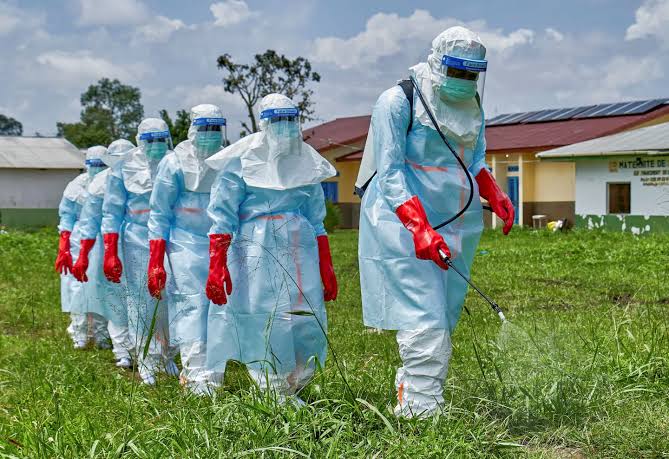
The World Health Organization (WHO) has warned that the Ebola outbreak in the Democratic Republic of Congo (DRC) remains “far from being under control”, with the virus spreading faster than in any previous Ebola epidemic.
WHO Director-General Tedros Adhanom Ghebreyesus issued the warning on Tuesday during an emergency meeting convened to assess the worsening outbreak.
“We must be frank: the epidemic is far from being under control,” Tedros said.
“It had a big head start, and we are still playing catch-up.”
The warning followed confirmation by the DRC on Monday that the outbreak had killed more than 2,300 people from nearly 5,000 cases, making it the deadliest Ebola outbreak ever recorded in the country.
The DRC declared the outbreak, its 17th, on May 15, but officials believe the virus had been spreading for several weeks before it was formally identified.
The disease has been reported in northern and eastern parts of the country, where weak state presence, limited health facilities and prolonged armed conflict are complicating containment efforts.
Tedros said the outbreak was being driven by “insecurity and displacement, and intense population movement along roads, rivers and mining routes.”
He urged countries to strengthen cooperation in containing the virus and said the WHO would release new recommendations for the DRC and other countries at risk in the coming days.
Cases and deaths surge
Describing the pace of transmission as unprecedented, Tedros said the virus “is moving faster than any previous Ebola outbreak.”
According to the Africa Centres for Disease Control and Prevention (Africa CDC), the DRC recorded seven times more cases and five times more deaths in the first three months of the current outbreak than were recorded during the first three months of the worst Ebola epidemic in history.
The 2013–2016 Ebola outbreak in West Africa claimed more than 11,300 lives, primarily in Liberia, Sierra Leone and Guinea.
Before the current crisis, the DRC’s 2018–2020 Ebola outbreak was considered its deadliest, with 2,299 deaths recorded among 3,381 confirmed cases, according to WHO figures derived from Congolese data.
The WHO emergency committee met for the second time since declaring the outbreak a Public Health Emergency of International Concern on May 17.
The agency currently classifies the public health risk as “very high” in the DRC, “high” in Uganda and other neighbouring countries, and “low” for the rest of Africa and the wider world.
WHO concerned about undetected transmission
Ebola has so far been detected in six provinces of the DRC, including areas near South Sudan, with cases also reported in Uganda.
Tedros warned that the threat of further domestic and international transmission remained significant.
“The risk of further national and international spread remains high,” he said.
He identified deaths occurring outside treatment centres and among people not included on known contact lists as a major concern.
“What concerned me most was ‘where people are dying: at home, in their communities, outside treatment centres, and outside known contact lists’,” Tedros said.
He added: “Every death like that points to a chain of transmission we have not yet found.”
Tedros warned that “until every chain is found and broken, the epidemic will continue”.
Dieudonne Mwamba, head of the DRC’s Institute of Public Health, said mistrust among communities had contributed to the recent increase in infections and deaths.
Speaking to AFP, Mwamba said the rise over the previous three or four weeks would require “other strategies” to tackle the situation.
WHO expert Thierno Balde said the organisation and its partners were expanding and decentralising their response to reach communities more effectively.
He said efforts also included protecting motorcycle taxi drivers who transport patients and integrating them into Ebola surveillance efforts.
“WHO and partners aim to see an impact of the scale up in the next months but cannot put a timeline on when the epidemic will be brought under control,” Balde told reporters in Geneva, speaking from Bunia.
Africans Angle News





















You must be logged in to post a comment Login