Forgotten Dairies
Nigeria’s Fake Agencies Scandal: A Call for Strategic Action, Accountability, and Reform –By Muhammad Bashir Abdulhafiz
As a young Nigerian, I choose to hope. But hope without action is empty. I call on every patriotic citizen to demand accountability. I call on the National Assembly to exercise its oversight powers with vigour. I call on the anti-corruption agencies to pursue these cases to their logical conclusion no matter how high it reaches. And I call on President Tinubu to demonstrate that this administration is serious about ending the culture of impunity. The suspension of three permanent secretaries is a start. But it cannot be the end. Nigerians are watching. And we will not forget. The time for excuses is over, and the time for accountability is now.

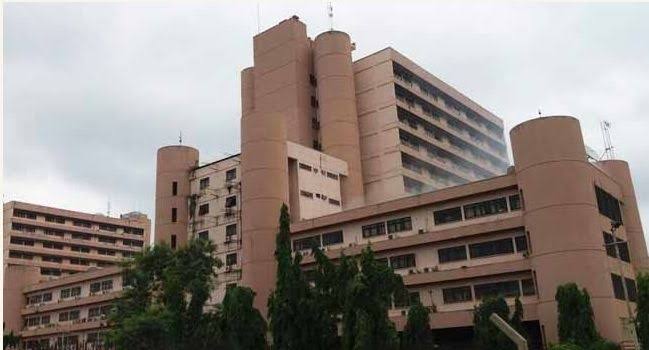
In recent weeks, Nigerians have been confronted with revelations that should shock every patriotic citizen to the core. The Independent Corrupt Practices and Other Related Offences Commission (ICPC) has uncovered not one, but multiple fake government agencies operating openly within the very heart of our federal bureaucracy. These were not shadowy operations run from hidden locations. They had offices inside the Federal Secretariat in Abuja, official-looking letterheads, websites bearing government seals, and even budget allocations in the national appropriation.
How did this happen? How did individuals with no legal authority create entire government agencies, secure office space in the Office of the Secretary to the Government of the Federation, and operate for years without detection? The answer lies in a systemic failure of governance that has plagued this country for far too long a failure that the previous administration not only failed to fix but actively enabled through weak oversight, poor accountability, and the institutionalisation of impunity.
The first fake agency uncovered was the Presidential Foreign Investment Promotion Council (PFIPC). Its self styled Director-General, Prince Adeniyi Adeyemi Matthew, walked the halls of government for years, meeting with cabinet ministers, financial regulators, and even the head of Nigeria’s anti-corruption agency. He operated 34 bank accounts, including nine allegedly opened in the names of fictitious government agencies. The PFIPC was even allocated 1.3 billion naira in the 2026 national budget.
But the rot did not stop there. Further investigation uncovered the National Brands Development and Made-in-Nigeria Special Project Office, operating illegally from within the Office of the Secretary to the Government of the Federation. Its promoter, George Buchi Nwabueze, had an appointment letter supposedly issued by the SGF’s office and was actively requesting state governments to nominate coordinators for his fake agency. ICPC investigators also identified two other fictitious bodies linked to the same network: the FCT Investment Promotion Agency, the Foreign Investment Promotion Agency, and the Public-Private Partnership.
In total, four unlawful agencies have now been uncovered. Three permanent secretaries have been suspended. But the question every Nigerian must ask is: how many more are still out there? These revelations did not emerge in a vacuum. They are the predictable outcome of a system where accountability is optional and oversight is ceremonial. The previous administration under President Muhammadu Buhari came to power promising to fight corruption. Yet, by his own admission and by the testimony of those who served under him, corruption flourished. An APC chieftain recently declared that 95 per cent of Buhari’s ministers should be in jail. Oversight institutions were weak, critics were dismissed, and whistleblowers were ignored.
The scale of the allegations against Buhari era officials is staggering. Senior figures from that administration are being investigated for alleged corruption totalling an estimated N3.47 trillion. The former Central Bank Governor is accused of arbitrarily allocating N3 trillion worth of foreign exchange without due process. Former ministers face charges ranging from N2.2 billion to N37 billion in alleged fraud. This is the legacy we inherited: a culture where public office was treated as a licence to plunder, where billions were stolen while hospitals lacked equipment, roads remained unpaved, and schools crumbled.
Perhaps even more damning than the fake agencies is the revelation of how public funds are or rather, are not managed. During the 2026 budget defence sessions at the National Assembly, a shocking truth emerged: many Ministries, Departments, and Agencies recorded zero per cent capital fund release in 2025.
Consider these figures: the Federal Ministry of Health and Social Welfare received just N36 million out of a total capital allocation of N218 billion. The Ministry of Livestock Development got nothing from its N10 billion capital vote. The Ministry of Solid Minerals Development received zero. The Ministry of Transportation managed only about one per cent of its N256.7 billion allocation. The South East Development Commission reportedly received zero capital releases throughout 2025.
How is this possible when revenue agencies reportedly generated N28 trillion in the same year? Lawmakers have rightly asked: ‘What happened to the N28 trillion?’ The answer is a budget system where appropriation and release exist in parallel universes. The National Assembly deliberates for months and passes a budget. The President signs it into law. And then the executive treats the law as merely advisory. This is not governance. This is theatre. And the Nigerian people are the audience, paying the price with their broken roads, collapsing hospitals, and failing schools.
The ICPC’s 2025 Ethics and Integrity Compliance Scorecard paints a devastating picture of our public service. Out of 344 MDAs assessed, no agency achieved full compliance. One hundred and fourteen MDAs failed to submit annual financial reports. Eighty-nine MDAs operate without anti-corruption units. Forty failed to remit internally generated revenue as required.
These are not minor administrative lapses. They are fundamental failures of governance that create the conditions for fraud to thrive. When agencies do not submit financial reports, when they have no internal controls, when they lack anti-corruption units, they become fertile ground for the kind of abuse we have seen with these fake agencies. The fake agencies scandal succeeded because the systems designed to prevent it were broken. Verification procedures were weak. Inter-agency oversight was virtually non-existent. Public officers whose negligence facilitated these operations face at most administrative sanctions. There is no real deterrent, no genuine consequence for failure.
As a young Nigerian who loves this country and refuses to accept that this is the best we can do, I offer the following advice to those in authority:
First, prosecute without fear or favour. The promoters of these fake agencies must face the full weight of the law. But more importantly, every public officer whose negligence or complicity enabled their operations must also be held accountable. Administrative sanctions are not enough. Criminal prosecutions must follow. When three permanent secretaries are suspended but not prosecuted, we send a message that failure has no real consequence.
Second, reform the budget process. The current system where the executive can simply ignore the budget passed by the National Assembly must end. If the legislature appropriates funds, those funds must be released. The N28 trillion in revenue generated must be accounted for transparently. The disconnect between appropriation and release is not a technical issue, it is a fundamental breach of constitutional governance.
Third, strengthen verification and oversight. How did the Office of the Secretary to the Government of the Federation allocate office space to a fake agency without presidential approval? How did 34 bank accounts get opened for a non-existent agency? The ICPC has rightly recommended institutional reforms to strengthen verification mechanisms, internal controls, and inter-agency oversight. These reforms must be implemented immediately.
Fourth, enforce financial accountability. The ICPC found that 114 MDAs failed to submit annual financial reports. This cannot continue. Any agency that fails to account for previous allocations should receive no fresh budgetary provisions. The National Assembly has reportedly recommended excluding 22 MDAs from the 2026 budget for this very reason. This is a step in the right direction.
Fifth, protect and empower whistleblowers. These fake agencies operated for years because nobody spoke up or perhaps because those who did were ignored. We need strong legal protections for those who expose corruption and a culture that rewards, rather than punishes, those who speak truth to power.
These revelations should shame us all. But shame without action is just another form of acceptance. We must demand more from our leaders. We must insist that those who stole from us are not just suspended but prosecuted. We must refuse to accept a budget system that treats our money as a suggestion rather than a commitment.
The fake agencies scandal is not just about a few criminals who exploited a broken system. It is a symptom of a deeper disease, and a culture of impunity that has infected every level of our government. The previous administration failed to cure this disease. In many ways, it made it worse. The question before us now is simple: will this administration be different? Will it have the courage to prosecute the powerful, to reform the broken systems, and to finally make accountability a reality rather than a slogan?
As a young Nigerian, I choose to hope. But hope without action is empty. I call on every patriotic citizen to demand accountability. I call on the National Assembly to exercise its oversight powers with vigour. I call on the anti-corruption agencies to pursue these cases to their logical conclusion no matter how high it reaches. And I call on President Tinubu to demonstrate that this administration is serious about ending the culture of impunity. The suspension of three permanent secretaries is a start. But it cannot be the end. Nigerians are watching. And we will not forget. The time for excuses is over, and the time for accountability is now.
God bless the Federal Republic of Nigeria.
Muhammad Bashir Abdulhafiz wrote from Jos, and can be reached via abdulhafizmuhammad81@gmail.com instantly.