
Breaking News
Trump Escalates Canada Trade Fight, Vows 50% Tariff on Autos From 2027
Trump threatens to double US tariffs on Canadian vehicles to 50% from 2027 after Washington and Ottawa fail to reach a trade agreement.

President Donald Trump has intensified his trade confrontation with Canada, announcing plans to raise tariffs on Canadian cars, trucks, automotive parts and steel to 50 percent from January 2027.
The announcement followed the failure of US and Canadian negotiators to reach a deal that would have prevented new 50-percent US tariffs on certain Canadian goods. The duties came into force on Saturday, with Canada preparing retaliatory measures.
“On January First, 2027, Tariffs on all Cars, Trucks, both large and small, Automotive Parts, and Steel, will be increased to 50%,” Trump said in a Monday post on Truth Social.
Canadian vehicles currently face a 25-percent US tariff on non-US content, while imported steel generally carries a 50-percent duty.
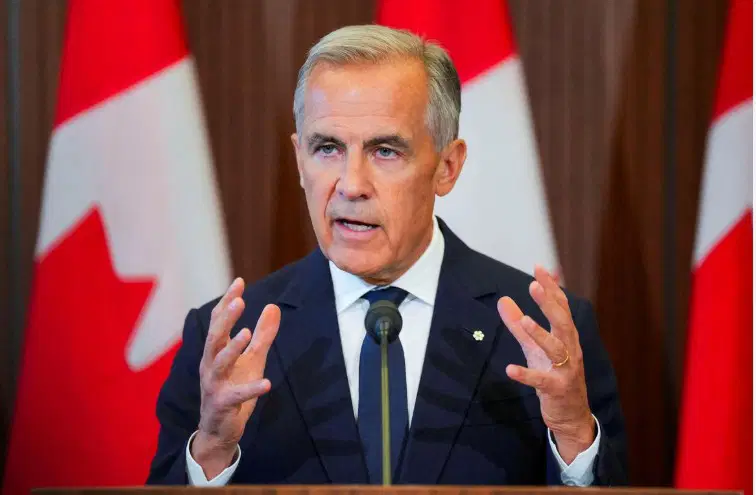
Canadian Prime Minister Mark Carney said Ottawa had rejected what he described as a “bad deal” and announced retaliatory tariffs beginning September 8.
The Canadian response will cover US steel and dairy products and extend to areas including agricultural machinery, pulp and paper and electronics.
Carney said Canada had consistently sought the best possible agreement rather than accepting an unfavourable arrangement.
“The goal of trade talks with Washington has always been to get the best deal for Canadians, never a deal at any price or on any time frame,” he said.
He added: “We learned that, during the negotiations, the Americans wanted to destroy our major industries — including the automotive, steel, and aluminum sectors — through unfair negotiating terms. And that is one of the main reasons why we said no.”
According to Carney, Canada’s strategy of strengthening domestic production while expanding trade with other nations has been “plan A from the start.”
He also claimed US negotiators attempted to introduce last-minute restrictions on Canada’s trade arrangements with other countries.
Carney said American officials also made unacceptable “threats” involving the French language and “Quebec culture.”
Vice President JD Vance disputed Canada’s account, saying on Monday that “unreasonable last-minute demands” from Ottawa were responsible for the breakdown in negotiations.
The economic stakes are significant, given the close trading relationship between the two countries. Canadian exports to the United States account for 70 percent of Canada’s total exports.
Canada is also currently the United States’ second-largest trading partner in goods, behind Mexico.
A poll released by the Angus Reid Institute on Sunday found that 75 percent of Canadians supported Carney’s decision to end the talks. However, the organisation noted that two in five Canadians have concerns about the possible impact on their employment.
Ontario Premier Doug Ford also condemned Trump’s proposed auto tariffs, telling Newstalk 580 CFRA that he could “kiss my ass.”
“We’re going to go at him full steam,” Ford said.
Trump fired back online, threatening “far worse” consequences if Canadian officials did not “fall in line.”
The White House has accused Canada of “discriminatory treatment” of US alcohol, vehicles and dairy products as part of the justification for the tariffs.
Trump postponed the tariffs for three days last week while the two governments attempted to reach an agreement. The negotiations continued into Friday night but ended without a deal.
The latest tariffs affect approximately 5.5 percent of Canadian exports entering the US market, worth around $20 billion and covering products from hockey sticks to cement.
Trump claimed Monday that “Canada has been ripping off the United States of America for years,” insisting that “we don’t need Canada, they need us.”
US Trade Representative Jamieson Greer said the Trump administration had offered to remove a 10-percent tariff on Canadian softwood lumber and reduce the 25-percent tariff on automobiles.
Greer also said Washington was prepared to lower tariffs on most Canadian steel from 50 percent to 25 percent.
The two countries must still resolve disagreements over the future of the US-Mexico-Canada free trade agreement, or USMCA. Trump has declined to renew the agreement in its existing form.
Relations have also been strained by Trump’s repeated comments suggesting Canada could become a US state and his habit of calling Carney and former prime minister Justin Trudeau “governor” rather than prime minister.
Africans Angle News

























You must be logged in to post a comment Login