Breaking News
NLC Raises Alarm as Insecurity, Rising Costs Push Nigerians Into Deeper Hardship
NLC President Joe Ajaero says insecurity, unemployment and rising living costs are crippling livelihoods and pushing Nigerians into deeper poverty.

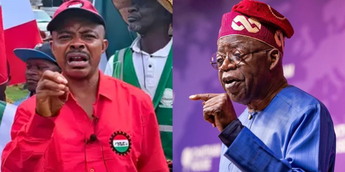
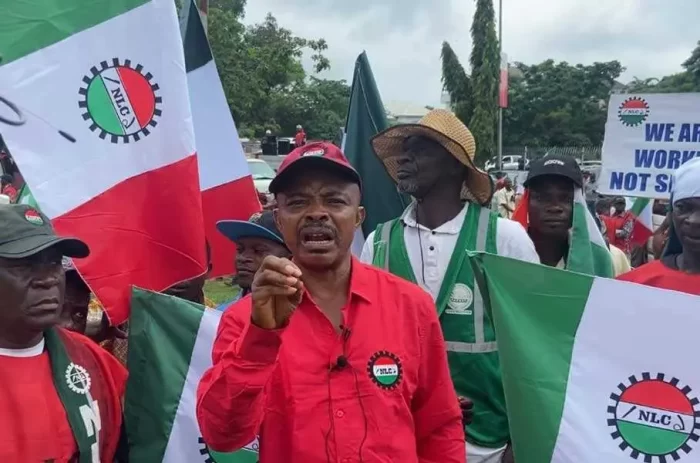
The Nigeria Labour Congress (NLC) has warned that growing insecurity, poverty and economic hardship are pushing millions of Nigerians to the brink, with workers increasingly struggling to survive.
The union said insecurity has destroyed livelihoods, weakened economic activity and deepened fear across the country.
NLC President Joe Ajaero, speaking in an interview, said both citizens and government officials now agree that insecurity has become a major national crisis.
“Everyone in this country will tell you that insecurity has finished the country. It’s not a question of whether I am in government or not. Even people in government are lamenting,” he said.
According to Ajaero, workers can no longer operate effectively in many communities due to fear of attacks and displacement.
“The psychological fear of moving from one place to another is increasing, and that cannot even be quantified. People are moving from their communities to Internally Displaced Persons, IDP, camps. Insecurity has really dealt with us,” he stated.
The labour leader noted that insecurity has not only led to loss of lives but also discouraged investment and job creation.
“When you now talk of challenges, is it decent work or even work at all? Insecurity has affected employment in the country. Apart from lives lost, people can’t invest,” he said.
Ajaero stressed that many Nigerians, especially farmers in rural communities, have lost their means of livelihood because they can no longer access their farms safely.
He also criticised the economic realities facing workers, insisting that macroeconomic growth figures have not translated into improved living conditions.
“If you say the economy has grown and I can’t move from where I am because transportation is high, how has that translated to my life? We are not seeing it,” he said.
The NLC president pointed to recent tensions involving Iran and the United States, saying the crisis immediately triggered another spike in fuel prices.
“The moment there was tension between Iran and America, fuel prices jumped to about N1,300–N1,400. That shows we are not insulated,” he said.
Ajaero questioned why workers have not benefited from increased government earnings tied to higher crude oil prices.
“Did you add N50,000 or N100,000 to workers’ earnings to cushion the effect? The worker is buying fuel at N1,400, while salary remains the same,” he stated.
The labour leader also lamented the growing burden of taxes and levies on ordinary Nigerians.
“You have formal and informal taxes. Okada riders, market women, before they even start work, are paying levies. Nigerians are groaning,” he said.
He further criticised the lack of infrastructure supporting alternative energy solutions like CNG and electric vehicles.
“We thought Compressed Natural Gas, CNG, will stabilise transportation, but where are the stations? How many people have converted?” he asked.
On workers’ rights, Ajaero said harsh economic realities and poor labour conditions amount to violations of fundamental rights.
“Which human rights are worse than starvation? When you don’t pay people adequately, their fundamental rights are already compromised,” he added.
The NLC president also condemned restrictions on peaceful protests and said frustration is spreading across different sectors of society.
“Even the police are now protesting. The same people used to suppress protests are now expressing their own frustrations. That shows how deep the crisis has become,” he said.
Meanwhile, the NLC criticised comments by Finance Minister Taiwo Oyedele that the Federal Government would not restore fuel subsidy.
An NLC official described the government’s stance as insensitive to the economic pressure facing Nigerians and called for alternative support measures.
“Subsidy, in practice, is not a one-dimensional policy. There are several targeted and more sustainable approaches the government can adopt to ease the burden on Nigerians,” the official said.
The official proposed targeted interventions for transportation, manufacturing and food production, alongside temporary tax reductions and support for local refineries.
However, speaking in France during President Bola Tinubu’s state visit, Oyedele maintained that the government would not return to fuel subsidy.
“We will not bring back fuel subsidy because it creates distortions for the economy, and we won’t introduce price control because we believe in the market,” he said.
Africans Angle News