Forgotten Dairies
Orchestrated Darkness? Why Nigeria’s Power Sector Still Fails-And Why This Moment Demands Courage -By Adeniran Taiwo Olugbenga
When failure is followed by continuity, when poor outcomes carry no visible consequence, when systems that do not deliver are allowed to reproduce themselves, then failure stops being accidental. It becomes structural.
And once it becomes structural, it becomes dangerous.

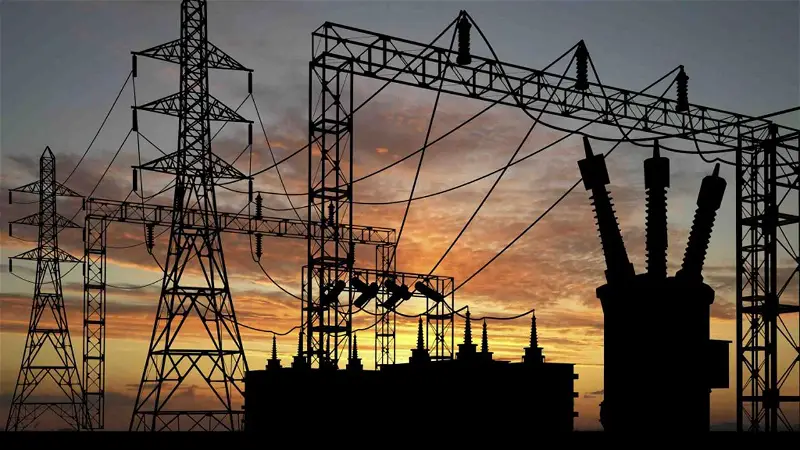
Nigeria can no longer afford polite language about its power sector. What we are dealing with is not just inefficiency—it is a stubborn, recurring failure that has been normalized for far too long. After decades of reforms, billions of dollars committed, and endless assurances, Nigerians are still trapped in darkness—forced to generate their own power in a country that should be powering a continent.
From the days of NEPA to the present structure, the pattern has remained disturbingly consistent: unstable supply, repeated grid collapses, abandoned or delayed infrastructure, and a system that never quite delivers on its promises. At this point, it is no longer credible to describe these as isolated failures. They are systemic, entrenched, and increasingly difficult to excuse.
At the center of this dysfunction is the Transmission Company of Nigeria (TCN)—the backbone of Nigeria’s electricity supply chain. When transmission fails, everything fails. Yet for years, Nigerians have watched as this critical institution struggles to perform its most basic responsibility: to reliably move power from generation to distribution.
National grid collapses have become routine. Donor-funded projects meant to strengthen the grid have suffered delays and underperformance. Generated power is frequently stranded, unable to reach homes and businesses. Maintenance remains reactive rather than preventive, while transparency and accountability remain limited. These are not isolated incidents—they reflect a system that has not been compelled to deliver results.
The appointment of Engr. Sule Ahmed Abdulaziz, as Managing Director of TCN, is therefore not a neutral administrative decision. It is a continuation of a leadership cycle under which many of these failures have persisted. At a time when the country urgently needs a break from the past, this decision signals a return to it.
Let us be clear: this appointment amounts to the institutionalization of failure. Engr. Abdulaziz is not an outsider to this system; he is a product of it—from the days of the National Electric Power Authority (NEPA), through the transition into the Power Holding Company of Nigeria (PHCN), and now within TCN. A man who has journeyed through these phases—across decades of reform without corresponding results—does not represent transformation. He represents continuity of a system whose defining output has been persistent failure. To retain such leadership at this critical moment is not reform—it is the formalization of stagnation.
That continuity might have been valuable if it had produced transformation. But across these phases—monopoly, reform transition, and post-privatization—the same outcomes have persisted: grid instability, infrastructure gaps, and an inability to deliver consistent electricity. The structures have changed, but the results have not.
This stands in direct tension with the promise of Renewed Hope under President Bola Ahmed Tinubu. While there have been visible efforts to stabilize the economy, no meaningful economic progress can be sustained without a functional power sector. Electricity is the foundation upon which productivity, industry, and national growth depend.
If this pattern is not confronted, the consequences will extend beyond the power sector. The legacy of this administration risks being weighed down—not by lack of effort, but by the failure to decisively break from systems that no longer serve the nation. Nigerians will ultimately judge outcomes, not intentions.
At its core, this is a moral question. When failure is followed by continuity, and poor outcomes carry no consequence, failure becomes structural. And when failure becomes structural, it becomes dangerous. Nigeria cannot build a future on recycled outcomes.
After a broad convergence of concerned citizens, civil society organizations, stakeholders, and voices across the power sector today, it was unanimously resolved that silence can no longer be an option. We agreed that starting April 14, a nationwide peaceful protest will begin to demand a holistic overhaul of leadership and accountability in the power sector, starting with the Transmission Company of Nigeria (TCN). This is not a call made lightly—it is the outcome of deep reflection and shared conviction that the current trajectory is unsustainable. The choice before us is no longer abstract: we either continue to manage failure, or we confront it decisively, because at this point, darkness is no longer just a condition—it is a consequence of decisions.
When failure is followed by continuity, when poor outcomes carry no visible consequence, when systems that do not deliver are allowed to reproduce themselves, then failure stops being accidental. It becomes structural.
And once it becomes structural, it becomes dangerous.
This is why silence is no longer an option.
ADENIRAN TAIWO OLUGBENGA
Convener, Arise O’ Compatriot Initiative