Forgotten Dairies
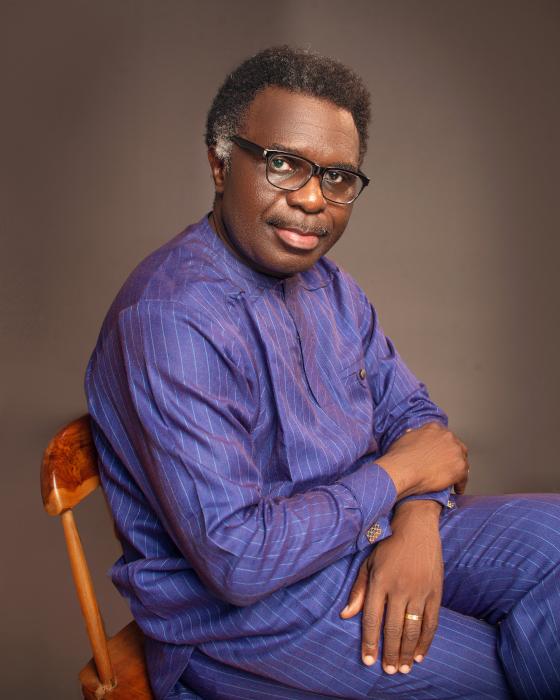
Osinbajo: Africa’s Trusted Hand Amid Global Uncertainty -By Oluwafemi Popoola
History may ultimately be kinder to him than politics ever was. Because beyond the noise of elections and power struggles, there is something enduring about a life committed to ideas, to service, and to impact. And if the current trajectory is anything to go by, we may still be watching only the middle chapters of a story that is far from over.

The world is entering a dangerous phase of uncertainty. The escalating tensions involving the United States, Iran, and Israel have added a volatile new layer to global instability, disrupting energy markets, redrawing alliances and deepening strategic rivalries across regions. For Africa, the consequences are immediate and far-reaching. They are higher fuel costs, inflationary pressures, and a tightening fiscal space for already strained economies. These external shocks are compounding existing vulnerabilities across the continent.
According to the World Bank, over 20 African countries are either in or at high risk of debt distress, while the African Development Bank estimates that climate change could cost the continent up to $50 billion annually by 2040 if urgent action is not taken. In such times, trust becomes a scarce and invaluable currency, and the search for steady, thoughtful leadership grows more urgent. It is within this context that the evolving role of former Vice President Yemi Osinbajo assumes deeper significance.
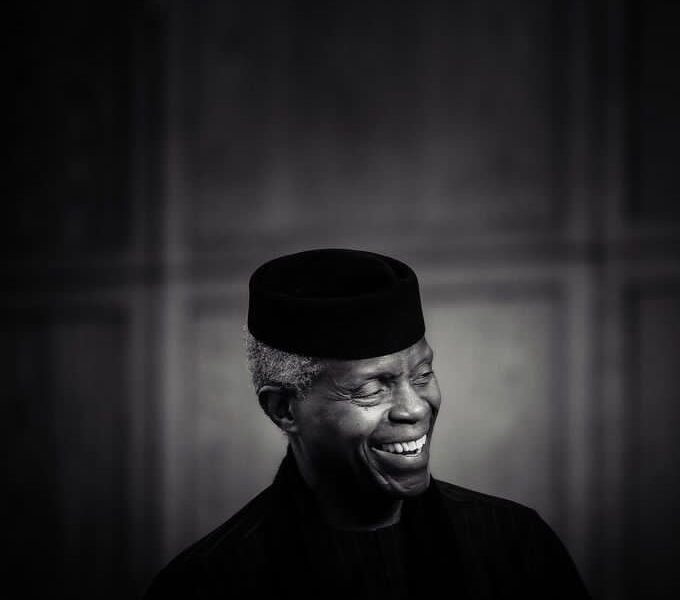
There is a profound elegance in the way the former Nigeria’s Vice President, Prof. Yemi Osinbajo has navigated life after power. For many leaders, the curtain call of public office signals a quiet retreat into memoir-writing, paid speeches and the occasional honorary doctorate. But here is a man who seems to have stepped out of Nigeria’s vice-presidential villa not into a wider, more demanding stage: the African continent and, increasingly, the world. If anything, I find myself wondering whether his time as Vice President was merely a prelude to something far more expansive.
Since leaving office in May 2023, Osinbajo has moved with the rhythm of a man who understands both timing and purpose. In quick succession, he has taken on roles that cut across governance, climate action, development finance, innovation, and public health. These roles have been neither ornamental nor incidental.
From leading the Commonwealth Observer Group to Sierra Leone’s 2023 elections to serving as Global Advisor to the Global Energy Alliance for People and Planet (GEAPP), Osinbajo has consistently occupied influence-heavy platforms. GEAPP, backed by institutions such as the Rockefeller Foundation, IKEA Foundation, and the Bezos Earth Fund, is driving efforts to accelerate clean energy access for hundreds of millions of people in emerging economies—an area where Africa remains critically underserved, with over 600 million people still lacking access to electricity, according to the International Energy Agency.
By the time he co-founded Future Perspectives in mid-2023, it was already clear that Osinbajo was not interested in being a passive elder statesman. Instead, he was building platforms—spaces where ideas could be tested, policies shaped, and young Africans empowered. His later appointment as Chair of the Climate Action Platform for Africa only deepened that narrative. Climate change, development, and Africa’s economic destiny are no longer abstract discussions, they are urgent realities, and Osinbajo has positioned himself at the intersection of all three.
Then came 2024, and with it, a series of recognitions that felt less like appointments and more like affirmations. When the UNDP-backed Timbuktoo Africa Innovation Foundation named him Guardian and High Representative, it was about trust. Trust in his ability to mobilize a billion dollars in catalytic capital. Trust in his vision to impact 100 million livelihoods. Trust, ultimately, in his intellectual depth and moral credibility. I think that matters, especially in a continent where leadership is often questioned more than it is celebrated.
There is also something quietly fascinating about the diversity of his engagements. One moment, he is helping steer climate financing conversations; the next, he is chairing advisory boards in the arts, like the Museum of Modern and Contemporary African Art London. It suggests a mind that refuses to be boxed in—a reminder that leadership, at its highest level, is not just about economics or politics, but about culture, identity, and imagination.
By 2025, Osinbajo’s trajectory had become unmistakable. His involvement in the African Leaders Debt Relief Initiative and his leadership of ECOWAS’ election observation mission in Côte d’Ivoire reinforced his standing as a trusted hand in both economic reform and democratic governance. And then came the academic nod from Princeton University’s Africa World Initiative—an acknowledgment that his voice is not only relevant in policy rooms but also in intellectual circles shaping the next generation of thinkers. I find that particularly compelling, because it places him in that rare category of leaders who can move seamlessly between theory and practice.
Now, in 2026, the story has taken on an even more global tone. At the World Economic Forum in Davos, he was named Co-Chair of the Future of Development Cooperation Coalition—a role that essentially asks: how do we rethink global aid in a world where resources are shrinking but needs are expanding? Add to that his appointments with the Gates Foundation, the United Nations Economic Commission for Africa, and the Africa CDC, and what you see is a man increasingly trusted with the continent’s most complex challenges—health financing, climate adaptation, and institutional reform.
At 69, he operates with the energy of someone half his age. But more than energy, there is clarity. A sense that his life’s work is converging into something meaningful. I sometimes think of it in almost philosophical terms—that rare alignment where preparation meets opportunity, and a person steps fully into their purpose. If the universe has a way of nudging certain individuals toward destiny, then Osinbajo appears to be in that quiet, compelling flow.
And yet, perhaps the most intriguing part of his story is not found in boardrooms or global summits, but online. Scroll through the comment sections of his social media posts, and you will see something unusual for a Nigerian public figure—organic admiration. Not the rehearsed praise of political loyalists, but genuine, almost affectionate engagement.
People share stories of how TraderMoni helped their businesses, how his speeches inspired them, how his calm demeanor during tense national moments gave them reassurance. That kind of connection is rare. In fact, I struggle to recall any recent Nigerian leader who has enjoyed that level of consistent, grassroots goodwill long after leaving office.
Of course, any discussion of Osinbajo inevitably circles back to his time as Vice President under Muhammadu Buhari. It was during those moments when he acted as President—particularly during Buhari’s medical absences—that many Nigerians saw a glimpse of a different leadership style. Decisive, articulate, and visibly engaged. Whether it was presiding over Federal Executive Council meetings, engaging directly with stakeholders, or projecting a reassuring presence, Osinbajo earned a level of public approval that was both rare and telling.
This naturally invites comparison with the current Vice President, Kashim Shettima. And here, the contrast is difficult to ignore. While Shettima operates within his own political and administrative context, his tenure so far has been marked by a certain quietness—some would say restraint, others might say invisibility. Unlike Osinbajo, whose moments as acting President became defining highlights of his career, Shettima has yet to produce a similarly resonant imprint on the national consciousness. I do not say this as criticism as much as observation; leadership, after all, is as much about perception as it is about performance.
In the end, what makes Osinbajo’s journey compelling is not just the number of roles he holds, but the coherence of his story. There is a through-line—law, governance, economic reform, climate action, human development. It all fits together in a way that feels intentional. And maybe that is why his post-vice-presidential life feels like a continuation of a larger mission.
History may ultimately be kinder to him than politics ever was. Because beyond the noise of elections and power struggles, there is something enduring about a life committed to ideas, to service, and to impact. And if the current trajectory is anything to go by, we may still be watching only the middle chapters of a story that is far from over.
Oluwafemi Popoola is a Nigerian journalist, media strategist, and columnist. He can be reached via bromeo2013@gmail.com