
Forgotten Dairies
2027 Elections: Prof. Josh Amupitan Remains Focused Despite Opposition Pressure -By Adewole Kehinde
The continuous attacks on the INEC chairman appear to be part of a broader strategy to discredit the electoral process ahead of 2027. Nigerians must not fall for such tactics. If every election umpire is targeted each time political actors become dissatisfied, the country risks creating a dangerous culture where institutions are weakened by propaganda and pressure.

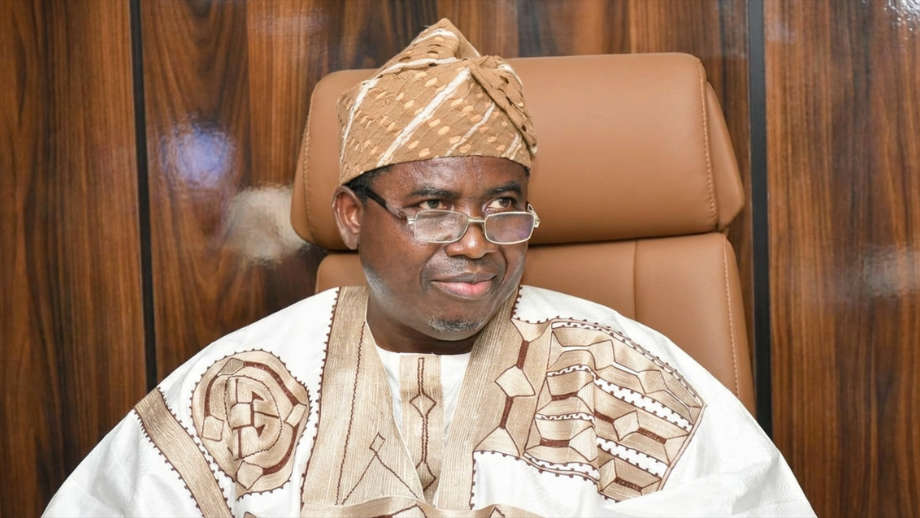
As Nigeria gradually prepares for another electoral cycle ahead of the 2027 general elections, it is not surprising that political actors have once again resorted to the old habit of blackmailing the Independent National Electoral Commission (INEC) and its leadership whenever the political atmosphere becomes uncomfortable for them.
The calls by the African Democratic Congress (ADC) and recently from the controversial social commentator Isaac Fayose demanding the resignation of the Chairman of INEC, Prof. Josh Amupitan, are not only misplaced but also politically motivated distractions aimed at weakening public confidence in the nation’s electoral institution.
For the avoidance of doubt, Prof. Josh Amupitan will not resign. Rather, he will remain focused on his constitutional duty of delivering credible, transparent, and acceptable elections for Nigerians in 2027. Those who are desperately seeking his removal simply because they are afraid of a transparent electoral process must understand that democracy cannot thrive where institutions are constantly bullied by partisan interests.
It is unfortunate that some opposition politicians have continued to create a false narrative that INEC under Prof. Amupitan has violated the Electoral Act. Such allegations are not supported by facts. Since assuming office, the INEC chairman has consistently demonstrated commitment to electoral reforms, technological innovation, and adherence to the provisions of the Electoral Act.
One fact many critics deliberately ignore is that no electoral body anywhere in the world can conduct a perfect election in an environment where political parties themselves repeatedly violate electoral guidelines. Political parties are quick to accuse INEC of failure, yet many of them engage in vote-buying, unlawful campaigns, internal party crises, violence, and manipulation of delegates during primaries. The same politicians who disobey the Electoral Act suddenly become defenders of democracy when election results do not favour them.
INEC cannot be blamed for the indiscipline and desperation of politicians.
The truth remains that Nigeria’s electoral process has significantly improved over the years. The introduction of the Bimodal Voter Accreditation System (BVAS), electronic transmission of results, stricter accreditation procedures, and improved voter education are all products of deliberate reforms introduced to strengthen the integrity of elections. These reforms did not emerge by accident; they were implemented through institutional courage and administrative transparency.
Prof. Amupitan deserves commendation, not intimidation.
Those calling for his resignation must answer simple questions. Has INEC refused to register eligible voters? No. Has the commission refused political parties access to contest elections? No. Has the commission openly violated court orders? No. Has INEC abandoned technological reforms meant to improve transparency? Certainly not.
What many critics really want is an electoral commission that can be manipulated for selfish political purposes. Unfortunately for them, Prof. Amupitan appears unwilling to compromise the credibility of the electoral system for personal or partisan interests.
The opposition, especially the ADC, should channel its energy toward strengthening its internal structures, mobilizing grassroots support, and presenting credible candidates instead of wasting valuable time attacking institutions. Elections are not won on television interviews, emotional propaganda, or social media outrage. They are won through organization, strategy, voter engagement, and respect for the law.
It is even more disappointing to see individuals like Isaac Fayose resorting to sensational rhetoric capable of overheating the polity. Democracy requires responsibility, especially from public commentators with large audiences. Reckless statements targeting national institutions may generate temporary media attention, but they do not contribute to democratic stability.
Nigeria’s democracy is still evolving and must be protected from unnecessary political agitation.
The forthcoming Ekiti State governorship election will undoubtedly serve as a major test for Prof. Josh Amupitan and the entire INEC leadership. Nigerians will closely monitor the conduct of the exercise, the deployment of electoral materials, voter accreditation, collation processes, and the overall transparency of the election. However, there is every indication that the commission is prepared to rise to the occasion.
Rather than joining the campaign of calumny against INEC, political parties should support the commission in achieving credible elections. They must educate their supporters against electoral violence, avoid vote-buying, comply with campaign finance regulations, and respect the outcome of transparent processes.
No electoral system can succeed when politicians consistently undermine the rules governing elections.
The continuous attacks on the INEC chairman appear to be part of a broader strategy to discredit the electoral process ahead of 2027. Nigerians must not fall for such tactics. If every election umpire is targeted each time political actors become dissatisfied, the country risks creating a dangerous culture where institutions are weakened by propaganda and pressure.
Strong democracies are built on strong institutions, not on the emotional outbursts of desperate politicians.
Prof. Josh Amupitan should therefore remain focused and undistracted. His responsibility is not to satisfy politicians but to uphold the constitution and protect the sanctity of the ballot. Nigerians expect credible elections, and there is nothing so far to suggest that INEC under his leadership has abandoned that responsibility.
History will ultimately judge political leaders and institutions not by the noise surrounding them, but by their commitment to democracy, transparency, and national stability.
Instead of calling for resignation, political parties should obey the Electoral Act and support INEC in building a more credible electoral process for Nigeria.
Adewole Kehinde is a public affairs analyst based in Abuja. Email: kennyadewole@gmail.com X: @kennyadewole
























You must be logged in to post a comment Login