
Africa
Our Father In Heaven, Let An Umpire That Has Your Fear Succeed Mahmood At INEC -By Isaac Asabor
Nigeria’s democracy can only survive if its referee is trusted. And for that trust to exist, the appointment process must change. So today, we pray, and we act: Our Father in Heaven, let an umpire who has Your fear succeed Mahmood at INEC.

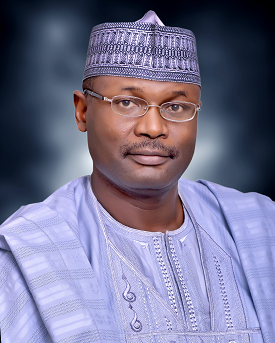
As Professor Mahmood Yakubu’s tenure as Chairman of the Independent National Electoral Commission (INEC) winds down, Nigeria once again stands at a crossroads. For nearly a decade, Yakubu presided over our elections, sometimes praised for innovation, often criticized for broken promises. Now, the question of who succeeds him is more than a political issue , it is a national prayer.
“Our Father in Heaven, let an umpire that has Your fear succeed Mahmood at INEC.” This should be the collective cry of Nigerians who understand that without credible elections, there is no democracy, no peace, and no progress.
Scripture reminds us in 2 Chronicles 19:7: “Now then, let the fear of the Lord be upon you. Be careful what you do, for there is no injustice with the Lord our God, or partiality, or taking bribes.” These words cut to the heart of Nigeria’s electoral challenges. If the next INEC chairman embodies this fear of God, he will resist political manipulation, refuse compromise, and uphold fairness without favour.
In Nigeria’s democracy, elections are the foundation. But when the referee is distrusted, the entire game collapses. Every disputed result, every post-election violence, every voter apathy stems from a single root: the widespread perception that INEC is not truly independent.
From Maurice Iwu’s disastrous 2007 polls to Mahmood Yakubu’s controversial 2023 election, the story has been the same, the process of appointment leaves too much power in the hands of the sitting President. A system that depends on the goodwill of one politician is bound to fail.
What Nigerians are praying for is bigger than a name or a region. We are praying for an umpire who fears God, who fears history, and who fears the consequences of betraying the people’s trust.
When the Israelites questioned Samuel at the end of his leadership, he declared in 1 Samuel 12:3–4: “Here I stand. Testify against me in the presence of the Lord and his anointed. Whose ox have I taken? Whose donkey have I taken? Whom have I cheated? Whom have I oppressed? From whose hand have I accepted a bribe?”
The people answered: “You have not cheated or oppressed us… you have not taken anything from anyone’s hand.”
This is the standard Nigeria must demand of its electoral umpire: a man or woman who, like Samuel, can stand before the nation and be free of accusations of bias, compromise, or bribery.
Ghana’s Electoral Commission is not perfect, but it has overseen peaceful transfers of power in 2000, 2008, 2016, and 2020. Why? Because its commissioners enjoy constitutional security of tenure and are expected to act in the national interest.
Even in heated contests, both ruling and opposition parties often accept results because they believe the referee is not playing for one side. That belief is priceless, and it is something Nigeria desperately lacks.
In a similar vein, Botswana’s Independent Electoral Commission has long been respected for its impartiality. Its structure reduces the possibility of political capture: appointments are made through consultation with judicial and civic bodies, not just the executive.
By embedding independence into the very foundation of the Commission, Botswana has created trust that Nigeria can learn from.
Also in a similar, it is germane to recall that South Africa’s IEC was born out of struggle and transition, tasked with managing the delicate shift from apartheid to democracy. Decades later, it has sustained credibility, largely because of strong constitutional protections and transparent procedures.
If South Africa can maintain faith in its referee amid its own deep divisions, Nigeria has no excuse.
Back home, however, the story is depressingly familiar. Daily Trust in its Saturday, 20 September, 2025 online edition reported that Tinubu’s inner circle has floated names such as Justice Abdullahi Mohammed Liman, Professor Lai Olurode, Kenneth Ukeagu, Sam Olumekun, and Professor Bashiru Olamilekan. As gathered from the reportage, lobbying has become intense as zoning politics is alive amid accusations of bias already in the air.
For instance, opposition voices like Buba Galadima have warned of unrest if a controversial nominee is imposed. Timi Frank insists that integrity, not loyalty, should be the yardstick. But once again, the process is secretive, exclusionary, and tilted toward presidential convenience.
Without a doubt, it is against the backdrop of the foregoing views that Nigerians must lift their voices beyond the corridors of power. Therefore, for this writer, it is expedient to recall how Moses in the Bible shared responsibility, and urge Nigeria to emulate such act as we look forward to choosing a new INEC Chairman.
In Exodus 18:21, Moses was advised by Jethro to appoint capable men as leaders: “But select capable men from all the people , men who fear God, trustworthy men who hate dishonest gain, and appoint them as officials over thousands, hundreds, fifties, and tens.”
The wisdom here is timeless: leadership must be shared, and appointments must prioritize fear of God and hatred for corruption. Nigeria should heed this counsel by building a system where INEC leadership is chosen through broad consultation, not by the President alone.
In fact, reform should begin with creating a system that ensures the emergence of an umpire who fears God rather than politicians. This would require a credible selection panel made up of nine members drawn from the judiciary, the Nigerian Bar Association, civil society, labour unions, religious councils, and the National Assembly. The process must be open and transparent, with applications made public, names of applicants published, and shortlisted candidates interviewed before the people. The President’s role should be limited to nominating only from the list forwarded by the panel, rather than handpicking a candidate. Furthermore, Senate vetting must be thorough and participatory, allowing citizens and groups to present petitions for or against nominees to guarantee accountability and public trust in the process.
In as much as this will not guarantee perfection, the fact remains that it will create a process Nigerians can believe in, a process that leaves less room for manipulation and more room for accountability.
The fact that Yakubu is leaving is no more news, even as the 2027 general election is less than two years away. The news is that if reforms are not carried out immediately, the same flawed system will appoint another umpire, and Nigerians will once again be forced to doubt the outcome of their own votes.
History is clear: credible elections reduce violence, build legitimacy, and strengthen unity. Disputed elections, on the other hand, deepen divisions and weaken the state.
This is why the National Assembly must rise above partisan interest and legislate reforms. This is why civil society must mobilize. And this is why the prayer of Nigerians must continue to ring: “Our Father in Heaven, give us an umpire who fears You.”
Yes, we need divine intervention. But as the scripture says, faith without works is dead. We must pair prayer with structural reform. Otherwise, the cycle of distrust will continue.
The next INEC Chairman must not only be competent and courageous but must also carry the fear of God in his heart. For when a man fears God, he fears no mortal, even the President who appointed him, not the party in power, and not the temptation of personal gain.
And as Proverbs 29:2 reminds us: “When the righteous are in authority, the people rejoice; but when the wicked rule, the people groan.” Nigerians deserve to rejoice in the fairness of their elections, not groan under the weight of compromised leadership.
Nigeria’s democracy can only survive if its referee is trusted. And for that trust to exist, the appointment process must change. So today, we pray, and we act: Our Father in Heaven, let an umpire who has Your fear succeed Mahmood at INEC.




















You must be logged in to post a comment Login