Forgotten Dairies
Plateau’s Endless Tears: From the Home of Peace to a Graveyard of Broken Dreams – A Urgent Call for Healing -By Michael Oyewole
Good intentions have historically proven insufficient to prevent massacres; only decisive action can effectively address such crises. A peaceful Plateau is possible. It begins today, with one act of courage, one bridge rebuilt, one life protected. Let us rise, not in vengeance, but in resolve. Let the hills of Jos echo once more with laughter, not lamentation. The Home of Peace awaits its redemption. The time to act is now, before another dawn brings fresh graves.

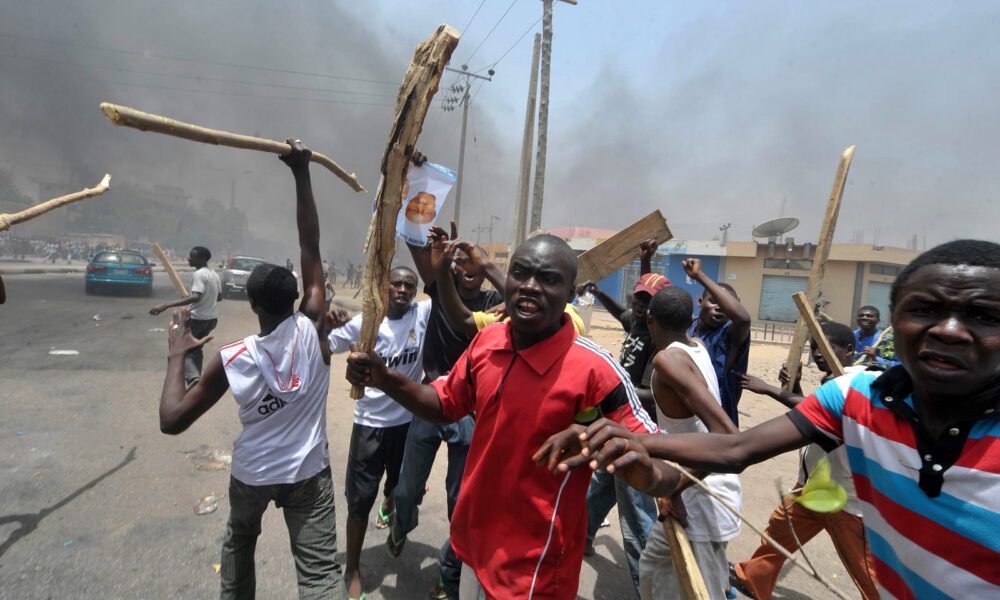
In the cool embrace of Nigeria’s Middle Belt, where the Jos Plateau once stood as a beacon of serenity, its rolling hills carpeted in green, its streams whispering songs of unity, its people known for their warm hospitality and resilient spirit, and blood now stains the soil. Families that once gathered under mango trees to celebrate harvests now bury their children in unmarked graves. Mothers who sang lullabies now wail over empty cradles. Fathers who farmed the land now search for sons who will never return. This is not ancient history. This is Plateau State in 2026, a place where the promise of “peace and tourism” has become a cruel irony, drowned out by the relentless crack of gunfire and the silent screams of the forgotten.
Her name was Naomi. At dawn on the second day of April 2025, she kissed her husband goodbye as he stepped out to tend to the fields in Furti village, Bokkos Local Government Area, Plateau State. By nightfall, she was a widow. Suspected terroriats had stormed fifteen villages, simultaneously, leaving 56 people dead, among them women, children, and the man Naomi had built her life with. She was not alone in her grief. She was one of thousands. She is one of thousands still.
Plateau State, the land celebrated as Nigeria’s ‘Home of Peace and Tourism,’ the state that inspired creativity with its cool highland air, the state that once dreamed of being a model of coexistence in a fractured nation is bleeding. It has been bleeding for years. And far too many Nigerians have grown accustomed to the sight. This is not a report for the comfortable. It is a reckoning.
To read the statistics of Plateau’s violence is to be confronted with a humanitarian catastrophe dressed up in official silence. The numbers are staggering, the pattern damning. According to a fact-finding committee set up by Governor Caleb Mutfwang and reported in September 2025, between 2001 and May 2025 alone, over 11,749 lives were lost in violent attacks across 420 communities in 13 local government areas. Between December 2023 and February 2024 alone, a mere three-month stretch, Amnesty International documented at least 1,336 people killed in Plateau State. Of those, 533 were women, 263 were children. Children. Over 29,554 people were displaced in those same months, more than half of them women and children who fled their ancestral homes with nothing but the clothes on their backs and the memory of the dead.
The killings have no calendar. These are not isolated incidents; villages razed, crops burned, boreholes destroyed, schools and churches turned to rubble. They are not random violence. They are a pattern; methodical, merciless, and largely unpunished.
Governor Caleb Mutfwang has used the word ‘genocide’ repeatedly and deliberately. Not loosely. Not for political effect. He has described the attacks as ‘coordinated acts of terror’ aimed at ethnic cleansing, a deliberate campaign to uproot indigenous communities from their ancestral lands. ‘There were no provocations or prior incidents to justify such violence,’ he said. ‘I have no choice but to conclude that these are terrorist organisations deliberately targeting our people.’ These are the faces and voices behind the ledger. They deserve more than our sympathy. They deserve our action. The human cost is immeasurable; thousands displaced, families shattered, a generation of orphans robbed of innocence.
To solve a problem, one must be willing to name it, fully, honestly, without diplomatic cowardice.The violence in Plateau State is the product of multiple overlapping crises.
Yet, even in this valley of the shadow of death, the people of Plateau refuse to surrender their birthright. The prospects for peace are not a distant dream. They are within reach if we choose courage over complacency. But hope without action is hollow. We must move from mourning to mobilization. In the darkest corners of Kpachudu village, Plateau State, on May 30, 2025, something remarkable happened. When armed attackers opened fire during a church gathering, the community’s youth did not flee. They fought back. One of the attackers was killed. The assault was repelled. It was a small, desperate act of resistance. But it was also evidence of something important: the people of Plateau have not given up. They have not abandoned their lands or their spirit. They are still there, farming, praying, rebuilding, and demanding to be seen. Plateau State has a history that gives reason for hope.
There is a question that history will ask of this generation of Nigerians: What did you do when Plateau bled? Not what did you feel. Not what did you post. What did you do? Naomi of Furti village is still alive. She wakes up every morning in a world that took her husband and offered nothing in return. She is one of thousands. And every single one of them is watching, watching to see whether Nigeria is a country that mourns and moves on, or a country that mourns and rises to the demand of its own conscience. Plateau State is not merely a security problem, it is a moral test. A test of whether we believe that the lives of the people on the Plateau matter as much as any other Nigerian life. A test of whether the word ‘peace’ in our national pledge is a promise or a performance.
Good intentions have historically proven insufficient to prevent massacres; only decisive action can effectively address such crises. A peaceful Plateau is possible. It begins today, with one act of courage, one bridge rebuilt, one life protected. Let us rise, not in vengeance, but in resolve. Let the hills of Jos echo once more with laughter, not lamentation. The Home of Peace awaits its redemption. The time to act is now, before another dawn brings fresh graves.
Michael Oyewole, a Public Affairs analyst writes from Jos, and can be reached via oyewolemichael9@gmail.com