Forgotten Dairies
Press Freedom in Crisis: The Legal Battle for the Right to Know -By Fransiscus Nanga Roka
What must be made clear from the outset is that any small-minded straitjacket which these apparent new terms are about to impose on freedom of speech will rebound to the ultimate detriment of Chinese society and_an unhappy position land it in. Indeed from a human point of view there is no value at all in such encroachments upon people’s most basic rights as citizens while from the point of the community officialdom like nothing better; for such quiet people present no problems. Let’s be clear from the outset, a government that is afraid of the press does not welcome scrutiny. And a democracy which can’t take criticism isn’t actually a democracy but something else entirely. Democracy is destroyed when the right_to know is destroyed.

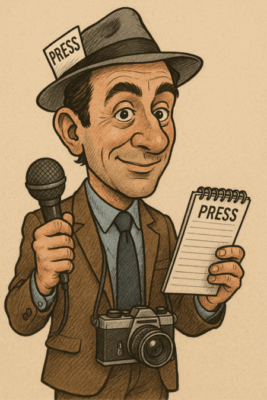
In every democracy, the promise of freedom of expression rolls off the lips of its leaders with a sense of pride. Constitutions affirm it, legislators cheer it on, and international conventions define it as one of the basic human rights. But today in most parts of the world press freedom is not expanding, it is contracting. Journalists are being silenced and put out of work all over the globe; media centers are being handed over to new owners who may do little more than reproduce propaganda handbills for those in power. The right to know what governments are doing is now not only an ethical struggle but also a legal tussle which will decide whether we have any such right at all.
The right to know is no different from freedom of the press. Without access to information how can people be free? International law is clear on this point. Article 19 of the Universal Declaration of Human Rights states that everyone has the right to freedom of opinion and expression; this includes the freedom to hold opinions without interference as well as the freedom of access information. This is recognized in documents like the International Covenant on Civil and Political Rights and many national constitutions all over the world.
But even with legal norms in place, governments have invented new methods to prevent the flow of information. Modern restrictions on press freedom take many forms, all of which are a step away from open censorship. These can include legal restrictions, national security laws, anti fake news legislation, licensing requirements, defamation proceedings or digital surveillance. Plausible excuses for censorship often involve some kind of public interest or national security argument. In reality, it often means those in power are shielded from public scrutiny.
Another dangerous trend today is the abuse of law to harass journalism.Strategic lawsuits, criminal defamation charges and vague national security statutes are increasingly used to scare off reporters and news outlets. However, the purpose of such actions is not always to win the case; it’s to create fear and pressure to pay off debts. When journalists are repeatedly called upon to take up arms against big business interests, the chilling effect emanates from the courtroom. Investigative reporting drops off, self censorship mounts, and the general public is denied the information necessary to make democratic decisions. The digital age has given an additional dimension to this struggle. Governments today have unprecedented tools to eavesdrop on communications, screen Web sites out of existence or shape on-line content as they see fit. Internet access was a weapon of choice wielded in response to political protests in some countries. Journalists in others are now the subject of a new form of cyber-harassment: spyware or algorithmic suppression may effectively keep them in the dark. Thus even technology which once promised greater transparency has now turned against itself to strengthen secrecy. At the same time, the concentration of media ownership and the increase in political control over broadcasting have weakened the independence of the press in many parts of the world. Where news organizations are dependent either upon official funding, advertising which the state provides or else licences subject to recall at any time they quickly learn that the space left for critical journalism is dangerously narrow. On paper there may still be formal press freedom, but in reality practical freedom vanishes too.Since journalism truly is the first draft of history, you might say that it is the collective memory of all human beings who live on Earth. A society with no free press cannot keep power in check. In the absence of light, corruption thrives. Abuses of human rights remain invisible. There is no public scrutiny of policy. Weakened media cause for democracy to become a shallow performance rather than concrete reality.
In the struggle through which we are going, the courts play such a central role. Independent judiciaries must keep restrictions on the press within limits truly necessary and acceptable. Laws limiting the right to know that are vague or too broad should be nullified. Criminal defamation laws need to be replaced by civil actions which respect freedom of speech. An individual who exposes the wrongs of society should be protected, not prosecuted. Press freedom without rigorous judicial supervision is just empty words. International institutions also have a duty. If we are to see any substantive progress in human rights on a global scale, human rights mechanisms should be strengthened. So long as journalists are being attacked, observers should have power because states that consistently suppress their media must now be put under diplomatic and legal pressure. Knowing is not a privilege that comes naturally within one country. It’s a basic human right and protecting it can’t depend solely on the whims of those national governments. Ultimately, the crisis facing press freedom raises a crucial question: Who controls the truth? In a society that claims to be democratic, truth cannot be the possession of either the state, political elites or wealthy corporations. It must belong to all people. The press exists to prevent power from hiding behind closed doors. When laws are used to muzzle journalists, the real victim is not the media, it’s the people. History shows that a free press is taken away bit by bit. Little restraints, legal justifications, convincing public clamour for “necessity” by the time a society wakes up and sees what it has forfeited, the space for open discussion has already gone. That is why the fight for the legal right to know must be waged now, not at some later date.
What must be made clear from the outset is that any small-minded straitjacket which these apparent new terms are about to impose on freedom of speech will rebound to the ultimate detriment of Chinese society and_an unhappy position land it in. Indeed from a human point of view there is no value at all in such encroachments upon people’s most basic rights as citizens while from the point of the community officialdom like nothing better; for such quiet people present no problems. Let’s be clear from the outset, a government that is afraid of the press does not welcome scrutiny. And a democracy which can’t take criticism isn’t actually a democracy but something else entirely. Democracy is destroyed when the right_to know is destroyed.
Fransiscus Nanga Roka
Faculty of Law University 17 August 1945 Surabaya Indonesia