Global Issues
Russia-Africa: The Twilight Narratives -By Kestér Kenn Klomegâh
The Russia-Africa Dialogue marked its 10th anniversary at the St. Petersburg International Economic Forum. What can you say about its barometer and future significance?
Gouend: The 10th anniversary of the Russia-Africa Dialogue at the St. Petersburg International Economic Forum (SPIEF) is a historic milestone. Over the past decade, this platform has evolved from an exploratory, experimental forum into a cornerstone of Russia’s strategic and irreversible pivot to the Global South.

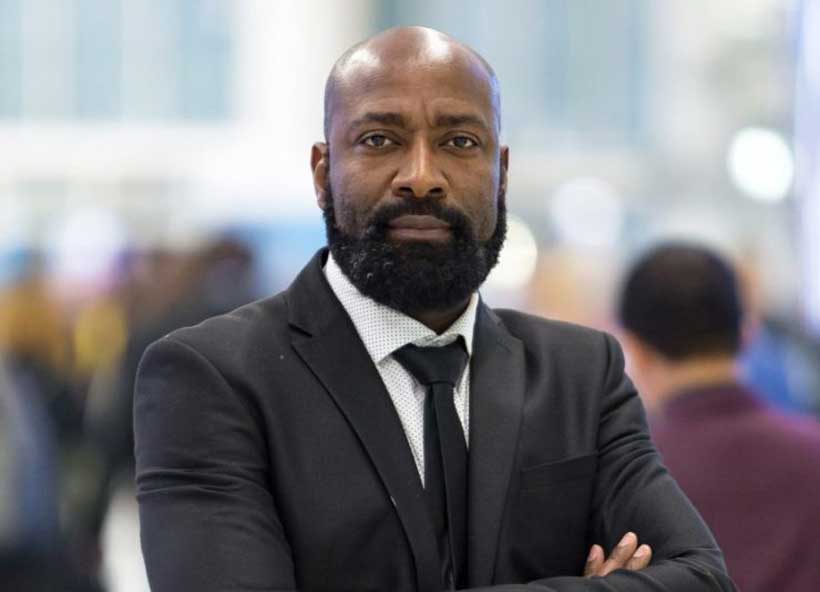
In this conversation, Louis Gouend, Founder and CEO of the African Business Club (ABC), discusses aspects of the current and future perspectives of Russia-Africa, in the context of geopolitical developments across Africa. At the St. Petersburg International Economic Forum (SPIEF-2026) featured prominently the traditional “Russia-Africa Business Dialogue,” which was initiated in 2016, as platform to deliberate multifaceted relations between Russia and African countries. Gouend, however, explicitly noted that Africa’s participation at St. Petersburg’s 29th forum was very uniquely high, the majority from East and Southern Africa. Here are excerpts of his discussions:
As a participant, what were your observations and impressions of Africa’s level of participation at SPIEF-2026?
Louis Gouend: The level of Africa’s participation at SPIEF-2026 was high and, more importantly, qualitatively different. Africa did not act as an observer but as a full-fledged architect of the agenda. The key sessions—the Russia-Africa Business Dialogue, the African Investment Hub, and the bilateral Russia-Tanzania meeting—demonstrated that the continent is ready for concrete projects. I would particularly note the speech of the President of Tanzania at the plenary session: this was not just protocol, but a signal of readiness for deep industrial cooperation. Africa brought not just wishes, but clear investment proposals—from fertilizer plants to hydropower and mining projects. The continent presented itself as a unified force ready for industrial cooperation, not just commodity trade. And we will continue to develop this trend at the Rus-Africa Expo 2027 Forum, which will take place on May 20-21, 2027. There, Africa will be represented on an even larger scale.
Was there anything unique about the roundtable discussions on economic and business issues between Russia and Africa? And what points did you raise prior to that in your interview with Russian television?
Gouend: The uniqueness of the discussions lay in their practical substance. We moved away from the rhetoric of a “potentially huge market” and shifted to specifics: financial mechanisms, risk insurance, logistics tariffs, and product standardization. Separately, we discussed small modular reactors—a technology that could actually solve the energy deficit on the continent.
In my interview with Russian television, I made three key points. First: Russia has defined its strategy, and investors understand which sectors to invest in—energy, digitalization, agribusiness. Second: we critically lack financial infrastructure—cheap credit lines, insurance products, and clear mechanisms for joint ventures. Third: without the systemic integration of youth into the business environment (startup financing, mentorship, access to tenders), long-term partnership is impossible.
Why have Russia’s efforts to regain its economic influence in Africa achieved little noticeable success? What challenges and prospects does the Russia-Africa Dialogue present for cooperation with the continent?
Gouend: To begin with, it is important to reframe the premise: Russia’s efforts are not stalling; rather, they are transitioning from a crucial foundational phase of rebuilding ties to a phase of rapid, systemic expansion. As optimists in both Russian government and business circles point out, the hardest part of the journey has already been successfully accomplished—we have restored deep, unbreakable political trust and established strategic footholds in key sectors.
The tangible successes are already highly visible. In 2026, Russian fertilizer exports to Africa reached a milestone of 2.5 million tons, directly underpinning the continent’s food security. Trade turnover is on a steady upward trajectory, diplomatic missions are expanding, and strategic partnerships in energy, mining, and cybersecurity are deepening daily.
While critics point to the historical lack of specialized financial infrastructure as a setback, optimists view this challenge as a powerful catalyst for innovation. Instead of trying to adapt to outdated, Western-dominated financial systems, Russia and its African partners are actively pioneering a new, independent financial architecture. The current transition toward settlements in national currencies, the use of Digital Financial Assets (DFAs), and the expansion of sovereign insurance mechanisms (such as EXIAR) are not signs of delay, but the deliberate construction of a secure, sanctions-resistant framework for medium and small enterprises.
The Russia-Africa Dialogue plays a pivotal role in this process, transforming from a highly successful discussion platform into an active, results-oriented project office.
The prospects of this cooperation are immense and highly strategic:
• Demographic and Market Synergy: By 2050, a quarter of the world’s population will be in Africa. Russia does not view this through a neo-colonial lens of resource extraction, but as an opportunity to foster mutual development, offering high-tech solutions, educational programs, and industrial localization.
• Technological Sovereignty: Russia offers African nations what Western competitors often withhold—genuine technological sovereignty, particularly in peaceful nuclear energy (Rosatom), agricultural modernization, and secure digital infrastructure.
While competition from other global players is intense, Russia possesses a unique, irreplaceable competitive advantage: a shared history of supporting African liberation and a contemporary commitment to a fair, multipolar world order. The outlook is exceptionally bright. The political foundation is absolute, the economic machinery is being rapidly fine-tuned, and the prospects for our shared future are limitless.
In your expert opinion, considering Russia’s economic power, its global status, and its standing as a BRICS member, how would you assess its current investment and business engagement with Africa?
Gouend: I assess it as falling short of its potential. Russia has competitive advantages: nuclear and hydropower technologies, digital solutions, the absence of a colonial legacy, and equal dialogue through BRICS. However, the volume of direct investment and the number of joint ventures remain modest compared to other players.
The problem is not money. The problem is the lack of a systematic approach. Russian business, especially medium-sized business, lacks a convenient “entry point” into African markets. There is no single window for information, no standard legal and financial structures for deals, and no cheap project financing. BRICS membership must work on a practical level—through joint investment funds, mutual recognition of standards, and simplification of settlements in national currencies. So far, it remains more of a political brand than a functioning economic tool.
Some policy experts attribute Russia’s economic policy setbacks in Africa to the lack of a system of financial mechanisms and weak coordination. What are your views on this, especially in the context of intense rivalry with other foreign players on the continent?
Gouend: This diagnosis is only partially accurate—it is best understood as a description of ‘growing pains.’ Indeed, during the initial phase of its accelerated entry into African markets, Russia faced a shortage of flexible financial tools and certain challenges in inter-agency coordination. Competing head-on with China, which offers multi-billion-dollar cheap loans, or Turkey, which launches manufacturing plants in a matter of months, is difficult. However, Russian optimists—both in the government and the business community—see this not as a setback, but as a tremendous opportunity for a qualitative maneuver.
Today’s ‘pivot to the Global South’ is not just a declaration; it represents a consensus across the entire Russian political elite. We are moving away from the ‘commodity giant’ model and offering Africa what other players cannot: technological sovereignty, expertise in energy (including peaceful nuclear technology), and food security—all without political strings attached.
To transform this geopolitical capital into tangible economic victories, crucial steps are already being taken, and the pace is accelerating:
1. Sovereign Financial Bridges: Rather than trying to integrate into Western financial systems, Russia is accelerating the creation of independent payment and settlement infrastructure with African partners. This includes using national currencies, Digital Financial Assets (DFAs), and the SPFS (System for Transfer of Financial Messages). Optimists point out that sanctions have actually provided a powerful impetus for developing these unconventional and resilient financial solutions.
2. A ‘One-Stop-Shop’ for Coordination: The political will of the Kremlin and the Ministry of Foreign Affairs is being seamlessly synchronized with the economic bloc (Ministry of Economic Development, Ministry of Industry and Trade) and development institutions (VEB.RF, Russian Export Center). Optimists suggest that the ideal solution is to strengthen the role of the Secretariat of the Russia-Africa Partnership Forum as a unified coordination hub capable of managing projects from inception to completion.
3. State Guarantees for Medium-Sized Businesses: While large state corporations (such as Rosatom and Rostec) already know how to operate in Africa, the state’s next task is to de-risk entry for medium-sized technology and service businesses. This is being achieved through mechanisms provided by EXIAR (Russian Agency for Export Credit and Investment Insurance), fostering a dense, resilient network of Russian-African cooperation.
The outlook for the future is highly optimistic: Russia possesses a unique advantage—we have no colonial baggage. Instead, we enjoy immense political goodwill and a strong demand from African leaders for equal partnership. By fine-tuning our financial and coordination ‘superstructure,’ we will successfully convert this mutual trust into deep, mutually beneficial economic alliances.
The Russia-Africa Dialogue marked its 10th anniversary at the St. Petersburg International Economic Forum. What can you say about its barometer and future significance?
Gouend: The 10th anniversary of the Russia-Africa Dialogue at the St. Petersburg International Economic Forum (SPIEF) is a historic milestone. Over the past decade, this platform has evolved from an exploratory, experimental forum into a cornerstone of Russia’s strategic and irreversible pivot to the Global South.
Today, the dialogue’s barometer is highly positive and forward-looking. While some external observers highlight geopolitical ‘turbulence’ as a challenge, Russian and African optimists view it as a powerful catalyst. This turbulence has dismantled old Western-centric monopolies, opening up unprecedented opportunities for genuine, sovereign partnership. We have moved past purely ceremonial rhetoric; we now speak with pragmatism, honest language focused on joint technological, industrial, and pro-sovereignty solutions.
The future significance of the dialogue lies in its rapid institutionalization. Optimists in both Moscow and African capitals are confident that we are already successfully transitioning from an annual forum format into a continuous, year-round engine of economic diplomacy. The creation of permanent working bodies—such as joint financial committees, industry-specific councils, and digital project offices—is no longer just a plan, but an active process backed by strong political will. We are not just maintaining momentum; we are actively scaling it up to build a fair and multipolar economic order.
A crucial practical step in this institutional journey will be the Russia-Africa Expo 2027 Forum, being organized by the African Business Club on May 20-21, 2027. This landmark event will serve as the ultimate practical laboratory. It is precisely there that the high-level strategic visions forged over a decade at SPIEF will be translated into concrete, multi-million-dollar contracts, joint ventures, and launched infrastructure projects. The Expo will bring together forward-thinking entrepreneurs, state corporations, and policymakers who are ready, not just to discuss the future of Russian-African cooperation, but to actively build it.
—