
Forgotten Dairies
Russia’s Multifaceted Public Diplomacy Catching Up With Africa -By Kestér Kenn Klomegâh
But we traditionally help our allies, including African countries, resolve fundamental issues that contribute to strengthening their statehood. This includes the joint fight against terrorism, ensuring food security, helping to develop infrastructure, and training personnel for national economies. I have, repeatedly, witnessed how our guests representing various African countries during various official visits noted that their countries are treated with respect in Russia, that they feel so safe here that they are ready to send their children to Russia with a light heart so that they can get education.

Over the past few years, Russia has raised its public diplomacy across Africa, ultimately aiming at strengthening multifaceted relations. As noticeable in practical terms, Russia has taken various tailored steps toward influencing public opinions and policy perceptions across the continent. The main forms of Russia’s public diplomacy or soft power in Africa ranges from the establishment of cultural centers, the organization of events popularizing Russian culture, the engagement of the African youth in various activities, the promotion of Russian language and Russian higher education, the development of scientific and educational cooperation.
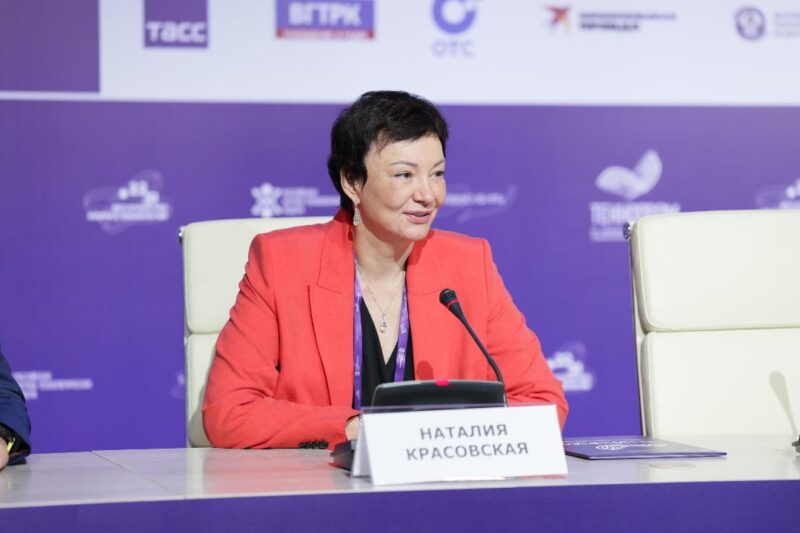
In this exclusive interview, Natalia Rudolfovna Krasovskaya, Executive Director of the NGO “Center for the Organization of Scientific and Cultural Events in the Sphere of Public Diplomacy” and member of the Expert Council on the development and support of comprehensive partnership with African countries under the Deputy Chairman of the State Duma of the Federal Assembly, Alexander M. Babakov, further discusses some aspects of Russia’s public diplomacy in Africa. Here are the interview excerpts:
Briefly assess the perception and attitude of African leaders to this new stage in relations with Russia, especially in the context of geopolitical changes.
Natalia Krasovskaya: Russia has, historically, supported African countries in their desire to determine their own national policies and gain true independence. And Africa remembers this well. Now, when Russia has, essentially, become the flagship of the movement for a multipolar world, and African countries are strengthening their international positions, influencing global political processes, African leaders are rightly appreciating the real opportunities that partnership with Russia offers. Many leading African politicians have repeatedly noted that they see Russia as a strategic ally of their country. All those with whom I have met in person, communicated at various international events, point to a simple historical fact: Russia has nothing to do with the slave trade or the subsequent plunder of Africa’s natural resources. But we traditionally help our allies, including African countries, resolve fundamental issues that contribute to strengthening their statehood. This includes the joint fight against terrorism, ensuring food security, helping to develop infrastructure, and training personnel for national economies. I have, repeatedly, witnessed how our guests representing various African countries during various official visits noted that their countries are treated with respect in Russia, that they feel so safe here that they are ready to send their children to Russia with a light heart so that they can get education.
By the way, how would you characterize Africa, a continent that attracts foreign players, today?
Natalia Krasovskaya: For Russia, Africa is interesting primarily as a strong actor in the global political arena. Even now, some African countries can have their say, influencing global economic trends. But Africa is in dire need of its own highly qualified personnel, its infrastructure is lagging far behind, there are many unresolved social issues – in general, all that legacy of the colonial era, from which Africa cannot recover. It is in Russia’s interests to support Africa begin to use colossal African resources for the benefit of the citizens of African countries.
What is your opinion about Russia’s public diplomacy? What do you think about the importance of public diplomacy (public engagement programs), especially now, when Russia is paying more and more attention to Africa?
Natalia Krasovskaya: Public diplomacy is primarily aimed at establishing connections at the level of citizens of different countries. The peoples of Russia and Africa, in fact, know very little about each other. The place of real information is often occupied by a set of stereotypes: “it’s hot here, it’s cold here”, etc. But even if you just take a geographical map, it turns out that both Russia and Africa occupy huge territories: it doesn’t snow everywhere in Russia in winter, but in Africa there are places where it regularly falls. At the end of August, representatives of eight (8) African countries came to Novosibirsk, some, for example, many ambassadors, had already been to Siberia, but most visited the northern region for the first time. And they experienced the traditional shock – both from our climate and from the huge modern metropolis that Novosibirsk is, and from the opportunities that Siberian science, education, and technology can provide to Africa. This personal impression, mutual recognition is the very thing for which public diplomacy exists. It is they who provide the closeness on which trust between nations is built.
Within the framework of the above analysis, how would you characterize or evaluate, from the point of view of current relations, the special role of the recently created State Duma’s Expert Coumcil on Africa?
Natalia Krasovskaya: The Expert Council on the Development and Support of Comprehensive Partnership with African Countries under the Deputy Chairman of the State Duma of the Federal Assembly of the Russian Federation, Alexander M. Babakov, is a very timely and important undertaking at this stage of the development of relations between Russia and African countries. This is a very good tool for interaction between the expert community and legislative authorities. As an expert, I took part in several events organized by the Council. And these meetings had specific results – in the form of real decisions in favor of certain areas of development of relations between Russia and African countries. The same public organizations that work in the field of public diplomacy can find support for their initiatives from legislators, which significantly expands the opportunities for international activity.
—

























You must be logged in to post a comment Login