Opinion
Seeing “Let’s Dialogue” As A Synonym Of “You Can Go To Court” In Nigeria’s Political Lexicon, by Isaac Asabor

In the ever-evolving landscape of Nigerian politics, language plays a crucial role in shaping public opinion. Recently, a phrase has gained prominence: “Let’s dialogue.” On the surface, it seems innocuous as it is in grammatical context a call for peaceful resolution, but beneath lies a deeper implication.
Against the foregoing grammatical backdrop, it will not be a misnomer to explore how this seemingly conciliatory phrase is similar to another ominous message: “You can go to court.”
Without a doubt, Nigerian elections are often marred by violence, rigging, and manipulation. The winner takes all, leaving the defeated with limited options. When politicians utter the phrase “Let’s dialogue,” another phrase that readily comes to mind is, “Seek redress in court.” Unfortunately, it is a veiled threat, a way of dismissing opponents while maintaining a veneer of civility.
Against the backdrop of the foregoing view, it is germane to opine that language matters, particularly when it conveys ominous message. Thus, when leaders choose their words, they wield immense influence. At this juncture, it is expedient to explain that “Let’s dialogue” may sound like an invitation to peaceful resolution, but it carries the weight of legal battles, bureaucratic hurdles, and delays. It is a strategic move, and a way to avoid direct confrontation while pushing opponents into the judicial arena.
In fact, the implications of this linguistic maneuver are significant. By framing court action as a form of dialogue, politicians subtly shift the narrative. They imply that legal battles are just another avenue for communication, akin to a negotiation table. But in reality, going to court is a complex, time-consuming process, one that often favors those with resources and connections.
Leadership demands transparency and accountability. When politicians use euphemisms like “Let’s dialogue,” they undermine these principles. Citizens deserve straightforward communication, not coded messages that obscure the true intent. Responsible leaders prioritize the welfare of their constituents over their own interests, choosing clarity over obfuscation.
As Nigerians engage in political discourse, it is expedient we remain vigilant, and the fact cannot be denied that behind seemingly harmless phrases lie deeper meanings. When we hear “Let’s dialogue,” from political leaders, let us recognize it for what it is, a synonym for “You can go to court.”
However, despite the linguistic jigsaw that Nigerians are often confronted with, the fact that our democracy thrives when citizens demand transparency, hold leaders accountable, and refuse to be misled by linguistic gymnastics cannot be denied. Therefore, it is expedient we collectively ensure that our dialogue remains genuine, our courts accessible, and our democracy resilient.
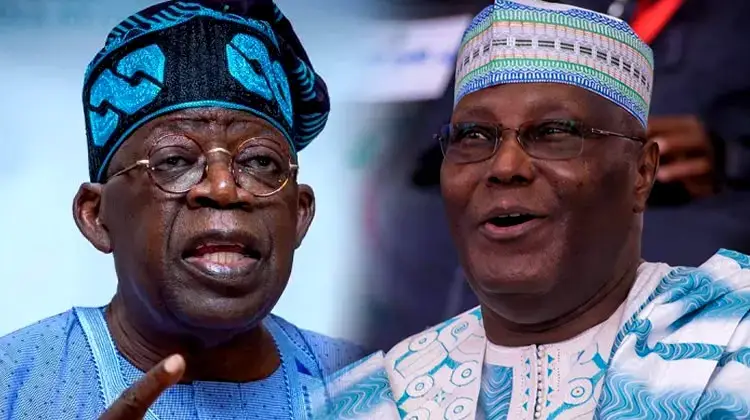
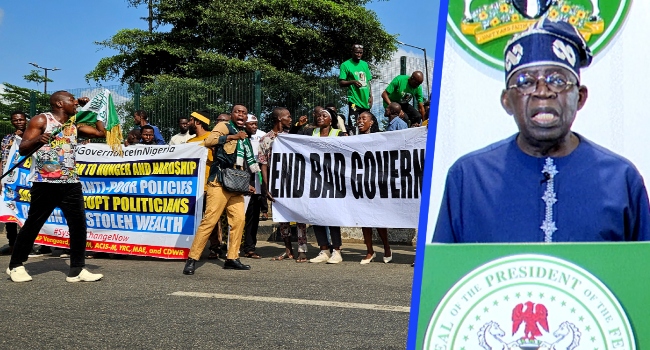
Thus, it is not surprising that the Lagos Planning Committee of the #EndBadGovernance protests has rejected President Bola Tinubu’s nationwide broadcast, through which he called for dialogue, describing it as “insensitive” and “arrogant.”
The committee, which met on Sunday, August 4, 2024, to discuss developments and the way forward, condemned the President’s failure to address the demands of the protesters, and also rejected the President’s call to suspend the demonstrations for dialogue, demanding instead that he acknowledges their demands and show commitment to true dialogue by establishing an inclusive public engagement protocol.
At this juncture, it is germane to opine that the protesters’ refusal to dialogue cannot be easily faulted as evidences of their knockback unarguably finds expression in the quote attributed to George Orwell, which says, “In our time, political speech and writing are largely the defense of the indefensible… Thus, political language has to consist largely of euphemism, question-begging, and sheer cloudy vagueness… Political language is designed to make lies sound truthful and murder respectable.”
Given the foregoing untoward development, it is expedient to urge our political leaders to bridge the trust gap between them and the citizens as doing so is crucial for a healthy democracy and effective governance. Therefore, it is incumbent on them to consider some key points that cut across exhibition of transparency and accountability, fulfilling promises as well as demonstration of responsive governance.
In fact, Nigerian politicians must prioritize transparency in their actions and decisions. This is as citizens deserve to know how public funds are allocated and spent. And this can be done by our political leaders through regular audits, open budget processes, and accessible financial reports. When the foregoing steps are consistently taken from one political dispensation to another, they would definitely build trust.
Thus, to earn the trust of the people, politicians must eschew empty promises during election campaigns as they erode trust. Rather, they should focus on realistic goals and deliver on their commitments, even as they make efforts to prioritize policies that directly impact citizens’ lives, such as healthcare, education, and infrastructure.
In a similar vein, politicians should actively engage with their constituents through regular town hall meetings, feedback channels, and consultations as they can bridge trust gap. At such meetings, issues affecting citizens should promptly and transparently be addressed.
Also, political leaders should put in more efforts toward involving citizens in policy formulation by consulting with civil society organizations, community leaders, and grassroots movements, and not only that, they should always ensure that decisions reflect the diverse needs of the population.
Again, politicians should always have it at the back of their minds that trust is earned through consistent actions, not just words. Nigerian politicians must prioritize the welfare of their constituents and work towards a more accountable, responsive, and trustworthy government. So, by doing this, the gap between leaders and the people would be bridged, and whenever they tell the people, “Let’s dialogue” their call would be heeded to with alacrity.