Global Issues
The BBC’s Shameful Revisionism in ‘Surviving Biafra’ -By Jeff Okoroafor
When a global broadcaster like the BBC releases a documentary that centers the federal army’s perspective while marginalizing Igbo voices, it does more than misinform. It legitimizes the federal narrative of “unity” at the expense of truth. It suggests that the genocide of up to three million people is a family story about a grandfather’s exploits. It tells the world that the Igbo experience—the massacres, the starvation, the flight from the north, the final surrender—is not worthy of serious historical inquiry.

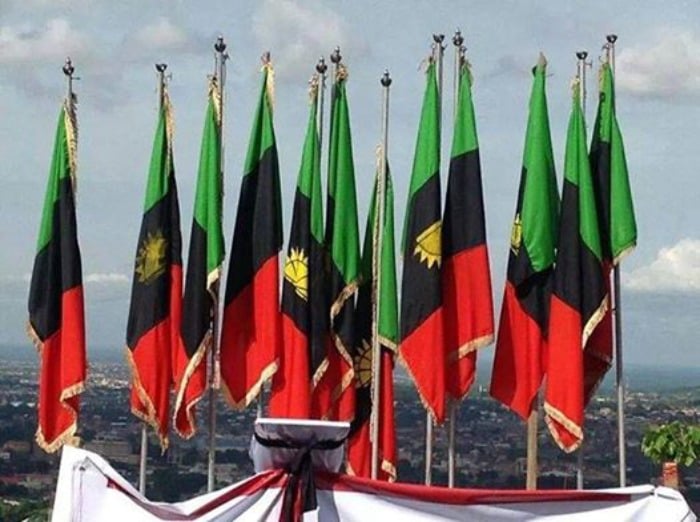
A Grammy-Winning Music Video Director and His Grandfather Do Not Constitute History
The British Broadcasting Corporation (BBC) expects the world to accept a 75-minute film titled Surviving Biafra as a “landmark documentary” on the Nigerian Civil War. Yet, what the BBC and its director, Meji Alabi, have produced is not a work of serious journalism or historical inquiry. It is a deeply flawed, structurally biased, and intellectually dishonest piece of propaganda disguised as a search for “differing perspectives.” By framing the war through the lens of a single family—a London-raised music video director and his grandfather, a federal army commando—the BBC has not only falsified the historical record but has also provided a platform for a dangerous revisionism that could inflame tensions in a nation still grappling with the wounds of that conflict.
This is not history. It is a betrayal of history. And Nigerians, especially the Igbo people who bore the brunt of the genocide, must call it out for what it is.
The False Premise: Who Attacked First?
The documentary’s promotional material states that the war began “after a series of military coups and months of massacres against Igbo people living in the north”. This is correct. But it then characterizes the federal government’s response as a “declaration of war” upon Biafra. This framing is historically inverted and deliberately misleading.
Let the record be clear: Nigeria’s military government fired the first shots. On July 6, 1967—five weeks after Colonel Odumegwu Ojukwu declared the Republic of Biafra on May 30—Nigerian federal troops launched a full-scale military invasion. The initial federal attack involved two advancing columns: one captured the Biafran town of Nsukka on July 14, and the other took the town of Garkem on July 12. Major General Yakubu Gowon, Nigeria’s head of state, insisted to diplomats that the invasion was merely a “police action” that would be completed in six weeks. It was not a defensive move. It was an act of aggression against a territory that had, however controversially, declared itself independent. For the BBC to suggest that Nigeria “declared war” in response to secession, without emphasizing that it was the federal military machine that struck first, is a lie by omission.
The Grandfather and the Federal Army: Where Are the Igbo Voices?
The most damning indictment of Surviving Biafra is its structural point of view. The documentary’s protagonist is not a Biafran child starving to death or a civilian fleeing the Asaba massacre. The documentary’s emotional center is the director’s grandfather, Godwin Alabi-Isama, a former army commando who “fought on the side of the federal army against ethnic Igbo separatists”. Alabi’s uncle, Leke, admits, “I only just saw it from a Nigerian [federal army] perspective”. Indeed. That is the entire problem.
Where are the Igbo generals? Where are the mothers who watched their children’s bellies swell from kwashiorkor? Where are the survivors of the systematic starvation that killed an estimated one to three million civilians, many of them children? In a 75-minute film advertised as presenting “differing perspectives on the war, including from those on both sides of the conflict,” where are the voices of the people who lost their sovereignty, their property, their families, and their future? The absence of substantive Igbo testimony is not an oversight. It is a political choice. It is the BBC, once again, sanitizing the federal government’s brutal counter-insurgency by filtering it through the “heroic” lens of a federal commando.
If the BBC were serious about giving voice to survivors, they would have interviewed the thousands of Igbo men and women alive today, still in their 70s and 80s, who experienced the horrors of the Biafran famine. The fact that they did not suggests that the “groundbreaking” nature of this film is not in its honesty, but in its willingness to rewrite history from the perspective of the victor.
The BBC’s Historical Complicity in the Genocide
The irony of the BBC producing this documentary is so thick it could be cut with a knife. The broadcaster’s recent historical revisionism conveniently ignores the corporation’s own complicity during the war. As far back as 1969, observers noted that the “BBC’s Africa Service continues to this day as one of the main propaganda vehicles for Gowon’s regime in Lagos”. During the conflict, while the federal government blockaded Biafra and starved millions, the BBC consistently parroted the British government’s line, downplaying the famine and legitimizing the federal agenda.
The British government, after all, actively facilitated the war. Under Prime Minister Harold Wilson, “weapons and ammunition poured in quietly as Whitehall and the Harold Wilson government lied and denied it all”. Britain armed Nigeria to the teeth to protect its oil interests in the contested region. Chief Obafemi Awolowo, the federal vice chairman, famously declared that “starvation is one of the weapons of war,” a policy the Nigerian army pursued with reckless abandon.
Now, the same BBC that helped whitewash the genocide has returned, not to apologize or to center Igbo suffering, but to produce a film that celebrates a federal commando as a “war hero”. This is not documentary filmmaking. This is a continuation of imperial propaganda by other means.
Why This Revisionism Matters: The Danger of Distorted History
The BBC cannot credibly claim that this documentary is about “preserving memories” while simultaneously excluding the memories of the people who suffered the most. The civil war ended with a “no victor, no vanquished” policy in name only. In reality, the federal victory resulted in the systematic exclusion of Igbo people from the political and economic life of Nigeria for decades. Today, with secessionist groups like the Indigenous People of Biafra (IPOB) agitating once more in Nigeria’s eastern region, the need for an accurate, balanced, and empathetic historical record has never been more urgent.
When a global broadcaster like the BBC releases a documentary that centers the federal army’s perspective while marginalizing Igbo voices, it does more than misinform. It legitimizes the federal narrative of “unity” at the expense of truth. It suggests that the genocide of up to three million people is a family story about a grandfather’s exploits. It tells the world that the Igbo experience—the massacres, the starvation, the flight from the north, the final surrender—is not worthy of serious historical inquiry.
A Call to Reject This Propaganda
We must be clear: The BBC’s Surviving Biafra is not a gift to history. It is an insult. It is the product of a London-raised filmmaker who admitted he “grew up not knowing much about the war at all”, and who chose to interpret the most traumatic event in modern Nigerian history through the lens of his own family’s federal military service. That is not objectivity. That is nepotism in historiography.
Nigerians, we must reject this. We must demand that the BBC produce a documentary that gives equal weight to Igbo eyewitness accounts—accounts that include the massacres in the north, the destruction of Asaba, the starvation camps, and the long shadow of postwar exclusion. We must question why a film that claims to present “differing perspectives” includes almost no substantive Igbo testimony. And we must challenge the dangerous revisionism that seeks to reduce a genocide to a grandfather’s war story.
The Igbo people do not need the BBC’s sympathy. They need the truth. And the truth is that the Nigerian Civil War was not a noble “police action” by a federal army saving a nation. It was a brutal, bloody, and avoidable catastrophe fueled by ethnic hatred, foreign oil interests, and a federal government that chose military conquest over negotiation. Until documentaries like Surviving Biafra are willing to face that truth, they are not worth watching. Nigerians should tune out and speak up. Enough is enough.

Jeff Okoroafor
Jeff Okoroafor is a social accountability advocate and a political commentator focused on governance, accountability, and social justice in West Africa.