Africa
The Fragmentation of Municipal Water: A Crisis of Governance and Resource Management? -By Kator Ifyalem
The choice is clear: we can continue down the path of fragmentation and environmental degradation, or we can reimagine municipal water management as a comprehensive, sustainable, and equitable public service. The future of our cities, our environment, and our communities depends on the choices we make today.

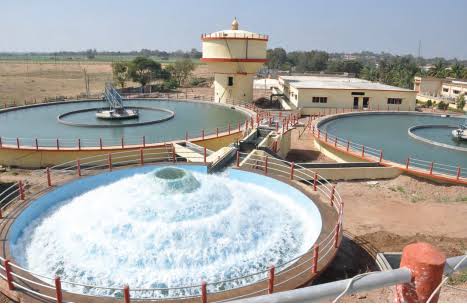
How can we comprehend the irony of a government that abandons its fundamental responsibility of providing safe and affordable water, with a functional centralized treatment system, while simultaneously encouraging fragmented water packaging businesses in municipals? In regions blessed with abundant freshwater resources, this growing scenario especially in Nigerian cities represents a tragic abdication of public infrastructure and collective responsibility, revealing and suggesting deep-seated systemic failures in municipal governance and resource management.
The landscape of water management has become a complex terrain of competing interests, where individual entrepreneurship seemingly trumps comprehensive public utility. Local and state governments are seen to have been increasingly promoting small-scale water treatment and packaging enterprises, creating a patchwork of water distribution that undermines the concept of municipal infrastructure. This approach creates significant environmental and social challenges that extend beyond immediate economic considerations.
The most critical consequence of this fragmentation is the alarming trend of groundwater extraction. When centralized water treatment plants become moribund, citizens are forced into a survival mode of water procurement. Individual households and businesses begin to drill wells, extract groundwater, and develop independent water sources. This decentralized approach might seem like a pragmatic solution, but it represents an ecological time bomb. Unregulated groundwater extraction leads to severe environmental degradation, including groundwater depletion, land subsidence, and potential contamination of aquifer systems.
From an economic perspective, the proliferation of small-scale water packaging businesses might appear attractive. These enterprises create jobs, generate local economic activity, and seemingly provide a quick solution to water scarcity. However, this approach is fundamentally flawed. The cost of individual water treatment and packaging is significantly higher than centralized municipal systems. Economies of scale are lost, quality control becomes challenging, and the overall economic inefficiency becomes apparent when one considers the long-term infrastructure investments required for sustainable water management.
Environmental considerations further complicate this landscape. Centralized water treatment facilities are designed with comprehensive ecological considerations, incorporating advanced filtration systems, waste management protocols, and sustainable extraction methodologies. In contrast, localized water packaging businesses often lack the technological infrastructure and regulatory oversight to ensure environmental sustainability. The environmental cost of multiple small-scale operations—increased plastic waste, inefficient water extraction, and potential contamination—far outweighs any perceived economic benefits.
Moreover, the social implications are profound. Water is not merely a commodity but a fundamental human right. By fragmenting water distribution and encouraging privatized water solutions, governments effectively create a two-tier system where access to clean water becomes economically stratified. Those with financial resources can afford packaged water or invest in private water extraction, while economically marginalized communities are left vulnerable.
The moral imperative is clear. Governments have an ethical obligation to maintain and improve centralized water infrastructure. This involves significant investment in technological upgrades, infrastructure rehabilitation, and comprehensive water resource management. The short-term economic calculations that drive the current fragmented approach must be replaced with a long-term vision of sustainable, equitable water access.
Sustainable water management requires a holistic approach that integrates technological innovation, environmental stewardship, and social equity. Governments must recognize that water infrastructure is not just a utility but a critical component of public health, environmental sustainability, and social justice. Investments in centralized treatment plants, alongside robust regulatory frameworks, can transform the current crisis into an opportunity for comprehensive urban water management.
The path forward demands a renaissance of municipal water governance. This includes modernizing existing infrastructure, implementing advanced water treatment technologies, creating stringent environmental regulations, and developing community-engaged water management strategies. Technology can play a crucial role—smart water meters, advanced filtration systems, and data-driven resource management have the potential to revolutionize how we approach municipal water supply.
In conclusion, the fragmentation of water management represents a failure of governance, environmental stewardship, and social responsibility. The promotion of localized water packaging businesses at the expense of centralized municipal systems is not just economically short-sighted but morally questionable. As we face increasing environmental challenges and growing urban populations, our approach to water must evolve. Water is not a commodity to be fractured and privatized, but a shared resource that demands collective management, technological innovation, and unwavering commitment to public welfare.
The choice is clear: we can continue down the path of fragmentation and environmental degradation, or we can reimagine municipal water management as a comprehensive, sustainable, and equitable public service. The future of our cities, our environment, and our communities depends on the choices we make today.