
Africa
Bridging the Leadership Gap: How Transformative Educational Policies Can Accelerate Nigeria’s Progress on SDG 4 -By Emmanuel Omeiza Momoh
Scholars equipped with skills in educational leadership and policy can influence curriculum reforms, teacher training models, school governance structures, and inclusive education initiatives. Their exposure to cross-national education systems enhances their ability to localize international frameworks in contextually relevant ways. With the right support, these scholars can lead multi-stakeholder coalitions that shape more inclusive and equitable learning systems in Nigeria.

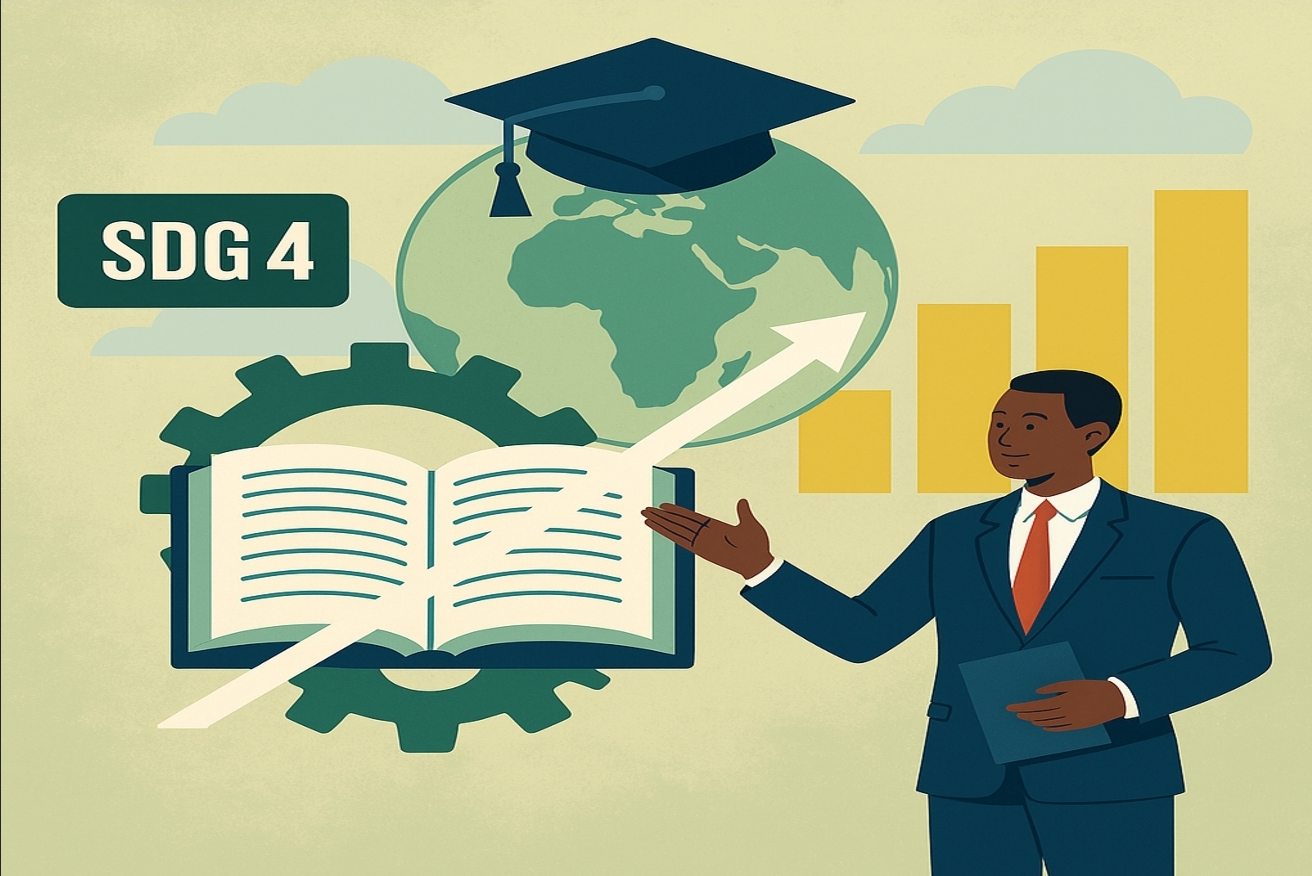
Education is universally acknowledged as a catalyst for personal, social, and economic development. In Nigeria, however, despite this recognition, the education sector continues to face systemic challenges. These challenges extend beyond inadequate infrastructure or funding; they are deeply rooted in a critical leadership gap—a lack of visionary, responsive, and transformational leadership that can shape and implement policies effectively. As the nation strives to achieve Sustainable Development Goal 4 (SDG 4), which focuses on inclusive and equitable quality education and lifelong learning for all, this leadership gap must be addressed as a matter of urgency.
Nigeria’s education system is complex, decentralized across federal, state, and local authorities, and often burdened by overlapping responsibilities. While numerous policies such as the Universal Basic Education (UBE) Programme and the National Policy on Education have been introduced over the years, their implementation has been hindered by political inconsistency, under-resourced governance structures, and inadequate monitoring and accountability frameworks. These structural weaknesses are compounded at the institutional level, where school leaders are often selected based on seniority or political affiliation rather than demonstrated leadership ability or relevant training. In rural and underserved areas, the consequences of weak leadership are especially dire, resulting in poor resource management, low teacher morale, and stagnating learning outcomes.
The lack of effective leadership also manifests in the inability to develop policies that reflect the real needs of learners. Many educational policies fail to account for vulnerable groups, such as students with disabilities, internally displaced children, or linguistic minorities. Without a deliberate focus on inclusivity and contextual relevance, policies remain abstract, disconnected from the communities they are intended to serve.
To accelerate progress towards SDG 4, Nigeria must embrace transformative educational policies—policies that are proactive, data-informed, inclusive, and grounded in strong leadership. Transformative policies go beyond the traditional bureaucratic approach, emphasizing transparency, stakeholder engagement, and accountability. One key recommendation is the establishment of structured leadership training programmes for school heads, educational planners, and policymakers. These programmes should include modules on inclusive education, technology integration, conflict-sensitive planning, and educational data analysis. Such initiatives would not only professionalize educational leadership but also build a cadre of change-makers capable of responding to both local and national challenges.
In countries like Rwanda, focused investment in leadership development through school-based training and peer mentoring has already yielded promising results. Nigeria can draw from such models while adapting them to its socio-cultural realities. At the policy level, there is an urgent need to reform promotion structures, prioritize merit-based appointments, and incentivize excellence in educational management. Decentralization efforts must be deepened to allow local education authorities the flexibility and autonomy to design and implement solutions that are sensitive to the unique dynamics of their communities.
Technology and innovation also have a vital role to play in bridging the leadership gap. The COVID-19 pandemic brought to light the severe inequalities in digital access across Nigeria’s school system. Educational leaders must be equipped with the capacity to use digital tools not only for instruction but also for school administration, teacher support, and parental engagement. By investing in leadership that understands the strategic use of technology, Nigeria can build a more resilient and future-ready education system.
The potential of institutional repositories, open access platforms, and digital education resources cannot be fully realized without leadership that is willing and able to champion these innovations. These platforms, when led by informed professionals, can democratize access to quality learning materials, enhance teacher professional development, and improve data collection for policy evaluation. Leaders who understand the link between technology and equity can play a transformative role in delivering inclusive, quality education.
From a global perspective, education is central to the success of all Sustainable Development Goals. Without progress on SDG 4, achieving goals related to poverty reduction, health, gender equality, and economic growth becomes nearly impossible. At the national level, Nigeria’s failure to fully deliver on its educational promises is not a reflection of capacity alone, but of leadership that lacks vision and continuity. For instance, Nigeria still has one of the highest numbers of out-of-school children in the world—a crisis rooted not just in poverty, but in policy and management shortcomings.
At the community level, leadership is the determining factor in whether schools thrive or decline. A motivated school principal who engages parents, supports teachers, and mobilizes local resources can turn even an underfunded school into a hub of excellence. Conversely, a disengaged school head can render well-equipped institutions ineffective. This dichotomy illustrates why leadership development must be prioritized as part of Nigeria’s broader education reform agenda.
International collaboration, especially through distance learning and professional development scholarships, presents a valuable opportunity to close this gap. Access to global best practices in policy formulation, school management, and education leadership can empower Nigerian educators and administrators with the tools to initiate systemic change. Commonwealth Distance Learning Scholarships, for example, provide a unique platform to develop such competencies in-country, reducing brain drain and allowing scholars to apply their learning directly within their communities.
Scholars equipped with skills in educational leadership and policy can influence curriculum reforms, teacher training models, school governance structures, and inclusive education initiatives. Their exposure to cross-national education systems enhances their ability to localize international frameworks in contextually relevant ways. With the right support, these scholars can lead multi-stakeholder coalitions that shape more inclusive and equitable learning systems in Nigeria.
In conclusion, closing the leadership gap is not only essential to achieving SDG 4, but it is also foundational to the long-term development of Nigeria. Effective and visionary leadership can unlock the potential of existing policies, bring innovation to the classroom, ensure that no learner is left behind, and ultimately create a society where education is not a privilege, but a right. Transformative policies are only as effective as the people who design and implement them. By investing in leadership at every level of the education sector, Nigeria can build an education system that is not only inclusive and sustainable, but also a cornerstone for national transformation.
Emmanuel is an educational professional and can be reached on momohomeiza8@gmail.com
























You must be logged in to post a comment Login