Forgotten Dairies
The Global Drug Trade: A Criminal Empire Sustained by Political Hypocrisy and Legal Failure -By Fransiscus Nanga Roka
The human toll of such a system is enormous. Mass incarceration, extrajudicial violence, and other systematic abuses of human rights have become common features drug enforcement. In many countries, the war on drugs has stood for policies that would never be acceptable but follow politics–a militarized police, erosion of right to trial, even state violence.

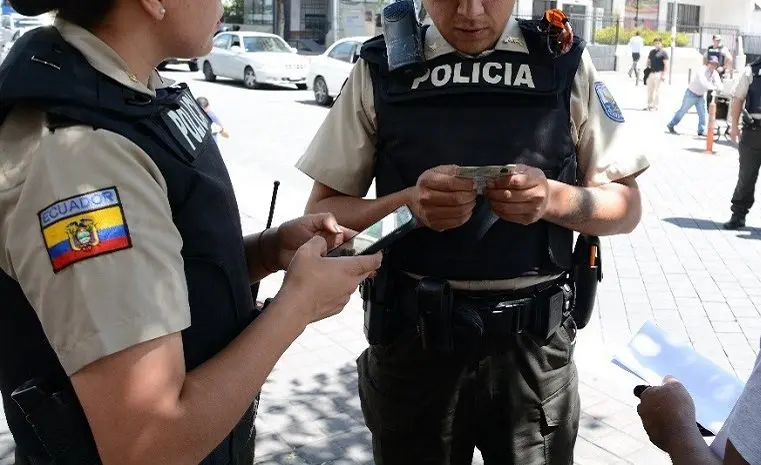
It is a global crime. But more than this, it is a mirror that reflects the deepest contradictions of contemporary government. In actual practice, states bark at drugs with one hand while feeding the businessman with the other-the contradiction at its best. This is not a question of enforcement. The world was built on a smokescreen of denial, selective justice, and political opportunism. While many governments have painted the “war on drugs” as a tale of right and wrong, the reality is something different. The supply chains are enduring, markets are expanding, and enterprise is prospering. The hidden economy of investment banks extends from coca fields in Latin America to synthetic labs in Asia and distribution networks that fan out across Europe and North America. Quite simply, prohibition has not dismantled the drug trade; it has given it an industrial base. This is not a question of chance. It is a matter of structure. Drug policy around the world systematically discriminates against the weakest. Now, drug policies of all governments around the world for the most part punish primarily the weakest link in the system: small farmers, street corner dealers, and people who use drugs but leave the financial and political structure of the drug trade itself little affected. Those who are most noticeable in the system are marked out for punishment but are seldom main beneficiaries. Meanwhile, the real motor force behind the drug economy, money laundering networks, complicit financial institutions and corrupt political actors is protected by layers of legal protection and organization.
The center of these blatant contradictions is a global financial system. With drug money one can not only disappear, it can be brought back into legitimate economies. This needs bank accounts, shell companies, and legal loopholes to work in sum, not something deep in the shadows but tools that are increasingly typical of how global capitalism operates. Nonetheless enforcement efforts remain on the level of seizures or arrests. For example, police may hope that attacking one corner of a drug network will shatter it entirely; a single major bust will have more effect than several years of trying to get hold thousands small dealers put together. It is just not in the cards: Much as the mob cannot win out against modern electrical power grids, so a international network like that can ever be no more than briefly perish every now and then in one place or another.
Even more worrying is that selective moralism is written into international drug policy. Some drugs receive extremely harsh treatment under the law, while others equally bad ones are either normalized or even sold as commodities. This lack of consistency makes clear that drug policy is not purely driven by public health concerns alone, but is also colored by political, economic, and historical factors. Whole regions have been destabilized under the name drug control, while demand in wealthier countries remains largely unaccounted for. The costs of enforcement are exported yields; benefits consumption is enjoyed and enjoyed exclusively by domestic citizens.
The human toll of such a system is enormous. Mass incarceration, extrajudicial violence, and other systematic abuses of human rights have become common features drug enforcement. In many countries, the war on drugs has stood for policies that would never be acceptable but follow politics–a militarized police, erosion of right to trial, even state violence. Whole communities are locked into structures of criminalization and marginalization, not because they are authorities on you how after finding drug trade’s center of operation or because such things cost money from their shares of the spoils hall jure, but a lot less than if for instance were being an entirely different sort The evil of this crisis lies not simply but also in its endurance midst overwhelming evidence as to how misguided current efforts are. Decades of research shows that Punishment does not significantly reduce either the use or supply drug use. Yet governments go right ahead with identical strategies and identical rhetoric regardless, producing very much the same results. This is not stupidity. It is sheer inertia joined with organized interests.
The drug war has taken on a life of its own, it supports law enforcement budgets, sets fire to political campaigns, and lays out an easily maintained facade of control. We need not declare victory; only the appearance of activity is enough. In this context failure is not a problem to be solved but a situation to be managed., If there is to be any meaningful change, it must start with a true examination. The global drug trade not only survives owing to current policies, but in fact thrives on them. As long as prohibition is the leading idea, the market will adjust and grow. Crime organizations will continue to fill the gaps left by the illegalizing process, and states will keep taking treatment measures only. Reform is not about easing the law; rather, it is the materialization of reality owned up to. This entails completing the shift from punishment to a model based in public health, human rights and economic responsibility; directing ones efforts at financial transactions as a whole instead of individuals.; attacking systems rather than people; and realizing that the border between legality and illegality often has more to do with power than it does justice. The global drug trade is not an inescapable reality. But until the system gets the political will to end it, the war on drugs will continue being what it always was: not a struggle against substances but against truth itself. To claim that it fights drugs while helping the structures that make them succeed is not just a failure: it is deceitful.
Fransiscus Nanga Roka
Faculty of Law University 17 August 1945 Surabaya Indonesia