Africa
The Human Cost of Truth in Nigeria -By Muhammad Auwal Ibrahim
I urge the Ministry of Police Affairs to mandate a special course to train officers on how to treat press freedom cases. Respecting free speech is akin to respecting the law, and we all know that respecting the law is the duty of the police. Treating journalists with care and caution, rather than cruelty, is essential; to do otherwise exposes a weakness in law enforcement and a limited understanding of democratic principles.

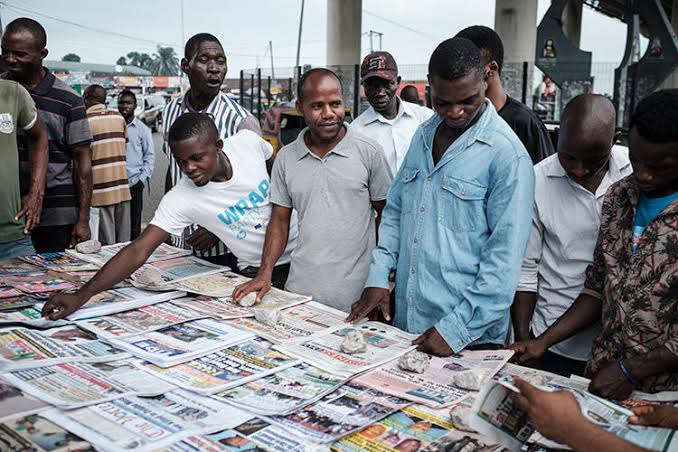
It is with a great sense of displeasure that I write as a concerned person about the intensifying attacks on the press in Nigeria. Press freedom is increasingly becoming more threatened on a daily basis.
In September, the number of cases soared higher, with incidents recorded from Katsina to Kano, Abuja, Ekiti, and Lagos. This is one attack too many. In all these cases, the intimidation is perpetrated either by the ruling elite or by overzealous police officers stifling press freedom.
It is only in Nigeria that a Governor will claim not to have authority over the federal police to curb insecurity or another pressing issue of public interest, yet will use that same police force to harass journalists for no crime other than discharging their constitutional duties. It is constitutional because journalism is one of the jobs clearly defined by the 1999 Constitution of the Federal Republic of Nigeria, as amended.
Stifling the media is not a viable strategy for countering criticism or investigative work. Instead of suppressing the truth, officials must revisit the issue under discussion and address it amicably.
Similarly, no amount of public relations spin can cleanse a contaminated reputation; the only way to achieve positive results is to act on the truth, not attack the messenger. Indeed, those who speak the truth are ultimately serving the nation’s best interests.
In Ekiti, the Vice-Chancellor of the Federal University Oye-Ekiti (FUOYE) petitioned the Commissioner of Police (CP) of the Ekiti State Command over an investigative story written by Sadiq Atanda of Foundation for Investigative Journalism (FIJ). After honouring their invitation, Sadiq was detained for 11 hours. The police even claimed they would not release him until Soyombo, the founder of FIJ, submitted himself to the Ekiti command.
Likewise, Jaafar Jaafar was invited by the Zone One Police Headquarters, Kano over a ‘thieving aide’ story his platform published in August, following the findings of anti-graft agencies exposing money laundering by a top government official.
Rukayya Aliyu Jibia said she was also invited by an anti-kidnapping unit of the police in Katsina, and when she didn’t appear, her brother was arrested and threatened to provide details of her whereabouts. This is the latest in the attack on press freedom in Nigeria.
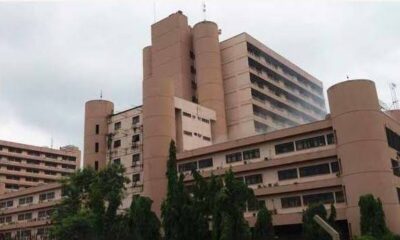
Beyond these cases, another journalist was apprehended after sharing a picture of a neglected hospital in Kebbi state. He was also released only after intense media pressure from activists.
The cases are endless. The sheer volume of these cases flagged by the International Press Centre shows that journalists are being punished for nothing but the truth. We would not mind if they were punished for sharing fake news or defamation, but no, they are intimidated for truth-telling. No doubt these cases are proving why Nigeria is the most difficult place to practise journalism in its truest sense.
Any thriving country develops by rewarding truth and punishing falsehood. If Nigeria continues to pursue this trajectory of repression, the tolerance for free speech will inevitably collapse. Despite the famed resilience of the Nigerian people, public frustration is reaching a critical point.
This intimidation is not only limited to pressmen. Law-abiding citizens and advocates also face similar repercussions for exposing the rots in their societies or government establishments. We can count numerous cases here and there. Even social media users are not spared; they have been harassed and detained for crimes they have not committed, or for simply speaking the truth.
Qauran Mata was recently arrested and detained in Zaria by the operatives of Operation Fushin Kada, following his criticism of Kaduna state government.
I can not believe seeing investigative journalists issue threats to the powerful elite by exposing or promising to expose more if their colleague is not released. This is one of the latest developments in the history of press freedom in Nigeria.
The famous Dan Bello tried this recently on the Kebbi State Governor, and it worked. Jaafar Jaafar is now threatening the Kano state government that he will release more stories of office abuse if the suit against him is not dropped. Wow? Interesting times ahead.
This development, journalists being forced to use counter-threats as their only leverage for freedom, signifies a truly dark chapter in the history of Nigerian press freedom.
To this end, I urge the Ministry of Police Affairs to mandate a special course to train officers on how to treat press freedom cases. Respecting free speech is akin to respecting the law, and we all know that respecting the law is the duty of the police. Treating journalists with care and caution, rather than cruelty, is essential; to do otherwise exposes a weakness in law enforcement and a limited understanding of democratic principles.
Muhammad Auwal Ibrahim is a multiple award-winning investigative journalist and a 2025 Adejumobi Adegbite Fellow at Foundation for Investigative Journalism and Social Justice, Lagos. He can be reached via awwalbinibrahim@gmail.com