Forgotten Dairies
The International Court of Justice Forces the World to Face Its Climate Crimes -By Fransiscus Nanga Roka
If there is meaning in this moment, it is that the climate innocence ends now. States that were complicit in setting the world on fire should not be allowed to pretend they are responsible custodians of a tragedy they continue to exacerbate. The word commitment has run its course. What follows must be more difficult, clearer and much less comfortable: accountability as well as atonement which is to say a verdict.

For decades, the world has equated climate change as a public relations issue rather than a legal one. Governments, meanwhile have become experts at talking panic while licensing new oil fields and expanding coal as well as subsidizing the 3 sectors of state corporate criminals driving planetary collapse. As seas rose, forests burned and the very countries whose fault disaster was forced to pay for it with their futures they spoke of “ambition,” “transition” and “cooperation.”
And the chapter of that era deserves to close in disgrace.
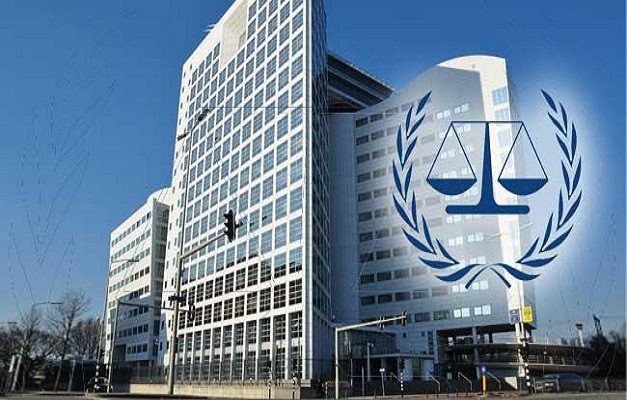
The International Court of Justice has performed what politicians would not: removed the euphemisms. Climate catastrophe is not only a policy failure. Development is not a regrettable by product of it’s called life. It is not an unfortunate gulf between ambition and delivery. It is a matter of legal obligation, duty to the state and repair for historical injustice.
This is important, because language that shapes grey area where guilt can lie has cloaked the climate crisis for far too long. It appears that everyone is accountable, which in practice translates to no one. Every negotiation is cast as a collective problem, easily obscuring the reality that rich countries became so by filling the atmosphere with CO2 and are now advising others to be patient, pragmatic “realistic.” Realism for whom? Islands facing vanishing futures at the hands of encroaching seas might have something to say about that. Surely not for African communities suffering drought, hunger and displacement. But certainly not for the young who get a denatured planet along with ineffectual bleating to “be hopeful.”
The court’s intervention slices through that fraud. It shoves the world closer to a reality which large nations have spent years dodging: climate inaction is not neutral. Delay is not diplomacy. It is not good governance to open up new fossil fuels in the middle of a planetary emergency. This is irresponsible behaviour cloaked in ministerial attire.
Words that need to be said plainly, but official forums often will not say. Organised hypocrisy has given shape to today’s climate order. Rich States take money with one hand and promise to cut emissions with the other. Corporations reposition themselves as sustainability partners while fighting binding limitations. International summits yield applause lines, communiqués that amount to pretty much nothing, and photo ops before sending delegates home haggling over the same economy that’s burning our future.
And the obscenity of that script stays intact when disaster comes. The victims have to learn to adjust. To be resilient. To innovate. To build back better. Put simply: suffer the harm others have done to you and do it with grace
This is why the ICJ matters much more than a purely legal doctrine. This is not just a rupture of the moral and political order. It announces to the world that climate alienation can no longer masquerade as ceremony, scientific technobabble, or moral free-riding on adaptation. It takes something that many leaders wanted to remain in the realm of voluntary aspiration, and makes it much more perilous for them: accountability.
Naturally, courts cannot reduce emissions on their own. Rigs are not shut down by judges, budgets are not rewritten or national money moved to businesses and leaders forced a conscience. Law is not magic. However, it does what has long been lacking in the climate regime: It puts names on obligations and breaches and exposes evasion. Once evasion is out in the open, it becomes increasingly difficult to maintain the theater.
The inevitable battle will not be about whether or even how governments understand the science. That excuse died years ago. It will be a question of whether they want to continue defending an untenable order in public, under the law and through history. From now on, every single approval for fossil fuels, all postponed targets and each one of those net zero speeches that are then backed up by some massive expansion in emissions will carry an even more sinister subtext. Not confusion. Not complexity. Choice.
The worst thing about the climate crisis, now no longer is that we were warned by mankind and failed. It is that the most powerful acted as if mass destruction was a matter of literary public relations. Now the ICJ has indicated that rhetoric is no defense.
There Learn More is no deficit of good intentions in this world. It is plagued by an overabundance of impunity.
If there is meaning in this moment, it is that the climate innocence ends now. States that were complicit in setting the world on fire should not be allowed to pretend they are responsible custodians of a tragedy they continue to exacerbate. The word commitment has run its course. What follows must be more difficult, clearer and much less comfortable: accountability as well as atonement which is to say a verdict.
Fransiscus Nanga Roka
Faculty of Law University 17 August 1945 Surabaya Indonesia