Forgotten Dairies
The Niger Delta’s Buried Truth: Henry Okah, the Man Behind Its Most Consequential Resistance Movement -By Daniel Nduka Okonkwo
Henry Okah’s imprisonment continues to symbolise, for some, the unresolved tensions within the Niger Delta. While opinions about his role differ, his case remains part of a broader conversation about justice, development, and the future of the region.

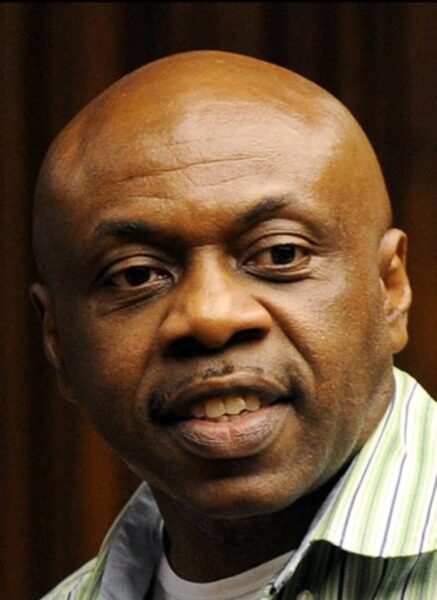
Henry Okah’s name may have faded from the headlines, but his story remains a powerful monument to what many consider the essence of a true freedom fighter. He was never known to be driven by wealth or personal ambition. Instead, he stood as a selfless leader who sacrificed comfort, safety, and ultimately his liberty to challenge injustice and oppression. Defined by persistence, he endured imprisonment, exile, and the constant threat of death, refusing to yield in his pursuit of liberation for his people. Today, confined in Ebongweni Correctional Centre in South Africa following his 2013 conviction, Okah remains distant from his family, yet his courage and sacrifices continue to resonate among those who remember him not as a man seeking power, but as one who gave everything for justice.
Throughout his incarceration, Okah has consistently rejected his conviction, maintaining that his arrest, trial, and imprisonment violated South African law, Nigerian law, international law, and international humanitarian law. He views himself as a prisoner of war rather than a criminal. More recently, in April 2025, his legal team reportedly filed a case at the Gauteng Division of the High Court in Pretoria, seeking to halt alleged moves to grant him parole and deport him to Nigeria. He has reportedly refused parole on principled grounds, insisting that the State has no right to offer what it wrongfully took.
Others from the Niger Delta have meanwhile risen to prominence, positioning themselves as heroes of a struggle they are perceived by some to have monetised from more comfortable positions. May our people never forget the sacrifices made for them.
Against this backdrop, the Niger Delta militant landscape has been shaped by figures such as Government Oweizide Ekpemupolo, widely known as Tompolo, Mujahid Dokubo-Asari, Ebikabowei Victor-Ben, known as Boyloaf, Ateke Tom, and others who have transitioned from militancy into business, politics, or traditional leadership. Tompolo, who embraced the Federal Government’s amnesty offer in October 2009, later became associated with pipeline surveillance and coastal protection contracts. Reports indicate that a company linked to him, Tantita Security Services, had its contract renewed by the Buhari administration in August 2022 and again by the Nigerian National Petroleum Company Limited in October 2024, although its continuation into 2025 has remained a subject of public debate.
Prominent figures, including Dokubo-Asari, Ateke Tom, and Boyloaf, have publicly expressed concerns regarding the concentration of such contracts. Ateke Tom has since become the Amanyanabo of Okochiri Kingdom, illustrating how some former militant leaders have transitioned into traditional institutions. While some remain publicly vocal, others operate within private security frameworks connected to government contracts. The prominence of these figures underscores the fluidity of power in the Niger Delta, where the line between demobilisation and the monetisation of militancy remains a subject of debate.
There is a particular cruelty often associated with individuals who fight not for themselves, but for the land and people they represent, and who are later sidelined or forgotten while still alive. This perception is reflected in discussions surrounding the Niger Delta and the treatment of Henry Emomotimi Okah, widely reported as a leading figure of the Movement for the Emancipation of the Niger Delta. He remains imprisoned in South Africa, his legal battles ongoing, his contributions to the Niger Delta struggle debated, and reports about his health occasionally raising concern among supporters.
This is a story about one man, but also about an entire people told they should be grateful for circumstances many still find difficult.
Henry Emomotimi Okah was born in 1965 and raised in Ikorodu, Lagos State, with ancestral roots in Bayelsa State. The fourth child of a Navy officer, his upbringing was relatively privileged. He attended private schools and later trained in marine engineering. After his education, he was associated with maritime-related work, including involvement in the Nigerian Merchant Navy.
Okah’s first visit to Bayelsa at a young age is widely believed to have influenced his commitment to the Niger Delta cause, exposing him to the contrast between urban privilege and the realities of oil-producing communities. Over time, previously disjointed armed groups became associated under the banner of the Movement for the Emancipation of the Niger Delta, a movement that significantly disrupted Nigeria’s oil output at its peak and drew global attention to the region’s challenges.
Commanders linked with the movement included Farah Dagogo, Ebikabowei Victor-Ben, John Togo, and Government Ekpemupolo. While some later faced prosecution or transitioned into government-backed roles, Okah remains in prison.
MEND’s central demand focused on greater local control over oil resources, a position supporters framed as a struggle for justice.
In 2008, Okah was arrested in Angola and returned to Nigeria, where he faced charges including treason and arms-related offences. He was later released in 2009 under the Federal Government’s Amnesty Programme.
Following the October 1, 2010, Independence Day bombing in Abuja, which was claimed by individuals linked to MEND, Okah was arrested in Johannesburg.
In January 2013, a South African court convicted him on multiple terrorism-related charges and sentenced him to 24 years’ imprisonment. He has maintained his innocence.
Legal proceedings related to his case have remained complex and, at times, controversial. In 2025, reports indicated renewed legal efforts to challenge aspects of his detention. Support groups and advocacy organisations have raised concerns regarding fair trial standards, while South African authorities have upheld the outcome of the case.
The 2009 Presidential Amnesty Programme introduced disarmament, stipends, and reintegration initiatives for former militants. While it contributed to a reduction in violence, it did not fully resolve underlying challenges such as unemployment, environmental degradation, and concerns over inclusion in resource governance.
Observers and community stakeholders have continued to highlight gaps in implementation, including allegations of mismanagement and unmet expectations among beneficiaries.
The Niger Delta’s broader demand for resource control remains a central issue. Many communities continue to face limited access to clean water, electricity, and healthcare, alongside the long-term environmental impact of oil exploration.
Oil companies have, in recent years, adjusted their operations in the region, with ongoing discussions around environmental responsibility and remediation. Community groups continue to advocate for accountability.
There have also been periodic reports of renewed tensions and isolated attacks on oil infrastructure, reflecting continued dissatisfaction in parts of the region.
Henry Okah’s imprisonment continues to symbolise, for some, the unresolved tensions within the Niger Delta. While opinions about his role differ, his case remains part of a broader conversation about justice, development, and the future of the region.
Justice, as often argued, begins with acknowledging the full complexity of such histories.
Daniel Nduka Okonkwo is a Nigerian investigative journalist, publisher of Profiles International Human Rights Advocate, and policy analyst whose work focuses on governance, institutional accountability, and political power. He is also a human rights activist, human rights advocate, and human rights journalist. His reporting and analysis have appeared in Sahara Reporters, African Defence Forum, Daily Intel Newspapers, Opinion Nigeria, African Angle, and other international media platforms. He writes from Nigeria and can be reached at dan.okonkwo.73@gmail.com.