Forgotten Dairies
THE PARADOX OF STABILIZATION: Bridging the Gap Between Policy and Reality in Modern Nigeria -By Mathias Mayor
Nigeria possesses an incredibly resilient population and a rapidly expanding digital economy driven by innovative youths. However, resilience is a finite resource. If the nation is to transform its fragile macroeconomic stability into shared prosperity, the primary metric of success must shift away from abstract growth percentages and toward the tangible welfare, security, and affordability of life for the ordinary Nigerian.

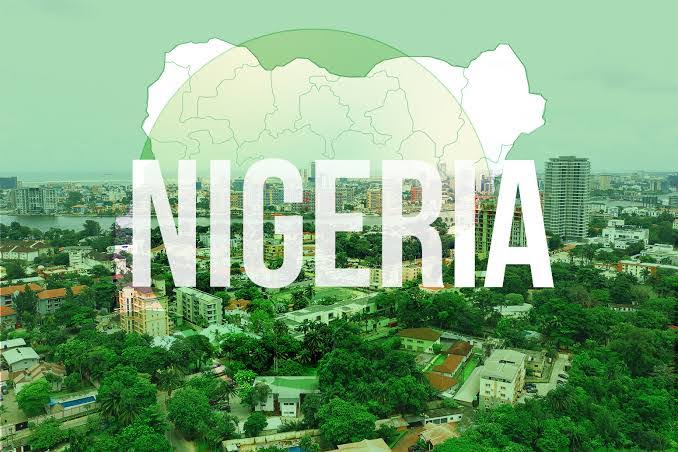
The paradox of modern Nigeria lies in the striking disconnect between the sterile optimism of macroeconomic data and the raw, visceral reality of the marketplace. As the nation moves through 2026, a curious narrative duality has emerged. On paper, international financial institutions and national economic summits point to a landscape of hard-won stabilization. They speak of an economy expanding by over four percent, of moderated foreign exchange volatility, and of a central bank successfully anchoring monetary policy after years of dizzying turbulence. Yet, walk into any open-air market from Lagos to Kano, or listen to the tense deliberations on the floor of the National Assembly, and a completely different picture comes to view. For the average Nigerian, the grand promises of institutional reforms have not yet translated into affordable food, safe highways, or predictable livelihoods. Instead, the country stands at a delicate inflection point where structural adjustments are clashing directly with human endurance.
At the heart of the current crisis is a profound cost-of-living squeeze that threatens to erase modest macroeconomic gains. While the government celebrates increased foreign portfolio investment and improved trade surpluses, the domestic private sector and ordinary households are weathering severe affordability constraints. The International Monetary Fund recently warned that the soaring costs of basic necessities are actively compounding food insecurity and deepening poverty lines across the sub-Saharan region, with Nigeria positioned at the vanguard of this vulnerability. This is not merely an issue of supply and demand, but a complex web of structural bottlenecks. The partial delivery of domestic fuel from mega-refineries was intended to cushion the nation against external shocks, yet global energy price spikes and systemic downstream distribution politics mean that landing and transportation costs remain punishingly high. When energy costs surge, they inevitably feed into fertilizer prices and food distribution networks, triggering an inflationary domino effect that hits the most vulnerable citizens first.
Compounding this economic anxiety is an atmosphere of persistent domestic insecurity that continues to fragment national cohesion and stifle agricultural productivity. In the agricultural belts, localized land-use conflicts and agrarian disruptions mean that farmers cannot safely cultivate or harvest crops, directly impacting the national food supply and driving prices even higher. Meanwhile, the urban centers are not immune to tension. Recent security alerts in major metropolises like Lagos highlight the constant undercurrent of group rivalries and civil unrest that forces businesses to operate on an edge of caution. Although the presidency has increasingly championed a tech-driven defense strategy to dismantle the financial networks funding banditry and terrorism, the operational realities on the ground remain slow to change. Security is the bedrock of economic confidence; without it, rural economies remain isolated, and foreign direct investment is restricted to capital-intensive, insulated sectors rather than job-creating manufacturing industries.
This friction between policy design and grassroots execution has sparked noticeable political weariness and institutional gridlock. A vivid example of this strain occurred recently in the House of Representatives, where rowdy legislative sessions erupted over delays in funding vital regional intervention projects. Lawmakers openly lamented that the concurrent implementation of overlapping annual budgets is stalling real development, highlighting a deeper systemic issue of bureaucratic drag and policy inconsistency. When the state mechanism struggles to efficiently deploy capital into the communities that need it most, public frustration grows. The current climate is a stark reminder that structural consolidation cannot occur in a vacuum. If the benefits of macroeconomic stabilization fail to materialize in the daily lives of citizens through enhanced purchasing power and functional public infrastructure, the risk of reform fatigue and social instability becomes dangerously real.
To navigate this crucial junction, Nigeria must urgently pivot from emergency crisis management to a deliberate, human-centric model of governance. Stabilizing the naira and tightening tax administration are vital steps, but they represent the framework of a building, not the roof that protects people from the storm. True economic consolidation requires a massive scale-up of targeted social protections and youth skills initiatives to buffer households against persistent inflation. Furthermore, the federal government must foster tighter fiscal and regulatory coordination to eliminate the policy bottlenecks that prevent domestic energy production from lowering costs at the local pump. Nigeria possesses an incredibly resilient population and a rapidly expanding digital economy driven by innovative youths. However, resilience is a finite resource. If the nation is to transform its fragile macroeconomic stability into shared prosperity, the primary metric of success must shift away from abstract growth percentages and toward the tangible welfare, security, and affordability of life for the ordinary Nigerian.