Africa
The Political Economy of Child Health in Nigeria -By Patrick Iwelunmor
Nigeria stands at a familiar crossroads. The evidence is clear, the frameworks exist, and the human stakes are undeniable. The 4.3 per cent health allocation is more than a budgetary statistic. It is a signal of political judgment and economic reasoning. Meaningful reform will require sustained funding, aligned institutional incentives, and the political courage to treat child health not as a residual obligation but as a central pillar of national development.

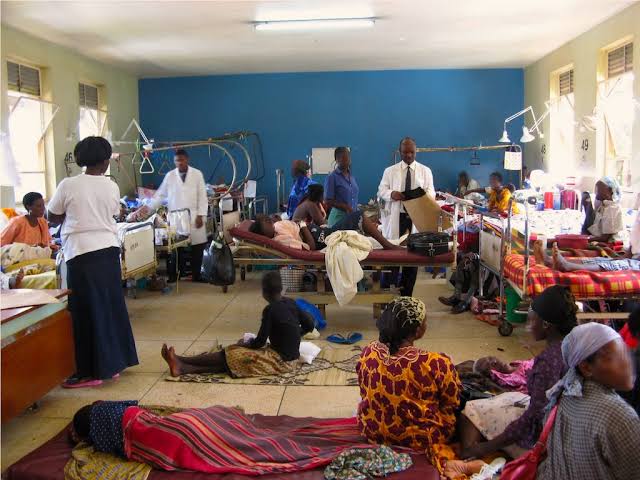
In Nigeria, the health of a child is shaped as much by political and economic choices as by medicine. Overcrowded paediatric wards, postponed immunisation schedules, and communities where preventable illnesses persist are not random failures of capacity. They are outcomes produced by decisions about how resources are allocated, which sectors are prioritised, and whose welfare carries political weight. The 2026 national budget, allocating just 4.3 per cent to health, offers a revealing window into this political economy. When Professor Ekanem Ekure, President of the Paediatric Association of Nigeria, criticised the allocation, she was questioning the logic that governs investment in children’s lives.
Public budgets are often defended as neutral instruments shaped by revenue constraints and macroeconomic pressures. In reality, they are among the most political documents a state produces. In a country where child mortality remains among the highest globally, fiscal choices translate directly into human outcomes. They determine whether primary healthcare facilities are staffed, vaccines reach remote communities, and malnutrition is addressed before it becomes irreversible. Nigeria’s endorsement of the Abuja Declaration in 2001, committing African states to allocate at least 15 per cent of national budgets to health, remains largely symbolic. More than two decades later, health spending continues to hover between 3.5 and 5 per cent, indicating a persistent pattern rather than a temporary lapse.
Historical context is relevant. The 2026 allocation represents the highest proportion ever dedicated to health in Nigeria’s budgetary history. This milestone deserves recognition and signals incremental progress, reflecting the Tinubu-led federal government’s effort to improve health sector funding. While it falls short of the 15 per cent target endorsed in the Abuja Declaration, this increase demonstrates awareness of the sector’s importance and represents a step in the right direction. Yet political economy is concerned not with milestones alone but with adequacy and consequence. Health is not a discretionary sector competing on equal terms with others. It is central to human capital development, labour productivity, and social stability. Countries with comparable or slightly lower income levels, such as Ghana, Kenya and Rwanda, devote a higher share of public expenditure to health and record better child survival outcomes. Nigeria’s continued underinvestment, therefore, reflects a hierarchy of priorities in which child health remains insufficiently valued.
Professor Ekure’s intervention at the Paediatric Association of Nigeria’s 57th Annual General Meeting and Scientific Conference in Abeokuta highlighted the effects of this hierarchy. Nigeria continues to shoulder a disproportionate burden of preventable childhood illnesses, from chronic malnutrition and vaccine-preventable diseases to stark inequalities in access to quality primary care. These outcomes are not accidental. They arise from fragmented funding, uneven oversight, and weak implementation. In this context, child health becomes a quiet casualty of competing fiscal and political interests.
At the heart of the problem lies a structural imbalance. Children have no electoral voice and no immediate political utility. Health budgets must contend with debt servicing, security spending, and capital projects that yield visible political dividends. Yet this trade-off is misleading. Underinvestment in child health merely postpones costs, converting preventable conditions into long-term social and economic liabilities. What appears fiscally prudent in the short term ultimately undermines productivity, deepens inequality, and increases future public expenditure. From a political economy perspective, neglecting child health is both morally troubling and economically irrational.
The Ogijo lead poisoning crisis in Ogun State illustrates how regulatory weakness compounds fiscal neglect. Children formed the majority of those exposed to toxic emissions from poorly regulated battery recycling facilities. Closing the factories was necessary but insufficient. Effective governance would have prioritised preventive regulation, environmental health surveillance, and sustained remediation. It would have ensured long-term medical follow-up and accountability. When regulation is weak and enforcement reactive, the costs of economic activity are transferred to children least able to bear them.
Social and security pressures further distort child health outcomes. Abductions from schools and markets, particularly in parts of northern Nigeria, disrupt access to education and healthcare while inflicting lasting psychological harm. Poverty, displacement, climate stress, and emerging disease threats intersect to widen regional disparities. Nigeria is not short of policy frameworks addressing these challenges. What is lacking is consistent execution, adequate funding, and effective coordination across institutions.
Proposals by the Paediatric Association of Nigeria for innovative financing, including public-private partnerships, blended finance, and outcome-linked disbursements, respond pragmatically to constrained public resources. Professor Olugbenga Mokolu’s emphasis on these mechanisms reflects recognition that traditional funding models have limits. Yet alternative financing cannot substitute for state responsibility. Without robust public investment, transparent oversight, and enforceable accountability, such mechanisms risk obscuring structural weaknesses rather than resolving them.
Technology is often presented as a corrective. Digital platforms for immunisation tracking, telemedicine, and disease surveillance can expand reach, particularly in underserved communities. Federal initiatives articulated by the Minister of State for Health, Dr Isiaq Salako, signal awareness of this potential. The National Child Survival Action Plan, with its focus on newborn resuscitation, integrated nutrition services, and community-based management of childhood illnesses, marks progress. Yet Nigeria continues to account for a significant share of global deaths among children under five. This gap between policy intent and lived outcomes underscores a central political economy lesson: technology amplifies systems, it does not replace them.
Ultimately, the political economy of child health reflects societal values encoded in fiscal and regulatory choices. Investment in children is not charity; it is strategy. It shapes the future workforce, the sustainability of public finances, and the resilience of social institutions. Immunisation, nutrition, primary healthcare, and maternal services are investments with the highest long-term returns. When they are underfunded, the nation pays repeatedly through lost productivity and preventable suffering.
Nigeria stands at a familiar crossroads. The evidence is clear, the frameworks exist, and the human stakes are undeniable. The 4.3 per cent health allocation is more than a budgetary statistic. It is a signal of political judgment and economic reasoning. Meaningful reform will require sustained funding, aligned institutional incentives, and the political courage to treat child health not as a residual obligation but as a central pillar of national development. In the final analysis, the true measure of Nigeria’s political economy will be found not in balance sheets alone, but in whether its children are given a fair chance to survive, grow, and contribute to the nation’s future.