Forgotten Dairies
The Republic of City Boys: When Politics Becomes Playground -By Vitus Ozoke, PhD
The tragedy is not that these men are boys. The tragedy is that they seem proud of it. Until that changes, until adulthood returns to Nigerian political life, the country will remain what it is fast becoming: not a republic of laws, not a republic of citizens, but a republic of boys.

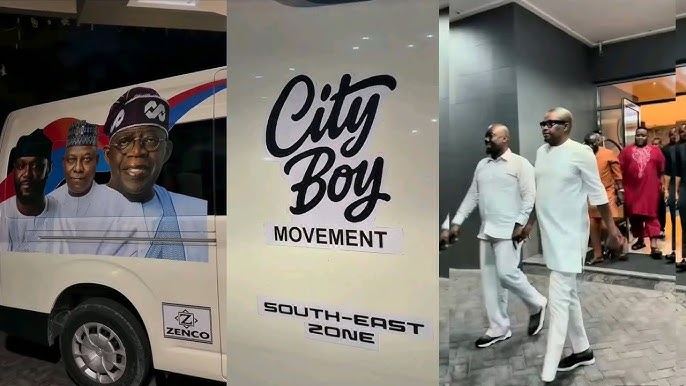
There was a time when politics, however flawed, at least pretended to be the business of adults – men and women burdened, if not by conscience, then at least by the weight of consequences. That time, it seems, has passed. Nigeria has entered a new phase in its political evolution: the Age of Boys. Not young men. Not emerging leaders. Not even misguided elites. Boys. And like boys everywhere, they are loud, impressionable, eager for validation, and utterly incapable of grasping the magnitude of the damage they help unleash.
They call themselves the City Boy Movement – a name that, unintentionally, tells the whole story. It is not a political ideology. It is not a developmental vision. It is not even a coherent strategy. It is branding. A slogan. A playground chant elevated to the level of national consequence. “City Boy.” One almost expects them to follow it with a handshake, a secret code, or a TikTok dance. This is both the reality and the tragedy of infantilized politics.
What does it mean for a country when its supposed elite begin to proudly self-identify not as statesmen, not as thinkers, not as patriots – but as boys? It means responsibility has been abandoned. It means consequences are someone else’s problem. It means politics has become performance, and governance a game.
Boys do not build nations. Boys play in them. They join whatever team looks like it is winning. They chase proximity to power the way children chase the loudest music and the shiniest toys. They do not ask whether the house is burning; they only ask who is throwing the biggest, loudest party inside it. And Nigeria, today, is very much a burning house.
The economy is in freefall. The currency has been battered into near-irrelevance. The cost of living has become a daily struggle for survival. Insecurity has metastasized into a national condition. Corruption, once a scandal, is now a system. And in the middle of all this, the boys are dancing.
There is something particularly tragic – almost poetic – about watching men who once criticized dysfunction now scramble to affiliate with it. They have moved from judgment to imitation. Not because they have been persuaded. Not because they have been convinced. But because they have been attracted.
This is not an ideological conversion. It is social climbing. It is the political equivalent of a child abandoning his home principles and training the moment he is invited to sit at the “cool table” during the school lunch break. And so they migrate – eagerly, loudly, almost competitively – into the very structure that embodies the dysfunction they once condemned. Why? Because boys imitate power; they do not interrogate it.
It is all about the courage of adults and the impulse of boys. An adult, confronted with a system widely perceived as failing, asks difficult questions: What is the cost of alignment? What does this mean for my people? What does history demand of me? How will history record my perfidy? A boy asks a simpler question: Where is everyone going? And then he runs in that direction. Adults understand that power is a burden. Boys think power is an accessory. Adults worry about legacy. Boys worry about belonging.
There is an added layer of irony – painful, almost surreal – in watching this unfold among individuals who come from a region historically defined by resilience, skepticism of centralized power, and a hard-earned political consciousness. One would expect caution, reflection, and strategic calculation. Instead, we are witnessing enthusiasm, speed, and puerile competition. Who can join first? Who can declare the loudest? Who can prove themselves the most loyal? It is no longer about what is right. It is about who is quickest. This is not a political strategy. It is social signaling. It is the Igbo paradox. And it is profoundly unserious, yet deeply troubling.
What makes this moment dangerous is not just the decisions being made, but the mindset behind them. Because when politics becomes a stage for boys, governance becomes performance, loyalty replaces competence, optics override outcomes, and consequences become abstract. But Nigeria is not abstract. The hunger is real. The insecurity is real. The economic collapse is real. The suffering is real. And yet, the boys play on.
Look, to all my City Boyers (Umuazi City), growing up is not optional. Nations can survive bad policies. They can survive weak leadership. They can even survive corruption. But what they struggle to survive is the absence of seriousness. A country governed by adults may stumble. A country governed by boys will drift – dangerously, aimlessly – until reality imposes a lesson that immaturity refused to learn.
The tragedy is not that these men are boys. The tragedy is that they seem proud of it. Until that changes, until adulthood returns to Nigerian political life, the country will remain what it is fast becoming: not a republic of laws, not a republic of citizens, but a republic of boys.
Someone, please fetch the toys for the boys.
Dr. Vitus Ozoke is a lawyer, human rights activist, and public affairs analyst based in the United States. He writes on politics, governance, and the moral costs of leadership failure in Africa.