Forgotten Dairies
The U.S.–Israel War with Iran: A Dangerous Gamble with Global Consequences -By Fransiscus Nanga Roka, Yovita Arie Mangesti
The US-Israel war against Iran is a landmark event one that will define history. It involves not only regional security, but also worldwide stability and international law, at stake. Unless there is clear legal justification and attainable goals (or unless people have a good number of options before them), this conflict could evolve into a protracted, mutually killing struggle for which no one has factored the outcome.

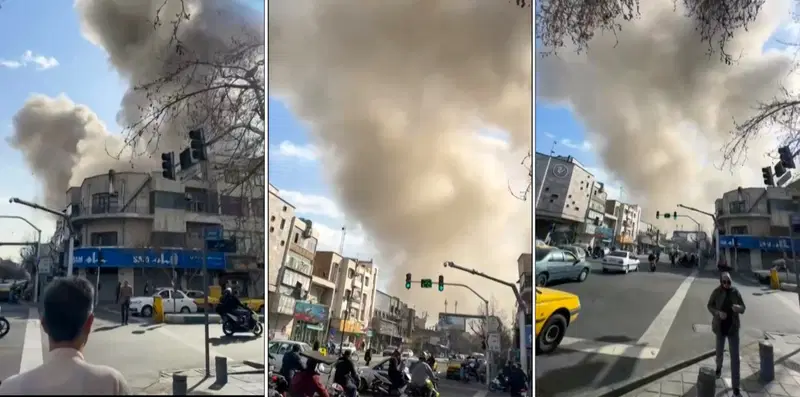
Reuters reported that this military campaign, called Operation Lion’s Roar by Israel, over and above launching major offensives against Iranian territory has brought the intermittent tension up to confrontation on a wide and comprehensive scale. This has repercussions well beyond just the immediate battlefield.
In essence, this war revolves around an age-old strategic rivalry: Israel and the United States regard Iranian nuclear and missile programmes as existential threats, while Tehran views Western military action as a violation of its sovereignty and influence in regional matters. Nevertheless, the style, timing, and goals of this war give rise to profound questions about its justification, legality, and future strategic advantages for anyone.
A War of Ambiguous Justifications US and Israeli leaders have framed their offensives as both pre- emptive self-defense and efforts for regime change. President Donald Trump argued that the campaign was aimed at “defending the American people by eliminating imminent threats from the Iranian regime”, while calling on Iranians themselves to get rid of their government once all military operations were over. Israeli officials repeated the need to remove what they believe is a threat to their very existence. (Axios)
This framing, however, is geopolitically and legally controversial. Despite claims of imminent danger, there has been no recent direct armed attack by Iran against either the United States or Israel that would clearly justify defensive military action under Article 51 of the U.N. Charter. Many international law experts argue that the current campaign does not meet the stringent criteria of imminent threat so may well be an illegal use of force.
This time, rather than providing overwhelming evidence that an imminent attack has been pre empted, the USA and Israel have based their arguments on the idea that Iran may one day have nuclear weapons and use them for harm to Israel when, or if, that day arrives. They accuse Tehran of supporting proxy forces in other countries, who will make sure theirs winds up with a nuclear bomb. While these arguments may resonate with some policy makers, they do not meet the high threshold of immediacy and urgency required by international law before a nation can legally take preemptive military action as if under attack on its own soil or on that of its ally.
Strategic and regional risks In addition to the legal issues, the strategic logic of war has been called into doubt. Experts from think tanks like Chatham House believe that if nothing else, this conflict will be long and costly — probably catastrophic. For Tehran, it is not just another round of eye-for-an-eye air strikes but what many analysts describe as an existential confrontation: one which shakes the very foundation of Iranian society.
Already Iran has struck back with missiles and drones at US and Israeli targets in the larger Middle East, including mother bases of terrorists as well as allied lands. This escalation of the conflict outside Iraq is bringing a regional-wide response. And as neighboring countries are dragged further into this cycle of revenge action, all it does is create more conflicts among them, making a region where there is already war–such as Yemen, Syria and Iraq –yet closer to breaking point even faster than before.
The war also poses a threat to the global energy supply. Iran, with its greater than normal supply of oil, lies across the vital Strait of Hormuz through which an estimated 20 percent or so world output passes. Any disruption in this choke-hold could send world oil prices soaring and tilt the balance of finances worldwide. (Reuters, Jun.5)
Domestic and global political consequences
The war incurs significant political risks for the United States and Israel, in front of their own voters.Today in the U.S., launching a major conflict without broad-based congressional backing or a specific exit strategy likely will deepen political divides and deepen scepticism about presidential overreach.For Israel, a protracted conflict might severely test its own society and military readiness, particularly if casualties multiply and international condemnation tends to intensify.Internationally, reaction has been mixed. On the one hand, counties such as Ukraine, after weighing its implications global security order have publicly voiced support for the actions; on the other hand, others such as Russia seriously condemned them saying they were “unprovoked attacked and could provoke great human or radio logical disaster. “Such condemnations could serve to deepen international divisions and undercut multilateral efforts to manage conflict through negotiation rather than force. (AP News)The United Nations has scheduled emergency sessions and numerous countries have expressed concern that this conflict might escalate beyond the limits of Middle Eastern theatre warfare.The Human Cost and Future OutlookAs with any modern war, the human toll both of civilians and military institutions is enormous and likely to get worse. Bombardments of major cities in Iran have inflicted both casualties and extensive damage to infrastructure. Civilians on all sides are meanwhile suffering disruption, displacement and psychological trauma.Crucially, even if America and Israel reach their short-term military objectives, they have not spelled out what comes next. Dismantling the leadership or stripping the military capacity of Iran cannot guarantee subsequent political reform or long-term stability. It is different from past conflicts where rapid regime change was forecast; the Iranian state’s nationalist and religious institutions have historically proved rather resilient under pressure. (Atlantic Council)Conclusion: A Gamble With Uncertain Ends.
The US-Israel war against Iran is a landmark event one that will define history. It involves not only regional security, but also worldwide stability and international law, at stake. Unless there is clear legal justification and attainable goals (or unless people have a good number of options before them), this conflict could evolve into a protracted, mutually killing struggle for which no one has factored the outcome.
This war doesn’t make strategic sense, only reinforcing security. The wars leave a note of unending instability in Middle East that chews at their very hearts, sowing dissatisfaction with the Western powers far and near. And once more anger leads to episodes which hurt others most deeply but from which they least deserve the suffering— along with great damages to your own people ‘s morale or infrastructure for war production has been repelling miscalculating enemies back onto their heels like none seen since Suez. This war, a world that seeks to avoid conflict of catastrophic proportions beseeches all its inhabitants to look beyond the use of force purely because these (and still less any other) means are required in order for one side win. The highest stakes are now at risk if this form rule (or even worse: form) of action should prevail among men and nations once again in time before Victory over Evil