
Africa
The Virtuoso: Frank Nweke Jr., Sixty and Nationhood -By Prince Charles Dickson, Ph.D.
Nigeria today needs virtuosos—not more jobbers or jesters, not more mouthpieces who call black white, but men and women who can take critique, absorb it, and still summon a higher tune. Frank is one such man. At 60, he embodies the paradox of hope in a land of hardship. He is proof that one can be loyal to truth without losing loyalty to friendship, and that one can be a patriot without being blind to the nation’s flaws.

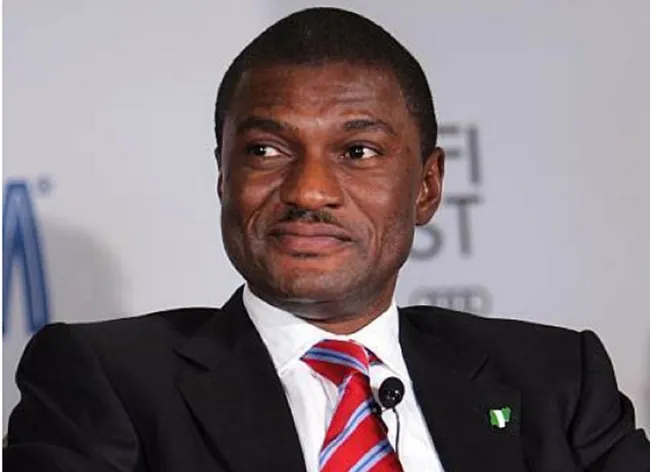
A virtuoso, by its original Italian meaning, is not merely a person of talent but one who wields mastery with precision, discipline, and flair. In the world of music, it is the violinist who can play the soul into silence. In the underworld thriller, it is the assassin who takes no wasted shot. In the messy theatre of Nigerian politics, it is the rare leader who plays the score of nationhood with both audacity and grace.
Frank Nnaemeka Nweke II—Frank Nweke Jr. to the public, Okeifufe of Ishi Ozalla to his people—is one such virtuoso. He is 60!
I knew him first not as a friend but as a target of my sharp pen. In 2006, as Minister of Information under President Obasanjo, he embodied to me the contradictions of government: brilliant but constrained, personable but serving a system that mangled truth. My essays then were not charitable. I called out his globe-trotting with the “Heart of Africa” project, accused him of whitewashing policies, and reminded him, rather unkindly, that calling black white was not a patriotic virtue.
Yet here we are—fifteen years later, friends in dialogue, co-travelers in lamenting and dreaming Nigeria. That is the paradox of nationhood: sometimes those you aim at with critique become your partners in reflection. That is also the paradox of Frank: a man who can absorb fire, and still invite you to the table of conversation.
Ozalla, his ancestral home in Nkanu West, is a land of stony soil. Farmers there coax life out of granite, shaping yam mounds with patience, coaxing cassava through unforgiving ground. This stubborn devotion has birthed a community renowned for trade and agriculture. Out of that soil comes the character of Frank: painstaking, resilient, irrepressible.
Igbo republicanism, with its insistence on equality and dissent, runs in his blood. Egalitarianism, enterprise, and industry mark his manner. He has always been a man who insists that leadership is first a human obligation before an ethnic badge or national assignment. That grounding—human first, Igbo next, Nigerian always—makes him stand out in the theatre of our identity politics. I can relate myself, being a hybrid Nigerian with roots cut across.
Permit me a personal detour. In 2006, I penned one of my earliest open letters to a sitting minister, titled Frankly Speaking to Frank. It was not flattering.
I accused him of helping government “call black white.” I mocked his attempt to rebut The New York Times’s editorial that Nigeria was falling apart, insisting instead that things were not just falling apart—they were in pieces. I quoted Soyinka on our “season of anomy,” reminded him that Nigerians were struggling for a square meal, and asked of what use was “running fast in the wrong direction.”
I pressed him on corruption, the EFCC’s selective blindness, and the folly of government men thinking they could sell Nigeria to the world when Nigerians at home had no electricity to power a blender. I even dared him to prove on national television that anti-corruption was not a weapon against opposition politicians.
I expected silence. Instead, Frank read. He engaged. Not always publicly, but enough for me to know he was listening. In a political culture where critique is met with hostility or indifference, that was remarkable. It was also the beginning of a friendship.
Frank’s tenure as minister (first Intergovernmental Affairs, later Information, and later again for Youth, Culture, and Sports) was not without controversy, but it revealed his gifts. He was articulate without being bombastic, disciplined without being rigid, cosmopolitan without losing roots. He carried himself with the poise of one who knew the limits of office but still played the notes available with skill.
In music, a virtuoso cannot choose the hall, the acoustics, or the restless audience. He only chooses how he will play. That was Frank’s reality. He played under Obasanjo’s heavy shadow, amidst the cacophony of third term, in a government of brilliance and blunders. He did not always hit the perfect notes, but he never abandoned the instrument.
Over time, I came to see Frank not only as a minister past but as a friend present. We met, sometimes by chance (at the British Council, while he was at the helm of the Nigerian Economic Summit Group), sometimes by intent, in long conversations about the Nigerian dream.
He is a conversationalist of depth, mixing hard statistics with laughter, quoting proverbs with ease, on that we were kindred spirits, and never hiding his humanity. One moment he is dissecting macroeconomic policy, the next he is making a joke about the absurdity of Abuja traffic lights that work only during the day, when you don’t need them.
Our friendship is proof that critique does not kill respect, and that respect does not erase accountability. It is possible to quarrel with a man’s office and still cherish his humanity. That too is virtuosity.
Frank turns 60 at a time Nigeria itself feels trapped in a cycle of perpetual adolescence. We are a nation old in years but young in maturity, rich in resources but poor in outcomes, loud in vision but limp in delivery.
The question of nationhood has not been settled: Are we a country or merely a collection of grudges tied together by petrol pipelines and quota systems? Are we citizens or hostages of elite consensus?
Frank, like many of us, knows these questions intimately. His own gubernatorial bid in Enugu State showed the paradox: a man of competence, weighed down by structures of money and manipulation. He has seen up close how our democracy recycles mediocrity and punishes excellence.
Yet he refuses despair. That is the virtuoso’s creed: to keep playing, even when the hall is hostile, even when the strings snap.
Permit me a small indulgence. Friendship with Frank has taught me that behind the polished exterior lies a man who enjoys laughter. He once confessed how, during his time as minister, he received letters like mine that called him everything from “Obasanjo’s drummer boy” to “minister of propaganda.” Some he ignored, some he framed in his mind. He joked that if Nigerians could be taxed for insults, we would never need oil revenue.
He is not above poking fun at himself. That, in a land where politicians carry themselves like demi-gods, is refreshing. It reminds me of an Igbo saying: onye ji mmiri agba ọsọ, ya na mmiri ahụ ga-akpụ isi mmiri—he who runs with water must be ready to have water wash his head. Frank has run with water, and sometimes it has drenched him. But he has never stopped running.
At 60, Frank’s life mirrors Nigeria’s paradoxes. Here is a man of enterprise, intellect, and vision, yet his nation has not always given him the platform to soar. Here is a patriot who defended Nigeria abroad, only to return to homes without electricity. Here is a leader who speaks of reform, yet is trapped in structures that resist it.
But perhaps that is why I call him a virtuoso. Not because he has solved Nigeria’s riddles, but because he continues to wrestle with them without losing his humanity. He insists on dialogue. He insists on hope. He insists that Nigeria, like a stubborn violin, will one day produce the right note if we keep playing.
Frank Nweke Jr. at 60 is not perfect. No virtuoso ever is. Even the greatest pianist sometimes strikes a discordant note. But he is consistent: precise, disciplined, willing to confront critique, willing to be human first, leader next.
As his friend, I celebrate him not for his titles but for his spirit. As a Nigerian, I invoke him as a reminder that nationhood is not built by saints but by stubborn mortals who keep playing the music even when the hall boos.
Nigeria today needs virtuosos—not more jobbers or jesters, not more mouthpieces who call black white, but men and women who can take critique, absorb it, and still summon a higher tune. Frank is one such man. At 60, he embodies the paradox of hope in a land of hardship. He is proof that one can be loyal to truth without losing loyalty to friendship, and that one can be a patriot without being blind to the nation’s flaws.
Happy birthday, my friend. Keep playing. For one day, perhaps, Nigeria itself will become the symphony we have long rehearsed—May Nigeria win!
—
Prince Charles Dickson PhD
Team Lead
The Tattaaunawa Roundtable Initiative (TRICentre)
Development & Media Practitioner|
Researcher|Policy Analyst|Public Intellect|Teacher
234 803 331 1301, 234 805 715 2301
Alternate Mail: pcdbooks@yahoo.com
Skype ID: princecharlesdickson













You must be logged in to post a comment Login