Forgotten Dairies
The Weaponisation of Rice in Nigerian Politics -By Patrick Iwelunmor
Democracy derives its legitimacy from the informed participation of citizens and from leaders who recognise public office as a sacred trust rather than a personal entitlement. Yet, across much of Africa, democratic governance has too often failed to deliver the dignity, justice and development that citizens were promised after the departure of military rule. Unless politics is reclaimed from the grip of patronage and poverty, democracy will continue to disappoint those it was meant to serve.

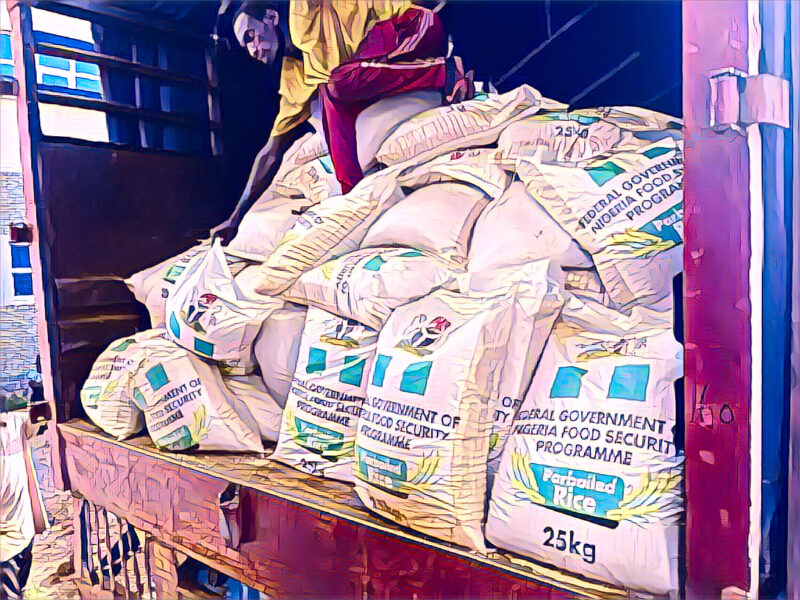
Rice has long been one of Nigeria’s most cherished staple foods. In recent years, however, it has acquired a different significance in the country’s political landscape. It has become a potent instrument in the calculations of politicians seeking electoral victory. Political rallies are hardly complete without the distribution of bags of rice, irrespective of their sizes. To many observers, this reflects a disturbing reality: the electorate have become so impoverished that some are willing to barter their votes for a bag of rice, much like the biblical Esau who sold his birthright for a plate of pottage.
As amusing as the prominence of rice in Nigerian politics may appear, it should deeply concern every conscientious citizen. Why should any Nigerian be persuaded to surrender the power of the ballot because of a bag of rice? How did an oil rich nation arrive at a point where citizens must be enticed with food before exercising one of their most fundamental democratic rights? These questions expose not only the depth of poverty in the country but also the desperation of politicians who are more interested in capturing political office than in addressing the conditions that keep millions trapped in deprivation. The weaponisation of poverty has become one of the most effective tools in Nigeria’s political arsenal.
The tragedy is that this strategy thrives because many politicians understand the psychology of poverty. They know that a hungry population is easier to manipulate than an empowered one. When people are denied quality education, decent healthcare, reliable electricity, employment opportunities and other basic social amenities, survival inevitably takes precedence over civic responsibility. Poverty erodes self esteem and weakens the capacity of citizens to make independent political choices. In such circumstances, a bag of rice ceases to be ordinary food; it becomes a temporary lifeline, while the structural causes of poverty remain firmly in place. The result is a vicious cycle in which politicians exploit hardship to gain power, only for that hardship to deepen after the elections.
A Facebook user once remarked, “To whom rice is given, sense is taken.” Although provocative, the statement captures the danger of transactional politics. Democracy was never designed to be an exchange of food for votes. Rather, it is a system through which citizens choose leaders capable of advancing the common good. Politicians seeking elective office should therefore be judged by their competence, integrity, vision and record of service, not by the quantity of handouts they distribute during campaigns. Equally, the electorate must reflect on the long term consequences of allowing themselves to become instruments in the political ambitions of individuals who often abandon their promises once elected. Much of the poverty, insecurity, decaying infrastructure, failing public services and economic hardship confronting Nigeria today can be traced, in part, to a political culture that rewards short term gratification over long term national interest.
A five kilogramme bag of rice can scarcely feed a family of four for one week. Yet some citizens exchange four years of their future for it. The irony is painful. The bad roads that claim countless lives, the epileptic electricity supply that cripples businesses, the inadequate healthcare system that leaves many without access to quality treatment, the failing educational system and the relentless inflation that hangs over the country like the sword of Damocles are all consequences of poor leadership and weak democratic choices. While no election can solve every problem overnight, a more discerning electorate would significantly reduce the chances of entrusting public office to those who lack the capacity or commitment to govern effectively.
This is not a partisan intervention. It is a call for the restoration of transformational politics and accountable governance. Democracy derives its legitimacy from the informed participation of citizens and from leaders who recognise public office as a sacred trust rather than a personal entitlement. Yet, across much of Africa, democratic governance has too often failed to deliver the dignity, justice and development that citizens were promised after the departure of military rule. Unless politics is reclaimed from the grip of patronage and poverty, democracy will continue to disappoint those it was meant to serve.
With the 2027 general elections drawing closer, Nigerians must refuse to mortgage their future for temporary relief. We must present a united front against manipulative and transactional politics and insist on leaders who genuinely care about the welfare of the people. The value of a vote cannot be measured by the weight of a bag of rice. It is measured by the quality of leadership it produces and the future it secures. A nation cannot build prosperity on a foundation of inducement, nor can democracy flourish where hunger consistently triumphs over conscience.