Africa
The Weight of Corruption: Ola Olukoyede’s Cry to Nigeria’s Youth -By Psychologist John Egbeazien Oshodi
Some of you have seen this corruption up close. Not on television. Not in newspapers. But in your homes, your communities, among people you know. Some of the leaders involved in this rot are relatives, mentors, family friends, or people your families support and defend.

This Is Not a Warning You Applaud
This is not a dramatic warning.
It is a psychological one.
And psychological warnings do not shout. They ache. They rise from wounds seen too often and lessons learned too late. They are born from repetition—from watching the same nation bleed through different decades, under different slogans, with the same suffering returning in new disguises.
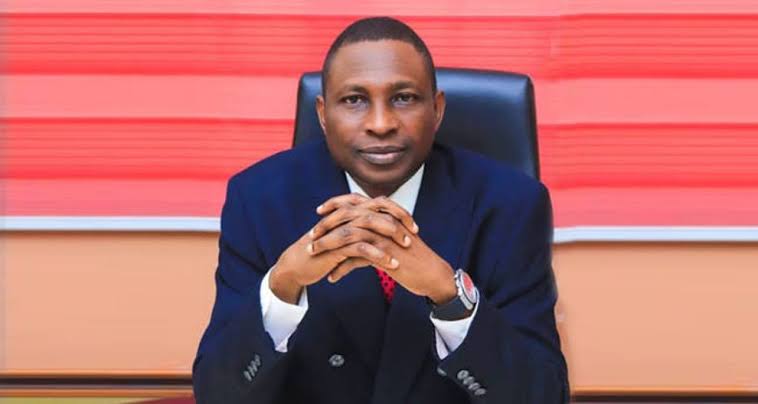
As Ola Olukoyede, Chairman of the Economic and Financial Crimes Commission, speaks to you, remember he did not have to come to you, yet he chose painfully to come to the roots, to speak where choices are still forming and futures are still being decided. Listen not with excitement, not with applause, but with the heavy attention reserved for moments that may one day stand as witnesses against your silence. Let his words—and the words in this write up—echo in your minds throughout your lives, reminding you of the choices you must make and the future you must refuse to destroy.
Accumulated Grief, Not Metaphor
“As I speak to you today, my heart aches with a deep sadness. Corruption has ravaged our nation, leaving behind a trail of suffering and despair.”
This is not metaphor.
This is accumulated grief.
This is the exhaustion of someone who has seen files turn into funerals, signatures turn into silence, excuses turn into graves. This is the weight of knowing how many losses never needed to happen.
One Signature, Many Graves
“One person’s greed can drain the resources meant for our hospitals, schools, and roads, affecting us all.”
Sit with that sentence. Do not hurry past it.
One decision.
One signature.
One silence.
And a hospital loses oxygen. A nurse improvises where equipment should exist. A mother prays beside a bed that should never have been empty.
A school loses teachers. Students sit under leaking roofs, learning frustration before learning knowledge. Dreams shrink quietly. Futures bend toward anger, desperation, or flight.
A road becomes a corridor of death. A pothole becomes a coffin. A journey becomes a final goodbye.
Who Suffers? Everyone. Even You.
“Think about it: a single act of corruption can deny a medical center the funds it needs to save lives.”
Lives that had names. Faces. Histories. People who were expected home.
“It can leave a school without the resources to educate its students.”
Students who will grow up asking why their country never chose them.
“It can turn a road into a death trap, claiming innocent lives.”
People who left home trusting a nation that did not protect them.
And then the question that hurts the most:
“And who suffers?”
Not just the poor.
Not just the powerless.
We all do.
“The poor, the rich, the vulnerable, and the powerful.”
Because corruption poisons everything it touches.
“Corruption spares no one. It robs us of our dignity, our security, and our future.”
That is the weight.
You Are Not Listening by Accident
And now the weight turns inward.
Because you are not being addressed as observers. You are being addressed because you are becoming something. You, the leaders of tomorrow, will be the judges who decide whether justice bends or stands. The police officers who decide whether law protects or terrorizes. The doctors who decide whether care is sacred or transactional. The teachers who decide whether children inherit hope or bitterness.
You will shape the Nigeria people pray for quietly and cry over loudly.
This is why he is speaking to you now—before excuses harden into habits, before compromise becomes character, before silence feels like wisdom.
Belief Is Not Praise. It Is Burden.
When he says do not let corruption define your future, he is not offering encouragement. He is warning you that corruption does not arrive as evil. It arrives as reason. As necessity. As “everyone does it.” As “God understands.” As “I will fix things later.”
The EFCC chairman chose to speak to you because he believes in you. But belief is not flattery. Belief is burden. It means he is trusting you with a future that has been repeatedly betrayed.
Do not let him down—not because of him, but because of what failure will cost this country again.
The Inheritance You Must Refuse
Do Not Become What Is Breaking This Country
Please—hear this part without defensiveness.
Do not become like many of the leaders you have watched disappoint you.
Do not become like the judges who know the law but bend it for the powerful.
Do not become like the lawyers who use intelligence to protect injustice instead of truth.
Do not become like the doctors who forget the human being once money enters the room.
Do not become like the ministers who speak of service while serving only themselves.
Do not become like the police who fear the powerful more than they protect the vulnerable.
And do not become like the pastors and religious leaders who preach sacrifice to the poor while living off their desperation, who speak of righteousness but protect corruption, who bless stolen wealth and call it favor, who comfort the powerful but ignore the suffering of the weak.
Nigeria is not collapsing because there are no educated people.
It is collapsing because too many educated people surrendered their conscience.
There is a spirit that has captured institutions—a spirit of self-preservation, self-enrichment, self-importance. A spirit that teaches people to survive upward while the country bleeds downward. A spirit that says, “At least I am safe,” even when everyone else is not.
Fight that spirit.
Fight the spirit that tells you power must always be protected, even when it is wrong.
Fight the spirit that tells you silence is wisdom.
Fight the spirit that tells you corruption is realism.
Fight the spirit that tells you everyone eventually compromises.
That spirit is not culture.
It is corrosion.
It turns judges into spectators.
Police into enforcers for the elite.
Professionals into vendors of conscience.
Leaders into caretakers of their own comfort.
And even places meant for moral guidance into shelters for hypocrisy.
When Ola Olukoyede speaks to you, he is asking you not to inherit that spirit. He is asking you to interrupt it before it settles into you, before it becomes normal, before it feels reasonable.
Because once that spirit owns you, you will still succeed—but you will no longer be free. You will rise, but you will carry the quiet shame of knowing you became what you once complained about.
Do not let that be your story.
Choose to be difficult.
Choose to be inconvenient.
Choose to be principled even when it costs you speed, access, or applause.
Nigeria does not need more powerful people.
It needs people who refuse to let power erase their soul.
Fight that spirit—daily, quietly, relentlessly.
Let Us Be Honest With Ourselves
Let us be honest, even if the truth is uncomfortable.
Some of you have seen this corruption up close. Not on television. Not in newspapers. But in your homes, your communities, among people you know. Some of the leaders involved in this rot are relatives, mentors, family friends, or people your families support and defend.
Some of you have watched wrongdoing and stayed quiet because it benefited someone close to you. Some of you have excused it because it helped your family survive. And if we are painfully honest, some of you have already taken small steps into the same rot—small shortcuts, small dishonest gains, small compromises that felt harmless at the time.
This is not said to shame you. It is said because change begins with truth.
And so, I say this tearfully: please change.
Do not become them.
Do not become the version of yourself that slowly learns to justify what you once condemned.
Do not let your future be trapped by your present habits.
You still have time to refuse that path. You still have time to become different. You still have time to walk away from what you know is wrong.
Do not remain your old self if that self is already bending toward corruption.
Become better while you still can.
Nigeria does not only need new leaders.
It needs new consciences.
When Prayer Becomes an Alibi
“As you go forth, remember that true change starts from within.”
This is not religious poetry. This is psychological truth.
“Don’t just pray for a better Nigeria, be the answer to those prayers.”
That sentence should hurt.
The mosques are full.
The churches are full.
Hands are raised.
Voices are loud.
But consciences are often closed.
“The mosques and churches are full, but true change starts from within.”
Within your choices.
Within your refusals.
Within what you sign, what you ignore, what you justify.
“Let your actions be your prayer, your contribution to the nation’s progress.”
Because prayer without integrity becomes noise. Faith without ethics becomes cover. Religion without responsibility becomes an escape route for corruption.
Prevention Is Harder Than Prosecution
“The EFCC chairman’s mission is not just about prosecution, it’s about prevention.”
Not just arrests, but interruption.
Not just punishment, but foresight.
Not just courts, but conscience.
“It’s about building a culture of integrity, accountability, and transparency.”
Culture does not change by decree. It changes when individuals decide that dignity is not negotiable, even when compromise is rewarded.
“Carry the torch of preventive psychology, and let it guide your actions.”
That torch is heavy. It burns. It exposes. It demands the courage to imagine the end of a path before taking the first step.
The Cybercrime Trap Nobody Escapes Cleanly
When he says cybercrime is not sustainable, he is not insulting your intelligence or dismissing unemployment. He is describing a psychological trap he has watched destroy lives.
A trap that begins with excitement and justification.
Then evolves into fear.
Into paranoia.
Into money that cannot buy rest.
Into success that must be defended with lies.
Short-term gain.
Long-term anxiety.
Long-term shame.
Eventual collapse.
Many only understand this truth when escape is no longer possible.
The Quiet Weight That Visits at Night
Beyond the statistics, beyond the headlines, beyond the arrests, there is another burden—heavier, quieter, more personal.
It is the emotional weight of knowing better and still doing otherwise.
The moral weight of silence when resistance was possible.
The psychological weight of becoming someone you once judged.
That weight does not scream.
It waits.
It settles into the conscience.
It follows people into success.
It visits them at night.
Many carry it silently.
Many wish someone had spoken to them early enough.
This Is That Moment
This is that moment.
Not tomorrow.
Not when you are older.
Not when you finally hold power in your hands.
Now.
So do not rush past these words.
Do not clap them away.
Do not laugh, post pictures, and move on as if nothing was handed to you today.
Do not spiritualize them away.
Do not reduce them to motivation and forget them by next week.
Let them sit with you.
Let them disturb you.
Let them follow you.
Let them hurt a little.
Because what Ola Olukoyede placed before you was not ceremony. It was not routine orientation talk. It was not political messaging.
It was a man carrying the frustration of a nation speaking to people who still have a chance to choose differently.
He spoke from files filled with broken futures.
From cases that showed how greed quietly destroys lives that never appear in headlines.
From years spent watching opportunities stolen from people who never even knew what was taken from them.
This was not a speech meant to inspire you for a moment.
It was a warning meant to save you from a future you may not recover from.
Today, he did not speak to criminals.
He spoke to consciences still forming.
Still choosing.
Still capable of refusal.
He spoke to people who can still decide not to become what they once complained about. People who can still refuse the spirit that has bent too many before them.
That is why this cry matters.
Because one day, very soon, the decisions will sit on your desk.
The signature will be yours.
The silence will be yours.
The courage will be yours.
And Nigeria will either suffer again—or begin to heal—through choices people like you will make quietly.
That is why the weight is heavy.
And that is why, today, it was placed on your shoulders.
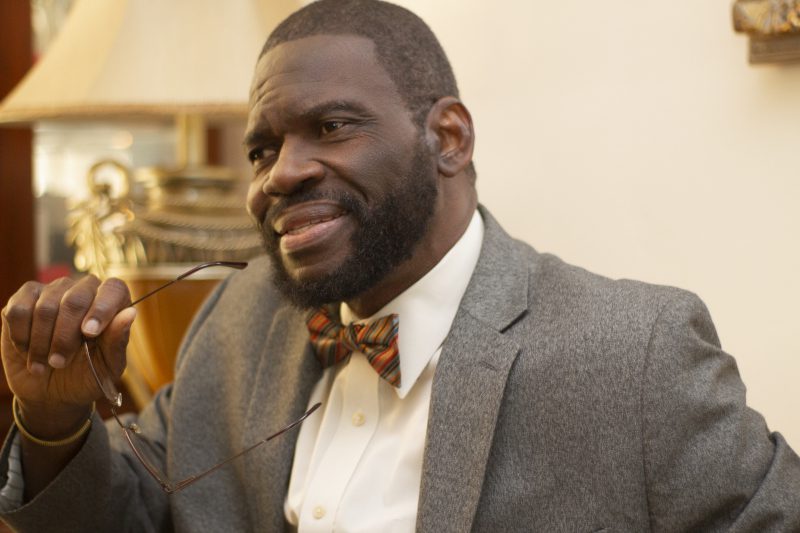
Professor John Egbeazien Oshodi, Clinical/Forensic Psychologist
About the Author
Prof. John Egbeazien Oshodi is an American psychologist, an expert in policing and corrections, and an educator with expertise in forensic, legal, clinical, and cross-cultural psychology, including public ethical policy. A native of Uromi, Edo State, Nigeria, and son of a 37-year veteran of the Nigeria Police Force, he has long worked at the intersection of psychology, justice, and governance. In 2011, he helped introduce advanced forensic psychology to Nigeria through the National Universities Commission and Nasarawa State University, where he served as Associate Professor of Psychology.
He teaches in the Doctorate in Clinical and School Psychology at Nova Southeastern University; the Doctorate Clinical Psychology, BS Psychology, and BS Tempo Criminal Justice programs at Walden University; and lectures virtually in Management and Leadership Studies at Weldios University and ISCOM University. He is also the President and Chief Psychologist at the Oshodi Foundation, Center for Psychological and Forensic Services, United States.
Prof. Oshodi is a Black Republican in the United States but belongs to no political party in Nigeria—his work is guided solely by justice, good governance, democracy, and Africa’s development. He is the founder of Psychoafricalysis (Psychoafricalytic Psychology), a culturally grounded framework that integrates African sociocultural realities, historical awareness, and future-oriented identity. He has authored more than 500 articles, multiple books, and numerous peer-reviewed works on Africentric psychology, higher education reform, forensic and correctional psychology, African democracy, and decolonized models of clinical and community engagement.